

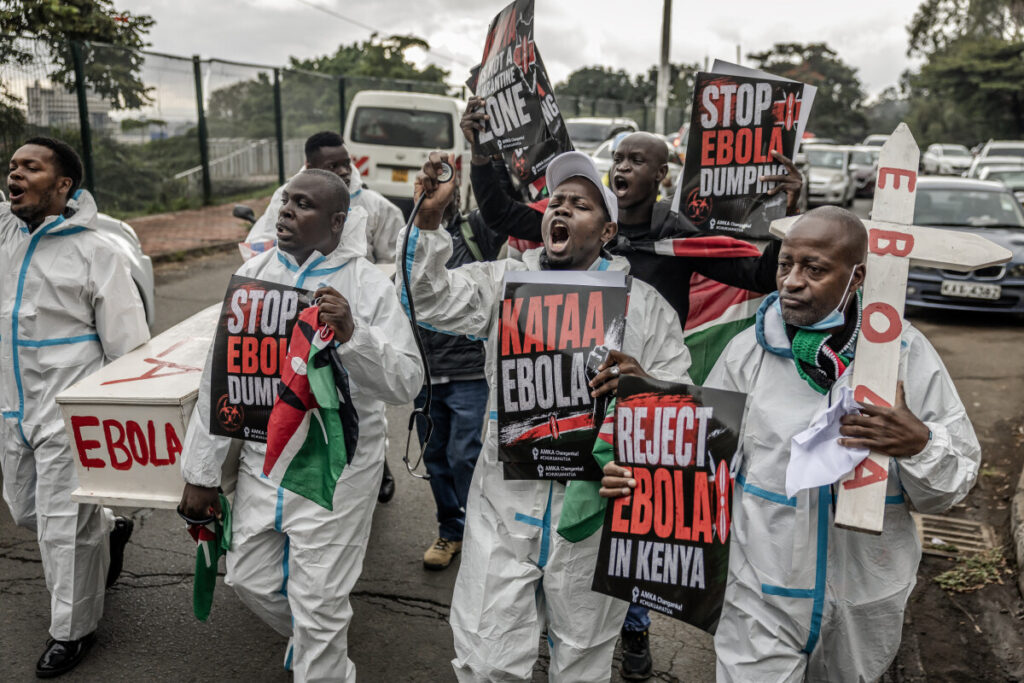
Lawyer Willis Otieno has expressed concerns about a troubling trend where foreign partnerships risk undermining Kenya’s constitutional processes and domestic accountability, especially regarding the proposed Ebola quarantine facility in Laikipia.
In a statement on her X account, Otieno emphasized that while international cooperation is vital, government decisions should clearly reflect responsibility within Kenya’s own institutions.
He cautioned against narratives that shift accountability for domestic decisions to foreign powers. “We’re normalizing a risky pattern where outside interests overshadow our constitutional processes,” he noted.
Otieno challenged the notion that foreign leaders possess in-depth knowledge of Kenya’s internal structures. “Do we really believe that a foreign head of state, like President Trump, knows the specifics of Kenya’s military infrastructure enough to dictate its use for a quarantine facility?” he questioned.
His main concern lies not with foreign influence, but with how government decisions are communicated to the public. “The real issue is the tendency to frame critical policies as externally driven, which weakens accountability at home,” he added.
Barrack Muluka, Secretary General of the Democratic National Alliance, echoed these sentiments, asserting that sovereignty and self-determination are crucial to Kenya’s constitutional framework. “Sovereignty, established in June 1963, means the people are the ultimate authority in government decisions,” he stated.
Meanwhile, the government insists that the proposed Ebola measures focus on public health rather than politics. Health Cabinet Secretary Aden Duale dismissed opposition, stating, “This isn’t about President Ruto; those are paid protesters.”
As the debate continues, discussions are shifting towards broader issues of public trust, accountability, and the role of foreign partnerships in decisions impacting Kenyan citizens.


