
Nearly 300 people who tested positive for Ebola in the Democratic Republic of the Congo remain unaccounted for, as highlighted by Africa’s leading public health official.
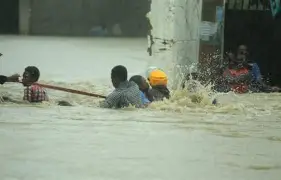
Dr. Jean Kaseya, director general of the Africa CDC, emphasized that the ongoing humanitarian crisis has left over 1 million people in inaccessible camps, complicating health workers’ efforts.
Recent projections from the World Health Organization’s Africa office, published in The Lancet Infectious Diseases, forecast about 8,210 cases and 1,420 deaths by mid-September. The outbreak has a significant chance—70%—of spreading to neighboring South Sudan soon.
Currently, the DRC reports 1,118 confirmed cases and 291 deaths, while Uganda has recorded 20 cases and two deaths. Meanwhile, a French doctor returning from the DRC tested positive, prompting his employer, medical NGO Alima, to investigate the circumstances of the contamination.
Worryingly, 297 individuals who tested positive remain untraceable. Dr. Kaseya expressed concern, asking, “Where are these people?”
DRC authorities have mandated a 21-day waiting period for anyone traveling from affected provinces. This outbreak, linked to the Bundibugyo strain, has become the largest on record within just five weeks of declaration; for context, the West Africa outbreak from 2014 to 2016 had significantly fewer cases at this stage.
The WHO utilized computer models to assess various transmission scenarios. Encouragingly, some evidence suggests that the DRC’s response is effectively slowing the outbreak, aligning current figures with a central projection of 6,636 to 10,287 cases by September 16. However, a worst-case scenario could see 66,000 confirmed cases by then.
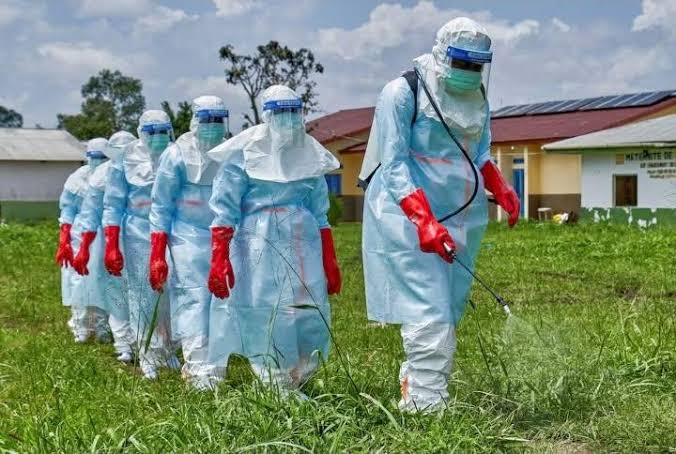
Dr. Kaseya noted that 30% of new cases arise from known contacts, indicating substantial community transmission. To enhance contact tracing, authorities plan to recruit 20,000 local community health workers.
Ebola treatment centers are currently at 95% capacity, and Dr. Kaseya warned that the peak has yet to be reached. He stressed the challenges posed by inaccessible camps, stating, “Without resolving the humanitarian issue, we cannot stop this outbreak.”
The Africa CDC and WHO estimate that $518 million is necessary to combat the outbreak, with humanitarian needs pushing the total to $1.4 billion. Unfortunately, only 13% of the $910 million pledged by international entities has been disbursed.
On a positive note, the first trial of potential treatments for the Bundibugyo virus starts next week in the DRC, followed by a trial of an antiviral aimed at preventing disease development in contacts.