

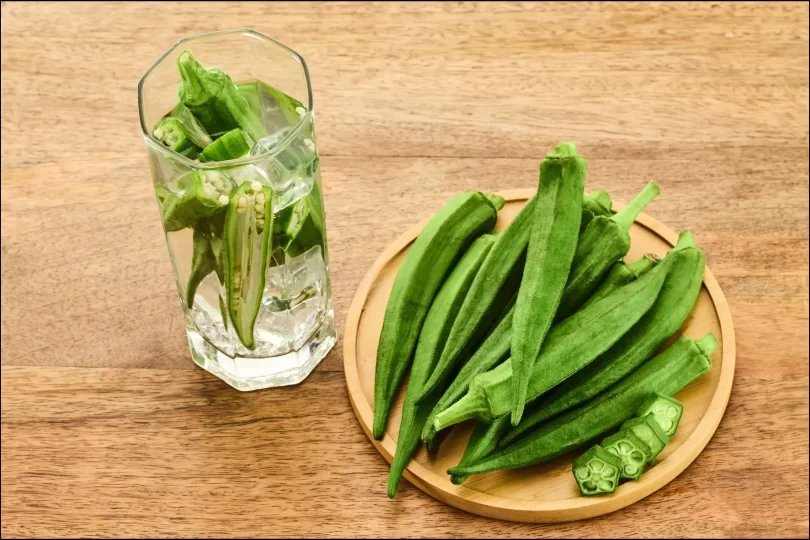
In the bustling markets of Nairobi and across Kenya’s urban centers, a peculiar trend has taken root among young women: the daily consumption of okra water. What began as a health fad promoted on social media platforms has evolved into a window through which we can examine the complex realities facing Kenya’s younger generation, particularly in matters of health, relationships, and personal agency.
The phenomenon gained significant attention following Mercy Simiyu’s investigative piece for Nation Media, which revealed that searches for okra water had spiked by 470% on Pinterest. Across TikTok and Instagram, young Kenyan women share testimonials about this slimy, slightly thick beverage made by soaking okra pods overnight in water.
“I started taking okra water after watching a TikTok video about its benefits,” explains Treza Atieno, a young professional who has made the drink part of her daily routine. “I take a glass every morning and even use some as a face mask. I no longer have bloating issues, and my skin is clearer.”
The claimed benefits are numerous: improved digestion, regulated blood sugar, enhanced fertility, clearer skin, and increased natural lubrication. While some benefits align with okra’s known nutritional properties—it’s rich in fiber, vitamins, and antioxidants—the social media claims often exceed scientific evidence.
“Ladies, start taking okra water now, your ‘V’ will thank you,” one TikTok influencer advised her audience, mostly young women. Her comments section was flooded with positive testimonials and eager young women asking about the ‘how’ to prepare and take the concoction.
Unexpected demographics
What surprised researchers and journalists investigating this trend was the primary demographic embracing okra water. Logic might suggest that older women, particularly those experiencing menopause-related changes, would be the primary consumers. However, the reality tells a different story.
“The people who were most obsessed with the drink were young women in their 20s,” noted Simiyu during discussions about her article’s reception. This demographic shift raises important questions about the underlying social dynamics at play.
Conversations with older women revealed their relative disinterest in the trend. “I thought they would be the target audience, yet they are not,” observed one woman in her 50s when discussing the phenomenon with her peer group.
Social implications
The okra water trend, while seemingly about health and wellness, reveals deeper societal issues affecting young Kenyan women. The focus on enhanced lubrication among naturally fertile young women points to complex relationship dynamics that merit serious consideration.
Contemporary dating culture in Kenya has seen the rise of what some term “sponsor” relationships—transactional arrangements between younger women and older, financially established men. These relationships, often lacking emotional connection and genuine attraction, create physiological challenges that young women are seeking to address through various means, including okra water consumption.
“Since most younger women are not attracted to the men, they need extra help,” explained one observer of the trend. This reality highlights the intersection of economic pressures, limited opportunities, and personal agency in young women’s lives.
What experts say
While okra water continues to gain popularity, nutrition experts urge caution about the claims circulating online. Henry Ng’ethe emphasizes that while okra has legitimate nutritional benefits, the miraculous claims need scrutiny. “Okra supports digestion and skin health, but it’s not a miracle cure. A balanced diet with diverse vegetables, fruits, and hydration offers more reliable benefits than soaking a few pods in water.”
For those determined to continue the practice, Ng’ethe offers practical guidance: “Okra water should be prepared with clean, fresh pods soaked overnight and consumed in moderation. For real results, pair it with fiber-rich foods, probiotics, and hydration—especially for gut and skin health.”
His concern extends beyond individual health choices to broader information literacy. “Social media gives young women access to health ideas but also promotes unverified trends. The real risk is mistaking viral hacks for expert advice. Media literacy is now a health survival skill.”
Root causes
Professor Joachim Osur, a Professor of Public Health and Sexual and Reproductive Health practitioner, offers deeper insights into why young women specifically are drawn to okra water. His analysis reveals concerning patterns in sexual health education and relationship dynamics.
“The reason why women are consuming this okra water, for me, is because of lack of experience in sex. Most of them are normally anxious. The foreplay is short. Many are incompetent in terms of sexual skills,” Prof. Osur explains. “They do not know what to expect. A number of them are in fear of unwanted pregnancy as well as infection with disease.”
His observations align with the social dynamics observed in contemporary dating culture. ” I also agree that sex can be transactional at this age. In this case, young women are not always emotionally connected to their sex partners. Sex doesn’t happen just because you are connected. Many people actually go into sex without knowing each other well. And so the body can just reject the sex, so you don’t lubricate.”
From a scientific standpoint, Prof. Osur is clear about okra water’s effectiveness: “We really don’t have evidence that this works. What you eat and drink goes to the digestive system. It doesn’t go to the sexual system. The process of lubrication is a totally different process, which is not connected to what you’ve eaten. So scientifically, there is no proof that okra water will give you lubrication.”
The gap
Prof. Osur identifies a critical failure in traditional support systems: “I know we have failed young people because people used to be guided, people used to be mentored into how to manage their sexuality. It used to be done by sometimes uncles, aunties, grandparents and so on. That has failed.”
He advocates for comprehensive sexuality education as a solution, despite acknowledging the controversy surrounding it. “When you give people information, you empower them, they are able to then do the right thing,” he emphasizes, countering common fears that education leads to risky behavior.
His recommendations for young people are practical and relationship-focused: “Don’t rush into sex. Take your time. Understand it, be in connection with your partner. Talk during sex about your feelings, let your partner know whether you’re ready to proceed to the next level.”
Prof. Osur also suggests professional support: “I would ask people who want to go into sex to do what we call sexual health check, and also sex coaching, which is offered by accredited sexual medicine or sexual health providers.”
His final observation provides context for the demographic patterns observed: “That’s why older women actually don’t use okra water because they know it doesn’t work, they know how to satisfy themselves through natural ways.”
Henry Ng’ethe, National Chairperson for the Nutrition Association of Kenya and Head of Nutrition at one of Kenya’s leading health facilities, provides scientific clarity on the trend. “Okra is rich in fiber, antioxidants, and folate, which can aid digestion and inflammation,” he explains. “But claims about fertility and lubrication lack clinical evidence—these are likely social media myths, not science-backed facts.”
Ng’ethe attributes some of the positive experiences to psychological factors: “Many young women genuinely feel better after taking okra water, but much of that could be the placebo effect. If you believe something will help, your mind—and sometimes your body—follows suit.”
Role of social media and community
The okra water phenomenon demonstrates the powerful influence of social media in shaping health and lifestyle choices among young Kenyans. Platforms like TikTok and Instagram have become primary sources of health information, often bypassing traditional medical advice.
User testimonials range from enthusiastic endorsements to skeptical warnings. One user cautioned, “Okra water DOESN’T make you any wetter down there. That is internet PROPAGANDA. If you have trouble getting wet, visit a gynecologist or start engaging with people you’re actually attracted to!”
This frank discussion reflects a generation of young women who are increasingly open about sexual health topics, even as they navigate complex social and economic pressures.
Implications for families and society
For organizations like The Global Peace Foundation, which focuses on building strong families and communities, the okra water trend offers valuable insights into the challenges facing young Kenyans today. The phenomenon highlights several critical areas:
Economic empowerment: The prevalence of transactional relationships suggests a need for increased economic opportunities for young women, enabling them to make relationship choices based on genuine connection rather than financial necessity.
Health education: Both experts emphasize that the reliance on social media for health information underscores the need for comprehensive, accessible health education. As Ng’ethe notes, “Media literacy is now a health survival skill.” Prof. Osur advocates for comprehensive sexuality education, arguing that “when you give people information, you empower them.”
Relationship dynamics: Prof. Osur’s insights reveal that the trend reflects changing relationship patterns that may impact long-term family formation and stability. His call for sexual health education and coaching suggests a need for new approaches to preparing young people for healthy relationships.
Cultural shifts: The openness with which young women discuss intimate health topics represents a significant cultural shift that both challenges traditional norms and creates opportunities for more honest health conversations.
Moving forward
The okra water phenomenon serves as a lens through which we can examine broader social changes affecting young Kenyan women. Rather than dismissing the trend, communities, families, and organizations can use it as a starting point for deeper conversations about health, relationships, and the social conditions that shape young people’s choices.
Understanding these trends allows for more effective support systems and interventions that address root causes rather than symptoms. For young women navigating complex social and economic landscapes, comprehensive support that includes economic empowerment, health education, and relationship guidance may be more beneficial than any single wellness trend.
As Kenya continues to evolve socially and economically, phenomena like the okra water trend will continue to emerge, each offering insights into the lived experiences of different demographic groups. By approaching these trends with curiosity rather than judgment, communities can better support their young people in making informed decisions about their health, relationships, and futures.
The okra water story is ultimately about more than a beverage—it’s about young women seeking agency, health, and solutions in a rapidly changing world. Understanding their choices helps us better understand the society we’re building together.
This article is part of ongoing coverage examining social trends and their implications for family and community wellness in Kenya. For more information about building strong families and communities, visit The Global Peace Foundation’s resources on values-based approaches to social development.


