

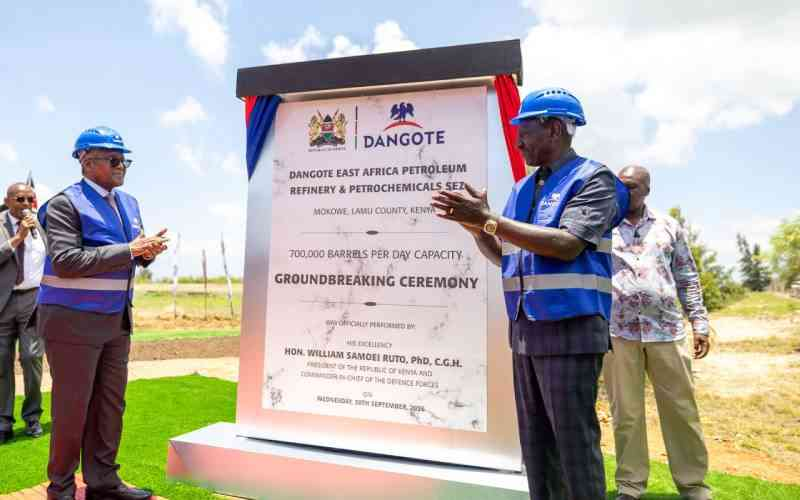
On Wednesday, September 30, 2026, government-aligned MPs and opposition lawmakers engaged in a lively debate in Parliament regarding the proposed Ksh2.2 trillion Lamu oil refinery. One side praised the project as a significant investment opportunity, while the other raised essential questions about its implementation.
Developed by Nigerian billionaire Aliko Dangote, this refinery project stands as one of the largest private investments proposed in Kenya. Its economic advantages, environmental effects, and the implementation process have sparked intense political discussions.
Following the project’s launch in Lamu, lawmakers expressed sharply divided views on whether this investment represents a tremendous economic opportunity or warrants further scrutiny before moving forward.
Support for Investment and Job Creation
Government-aligned lawmakers defended the refinery as a testament to Kenya’s ability to attract substantial foreign investment. Kisii MP Doris Donya urged Parliament to assess measures that promote foreign direct investment and protect investors from interference.
She stated, “We need a comprehensive report on the government’s initiatives to encourage foreign direct investment and safeguard investors from obstacles.”
West Mugirango MP Stephen Mogaka emphasized the potential for job creation, advocating for Kenyans to find employment within their own country. “It’s time for Kenyans to work in Kenya. By bringing in investments that thrive elsewhere, we can create local opportunities,” Mogaka asserted.
Nominated MP Irene Mayaka highlighted past missed opportunities for major investments, expressing optimism about the current situation. “We lost out on the cement trade investment before, but thanks to bold leadership, we now have this moment in Kenya’s history,” she remarked.
Senator Prof. Tom Ojienda of Kisumu described the project as clear evidence of the government’s transformative agenda. “This showcases the remarkable transformation our government is achieving,” he stated.
Molo MP Kimani Kuria shifted the focus to implementation rather than the origins of the idea. “What truly matters is who brings this vision to life. Today, we celebrate the president for making this discussion a reality,” he said.
Calls for Accountability from Opposition
Opposition lawmakers, however, expressed concerns about the pace of implementation and called for greater public involvement, environmental protections, and the potential effects on consumers.
Nairobi Senator Edwin Sifuna challenged remarks attributed to the investor, insisting that foreign investors must respect Kenya’s values. “If you want to invest in our country, you must engage with us respectfully,” Sifuna emphasized.
Tetu MP Geoffrey Wandeto raised questions about whether the refinery would ultimately lower petroleum prices for Kenyan consumers. “Will this lead to cheaper fuel? In Nigeria, it hasn’t. We need clear answers,” he insisted, also voicing skepticism about the project’s swift progress without public participation or an environmental assessment.
His comments echoed broader concerns in Lamu regarding land and environmental issues tied to the proposed refinery. Recent reports have also highlighted legal disputes over land designated for the project.
Political Perspectives on Economic Impact
The debate took a political turn as Kiambaa MP John Wanjiku urged colleagues to prioritize development over political disagreements. “Let’s focus on real progress rather than opposing for the sake of appearances,” he said, underscoring the potential benefits for Kenyans in Lamu and beyond.
National Assembly Speaker Moses Wetang’ula challenged the notion that Kenya needs significant domestic crude oil production to support a large refinery. “The oil market operates in such a way that even if a billionaire buys crude oil from abroad, they can refine it here in Lamu,” he explained, dismissing the argument that a lack of domestic oil makes a large refinery unfeasible.
This parliamentary exchange has placed the Lamu refinery at the heart of a national conversation about foreign investment, job creation, energy security, fuel prices, environmental protection, and the rights of communities impacted by major infrastructure projects. While government-aligned lawmakers view the Ksh2.2 trillion investment as a potential economic game-changer, opposition MPs insist that the promise of economic growth must be accompanied by transparency regarding due process, public participation, and the overall impact on Lamu residents.


