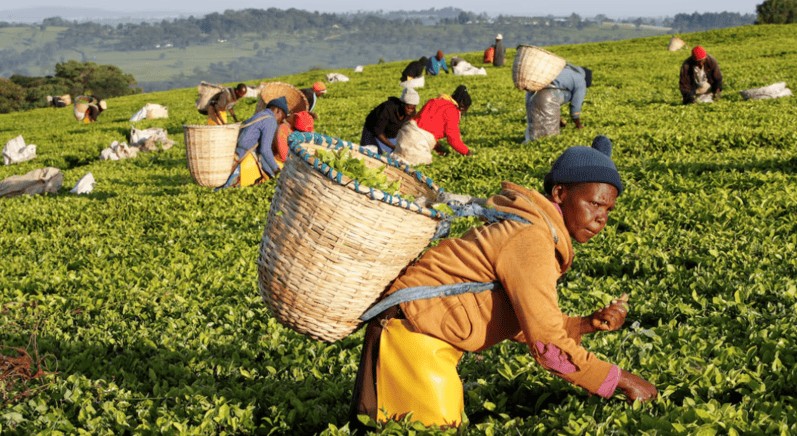
The Treasury Cabinet Secretary John Mbadi highlighted impressive growth in Kenya’s tea, coffee, edible oil, and sugar sectors over the last three years, thanks to government efforts to boost agricultural productivity and farmer incomes.
In his 2026/27 Budget Statement presented on June 11, 2026, Mbadi shared that tea production soared to 550.4 million kilograms in 2025, up from 535.04 million kilograms in 2022. Export earnings also jumped from Ksh163.3 billion to Ksh187.1 billion during this time.
“Tea production has increased significantly, and so have our export earnings,” Mbadi noted.
Reviving the coffee sector remains a priority, with the government distributing millions of coffee seedlings and rehabilitating aging plantations. In the 2023/24 financial year alone, they distributed 85,000 seedlings, followed by 809,710 in 2024/25 and 3.13 million in 2025/26, plus an additional 2.24 million seedlings during the March-May 2026 rains.
“To support coffee expansion, we’ve steadily distributed seedlings over the years,” he explained. This effort has expanded coffee cultivation to 115,500 hectares in 2025, up from 109,385 hectares in 2022.
The edible oils sector also thrived, with cultivation nearly doubling to 114,350 hectares in 2025 from 60,000 hectares in 2022, reflecting increased farmer participation and investment as Kenya aims to reduce its reliance on imported oils.
The sugar industry has seen significant improvements too, driven by government reforms. “Our interventions have led to remarkable growth in cane production and processing capacity, with sugarcane cultivation area increasing by 19.4% and national production rising by 20% to 815,454 metric tonnes in 2024, up from 472,773 metric tonnes in 2022,” Mbadi shared.