

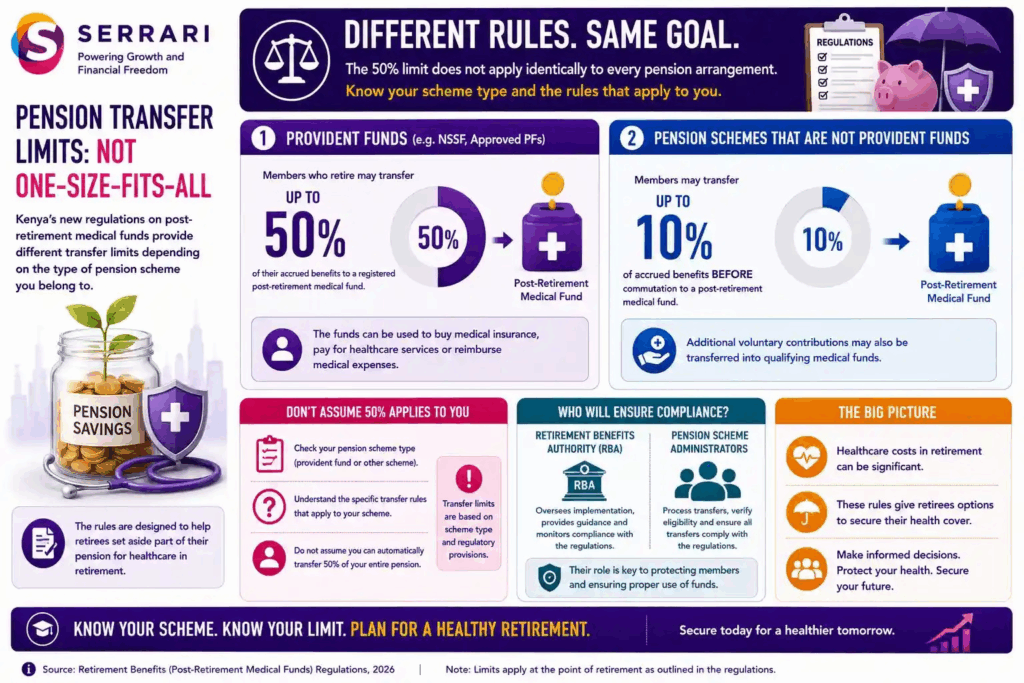
Kenyan retirees now have the opportunity to transfer up to 50% of their accrued retirement benefits into dedicated medical funds, enhancing their financial security for healthcare costs post-employment. This initiative, introduced through the Retirement Benefits (Post-Retirement Medical Funds) Regulations, 2026, creates a structured approach for individuals to save specifically for healthcare during retirement.
Under these regulations, which fall under the Retirement Benefits Act, retirees can allocate a significant portion of their pension to medical care, ensuring they are not solely dependent on their remaining retirement income for healthcare expenses. National Treasury Cabinet Secretary John Mbadi highlighted this provision in a recent Gazette notice.
Upon retirement, members can choose to transfer up to 50% of their accrued benefits from their retirement scheme to a registered post-retirement medical fund. This framework addresses the growing challenge faced by many Kenyans as they retire; while employment income ceases, healthcare needs often increase, leading to substantial medical expenses.
Understanding the 50% Pension Rule
It’s essential to note that retirees do not receive 50% of their pension as unrestricted cash. Instead, eligible retirement benefits are redirected into an approved post-retirement medical fund, ensuring the funds are dedicated specifically to healthcare-related expenses. For instance, a retiree with Ksh2 million in eligible benefits could transfer up to Ksh1 million into a registered medical fund, ensuring the money is reserved for approved medical expenses.
Additionally, the regulations cater to members who have not yet retired. For those in pension schemes, excluding provident funds, the rules allow for a transfer of up to 10% of accrued benefits before retirement. Members should verify which rules apply to their specific scheme to understand their eligibility fully.
Utilization of Medical Fund
Funds in a post-retirement medical account can be utilized for various healthcare-related expenses, including purchasing medical insurance, paying for healthcare services, or reimbursing eligible medical costs as they arise. Members also have the flexibility to transfer funds to another approved medical insurance provider or use them to purchase an annuity that covers medical insurance premiums. This separation of healthcare financing from regular retirement income can significantly alleviate the financial burden on retirees.
The new regulations also empower employees to contribute to post-retirement medical funds while still in the workforce, either independently or in collaboration with their employers. Contributions can be made as a fixed amount or a percentage of income, allowing individuals to build a healthcare reserve gradually rather than facing medical costs solely upon retirement.
Moreover, contributions to post-retirement medical funds are tax-deductible up to Ksh15,000 per month, creating an additional layer of retirement planning that prepares workers for both living expenses and potential medical costs as they age.
Benefits for Dependants
The regulations also extend benefits to dependants, allowing them to access medical resources from the fund based on the member’s selected options. This provision is particularly valuable for retirees supporting spouses or other eligible dependants, ensuring that healthcare savings can provide protection beyond the individual retiree.
As interest in post-retirement medical savings grows in Kenya, these regulations offer a structured approach to a previously underemphasized aspect of retirement planning. The Retirement Benefits Authority (RBA) oversees the regulation of post-retirement medical funds, which can exist as stand-alone entities or as part of existing occupational retirement schemes.
Existing funds have a 12-month period to comply with the new regulations, while the RBA has also established procedures for registering new funds. It is crucial for retirees to understand that the 50% provision is a transfer option to a regulated medical fund, not a general right to withdraw half of their pension as cash.
As pension members approach retirement, they should confirm their scheme type, the eligible transfer amount, and the specific conditions associated with the medical fund with their trustees or scheme administrators. The overarching significance of these regulations is the formal integration of healthcare into retirement planning in Kenya, providing a vital mechanism for safeguarding savings against the rising costs of medical expenses in later years.