

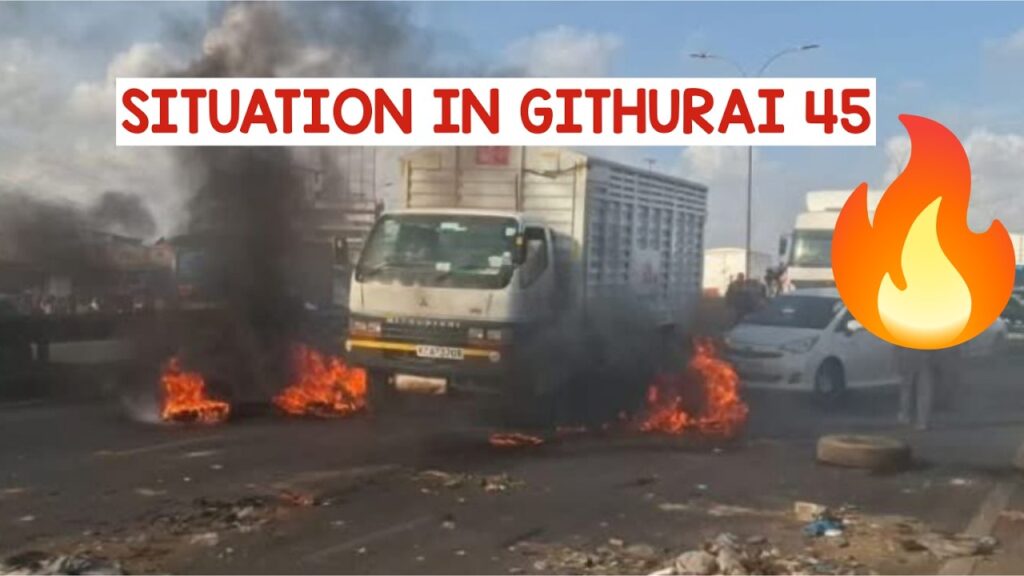
On Monday morning, May 18, 2026, protesters set a vehicle ablaze in Githurai as demonstrations against the nationwide matatu strike escalated along Thika Road.
Transport operators and residents demanded an immediate reversal of recent fuel price hikes and significant reforms to the government-to-government (G2G) fuel import program, which they believe has failed to stabilize prices and contributed to the increases.
Videos posted online captured thick black smoke rising from the burning vehicle. Protesters blocked parts of Thika Road with stones and burning tires, forcing motorists to turn back or abandon their vehicles and walk.
This incident occurred during a nationwide strike organized by the Transport Sector Alliance, which includes matatu operators, boda boda riders, truck drivers, and other transport workers protesting high fuel costs.
Commuters heading to Nairobi faced major disruptions, with long traffic jams reported along sections of Thika Road. Public transport vehicles remained off the roads in many areas as operators participated in the strike.
The alliance is urging the government to reverse the latest fuel price increase announced on May 14.
Protests in Githurai mirrored demonstrations in other regions of the country.
In Kitengela, protesters ignited bonfires with tires and blocked sections of Namanga Road with stones, rendering it impassable for several hours. Motorists had to find alternative routes as transport activities halted.
In Roysambu and other areas along Thika Road, protesters set up barricades while police monitored the situation.
The Kenya Red Cross reported that the strike disrupted movement in Nairobi, Kiambu, Kajiado, Machakos, Kisumu, Embu, Murang’a, and Makueni counties.
“Movement has been disrupted in several parts of the country due to the nationwide transport sector strike linked to fuel price increases,” the agency stated.
They noted that public transport, taxis, boda bodas, and cargo movement have all been affected.
Schools in some regions also experienced closures as students could not report to class due to the lack of matatus. Some parents kept their children home, while others had to walk long distances.
Transport operators contend that rising fuel costs have made business challenging and increased the overall cost of living.
They argue that higher fuel prices have led to increased transport fares, food prices, and the cost of basic goods.
National Treasury Cabinet Secretary John Mbadi defended the fuel prices, attributing the increases to global market pressures.
“In my view, the strike is completely uncalled for,” Mbadi stated during a television interview. “We are managing a global shock with domestic tools.”
He noted that the government had already reduced VAT and implemented fuel stabilization measures to support consumers.
Despite this, transport operators remain committed to the strike until the government addresses their concerns.