

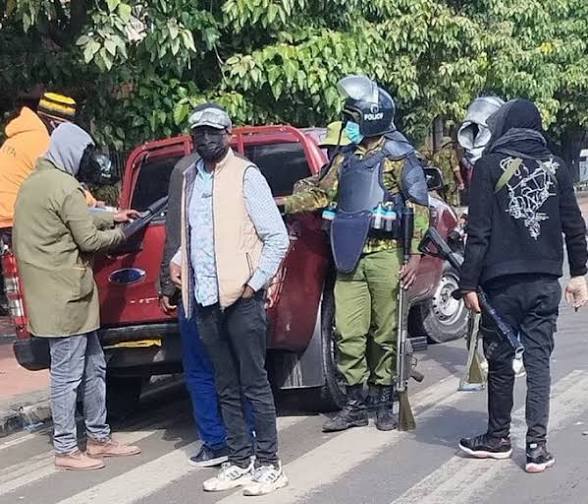
Rigathi Gachagua, the leader of the Democracy for the Citizens Party (DCP), has sent a compelling letter to Inspector General of Police Douglas Kanja, expressing serious concerns about the deployment of over 2,000 police officers to Ol Kalou in preparation for Thursday’s parliamentary by-election. Gachagua insists that all deployed officers should wear uniforms to ensure transparency and accountability.
In his letter, dated July 15, 2026, and shared on his official social media platforms, Gachagua highlighted potential interference in the electoral process by certain elements within the security apparatus. He called on the Inspector General to guarantee that the National Police Service remains neutral throughout the polling day.
The former deputy president emphasized the constitutional duty of the police to uphold law and order but argued that such a large deployment in Ol Kalou was unprecedented and could erode public trust in the electoral process.
Gachagua stated, “The deployment of over 2,000 police officers in Ol Kalou is unprecedented in our nation’s electoral history.”
He outlined several key demands, stressing that every officer should be easily identifiable. “All 2,000 police officers must wear uniforms, display their service numbers, avoid hooded appearances, and utilize clearly marked police vehicles,” he asserted.
Moreover, he urged the Inspector General to withdraw all plainclothes officers from the constituency, arguing that their presence could instill fear among voters and political agents. “To start, I encourage you to order the immediate withdrawal of all non-uniformed police officers deployed in Ol Kalou,” he stated boldly.
Gachagua raised significant concerns regarding election security, citing past incidents where DCP supporters and officials faced attacks during the campaign period. He referenced multiple occurrences, including an assault on party officials at a hotel in Ol Kalou, claims of campaign teams being pepper-sprayed by individuals he identified as plainclothes officers, damage to a campaign vehicle, and an attack on East African Legislative Assembly (EALA) MP Kanini Kega.
He questioned the lack of decisive action taken regarding these incidents, suggesting that if violence arises during polling, the security agencies would bear responsibility. “With such a historic number of officers, there should be absolutely no electoral violence. The presence of 2,000 police officers should ensure peace unless the officers themselves are the cause,” he wrote.
While Gachagua’s allegations remain unverified, the National Police Service had not publicly responded to his claims at the time of publication.
In his letter, Gachagua also reminded the Inspector General of the provisions in the Election Offences Act concerning the use of security agencies during elections. He cited Section 12 of the Act, which prohibits public officers or national security organs from coercing voters to support a specific candidate or political party. Gachagua urged the Inspector General to ensure that police officers maintain impartiality and protect the integrity of the electoral process.
This letter follows a statement from Inspector General Douglas Kanja, who assured residents that comprehensive security measures had been implemented to ensure peaceful elections in Ol Kalou. The National Police Service confirmed the deployment of additional security personnel to safeguard voters, election officials, candidates, and election materials before, during, and after polling.
While Gachagua claims over 2,000 officers are deployed, the police confirmed a deployment of 1,000 officers to ensure the integrity of the vote. The police also issued a warning against acts of violence, voter intimidation, and destruction of election materials, stating that anyone caught violating the law would face legal consequences.
The Ol Kalou by-election has garnered significant national attention, particularly after the Independent Electoral and Boundaries Commission (IEBC) raised alarms about escalating electoral offences that could threaten the credibility of the election. IEBC Chairperson Erastus Ethekon recently cited reports of voter bribery, violence, intimidation, and unauthorized campaign activities, warning that the Commission might postpone or cancel the election if such violations continued.
The Kenya National Commission on Human Rights (KNCHR) condemned the rising political violence and electoral malpractice, deploying monitors to observe the pre-election environment, polling day, and its immediate aftermath. Civil society organizations, including Amnesty International Kenya, have also called for strict enforcement of electoral laws and accountability for those involved in violence or voter bribery.
The Ol Kalou parliamentary by-election is viewed as one of the most politically significant contests since the reconstitution of the IEBC. Both the Kenya Kwanza administration and opposition parties are treating it as a crucial test of political strength ahead of the 2027 General Election. The outcome is expected to shape political narratives in the coming months, as attention remains focused on whether security agencies and electoral officials will deliver a peaceful, credible, and transparent election.


