

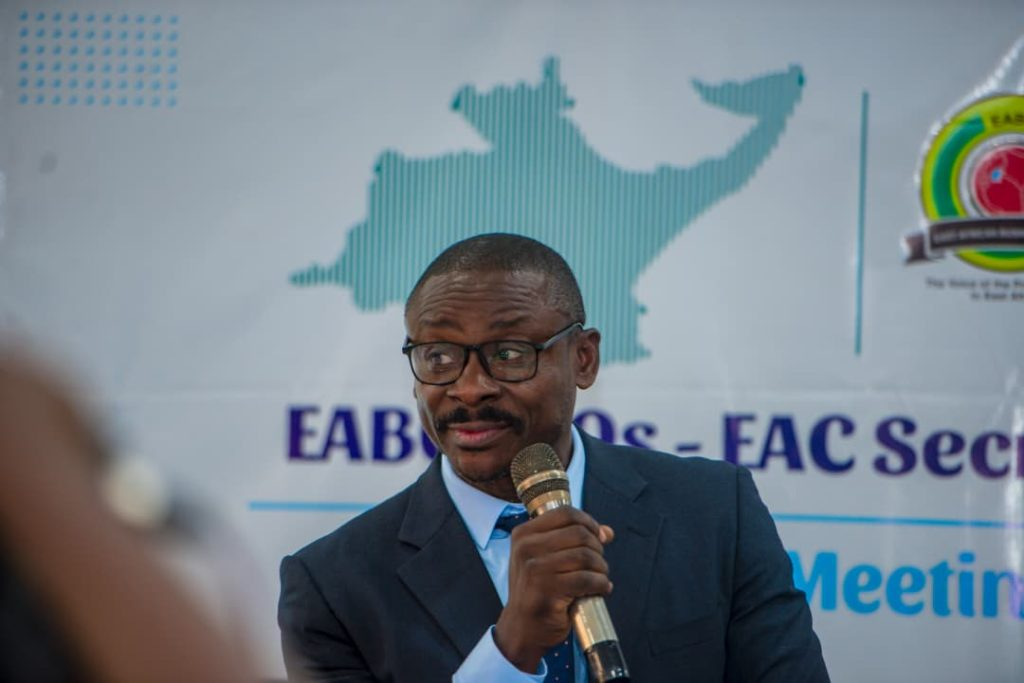
Burundi’s private sector has urgently called for decisive actions to eliminate non-tariff barriers (NTBs), reduce logistics costs, and enhance the business environment. These measures aim to unlock greater trade and investment within the East African Community (EAC).
This call to action emerged during the EABC CEO–Trade & Investment Roundtable in Bujumbura, which gathered government officials, chief executives, business associations, and development partners.
On September 6, 2026, the East African Business Council (EABC) released a statement highlighting that this meeting, convened in collaboration with the Federal Burundi Chamber of Commerce and Industry (CFCIB), served as a crucial consultation ahead of the East Africa CEO & Investment Forum 2026, scheduled for September 17–18, 2026, in Nairobi.
During the opening remarks, Severin Mbarubukeye, Burundi’s Permanent Secretary in the Ministry of Foreign Affairs, Regional Integration and Development Cooperation, emphasized the government’s commitment to enhancing public-private dialogue and removing trade barriers.
“The private sector is not merely a stakeholder; it is the driving force of our economy. Your perspectives must remain central to our policymaking processes,” stated Mbarubukeye.
He encouraged Burundian businesses to embrace the EAC as their home market while investing in innovation, skills development, digital transformation, and quality standards to boost their competitiveness.
Alice Irakoze, Director of Registration at the Burundi Development Agency, acknowledged the progress made in facilitating the movement of goods, services, and capital across the region. However, she cautioned that intra-EAC trade and investment still fall short of their potential due to persistent NTBs, regulatory discrepancies, inadequate infrastructure, logistics challenges, limited access to finance, and insufficient market information.
Irakoze identified key sectors with substantial investment opportunities in Burundi, including agriculture and agro-processing, livestock, mining, energy, infrastructure, tourism, ICT, manufacturing, and services.
CFCIB Secretary General Dennis Nshirimana advocated for stronger regional cooperation and practical interventions to tackle the challenges facing businesses.
“While challenges will persist, the focus should be on discovering effective solutions to the issues at hand,” Nshirimana remarked.
EABC Executive Director Ahmed Farah asserted that business competitiveness hinges on efficient operational conditions. These include reliable electricity, shorter transit times, access to foreign exchange and credit, quality suppliers, and expedited regulatory approvals.
Farah highlighted that Burundi’s aspirations under Vision 2040 necessitate immediate economic transformation and a reduced reliance on a narrow export base.
He urged increased productivity and value addition, particularly through enhanced agricultural yields, dependable energy sources, efficient logistics, and productive financing for small and medium-sized enterprises.
Farah also called on governments to establish stable regulations, predictable customs and approval processes, as well as transparent access to foreign exchange.
EABC Vice Chair Oliver Suguru stated that the roundtable aimed to identify and dismantle barriers preventing businesses from fully leveraging EAC integration and opportunities under the African Continental Free Trade Area (AfCFTA).
Suguru emphasized the need for stronger public-private dialogue, effective implementation and monitoring of regional commitments, harmonization of standards and taxes, compliance with the Common External Tariff (CET), liberalization of air transport and trade in services, and the full execution of the One Network Area.
Participants raised concerns about the challenges affecting trade, investment, production, logistics, financing, and access to regional markets. They urged both governments and the private sector to devise practical and measurable solutions.
The recommendations generated from this roundtable will contribute to discussions at the East Africa CEO & Investment Forum 2026, anticipated to convene businesses, investors, policymakers, and international stakeholders in Nairobi on September 17–18.
This initiative comes in light of President William Ruto’s directive for foreigners engaged in small-scale businesses, including hawking and petty retail, to cease their operations. He also indicated that the government would introduce legislation to identify businesses that should not be operated by foreign nationals.
“Monday, close these businesses. They do not discriminate against all those involved in small-scale enterprises,” he stated.