

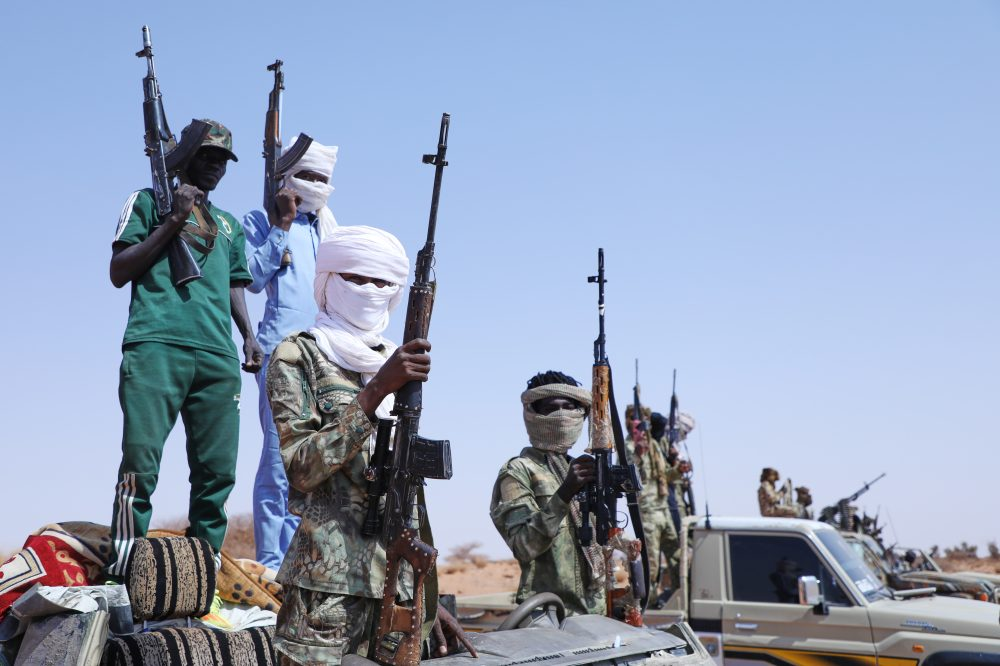
A recent United Nations (UN) investigation has uncovered a transnational network involving the United Arab Emirates, Chad, Libya, and Somalia, which facilitated the provision of weapons, military equipment, training, and personnel to Sudan’s Rapid Support Forces (RSF).
This extensive network has played a crucial role in enhancing the military capabilities of the RSF, enabling the use of advanced drones and other sophisticated weaponry, according to findings from the UN fact-finding mission.
The Independent International Fact-Finding Mission for Sudan has established “reasonable grounds to believe” that this transnational network supported RSF military operations through interconnected air, land, and maritime routes.
Individuals and entities associated with the United Arab Emirates, Chad, southeastern Libya, and Puntland in Somalia have been identified as key players in this network. These regions served as vital transit and logistical hubs for the transfer of weapons, personnel, and military supplies destined for areas controlled by the RSF.
The investigation revealed that various weapons and military equipment were transported along established routes through Bosaso in Puntland, Benghazi, Kufra, and Jufra in Libya, and Chad.
The equipment cataloged included NORINCO AH-4 155mm howitzers, FK-2000 air-defense systems, radars, armored vehicles, ammunition, weapons, and medical supplies.
The mission has confirmed these findings through authenticated imagery, which corroborates witness accounts involving some of the military systems. Additionally, the mission received credible information regarding CH-95 reconnaissance and strike drones, as well as electronic warfare capabilities and technical support.
Nyala Airport in Darfur emerged as a primary entry point for supplies into RSF-controlled regions.
Witnesses reported seeing boxes containing weapons and ammunition being unloaded from aircraft at the airport, which were subsequently distributed to RSF camps.
Further information indicated that RSF personnel, supported by Colombian contractors, launched drones from Nyala targeting areas controlled by the Sudanese Armed Forces, including parts of Kordofan and Khartoum states.
The report emphasized that the weapons and military capabilities significantly bolstered RSF operations during a conflict marked by serious violations of international humanitarian and human rights laws.
The investigation also highlighted the recruitment of former Colombian military personnel as a critical element of the network.
Starting from at least August 2024, Colombian nationals were recruited, trained, and deployed to assist RSF operations.
Estimates of their number ranged from 350 to 2,000. Based on credible independent information, including ongoing recruitment activities, the mission assessed that the total number could approach 2,000.
Entities registered in Colombia and the UAE were identified as being linked to recruitment and deployment efforts.
Some contractors reportedly were not informed during recruitment that they would be deployed to Sudan, while others received less compensation than specified in their contracts.
The report noted that Colonel Álvaro Andrés Quijano Becerra, identified as the founder of a key entity, operated out of Abu Dhabi, while his wife, Claudia Viviana Oliveros Forero, coordinated recruitment efforts in Colombia. Both were sanctioned by a UN Security Council committee in April 2026 for their roles in recruiting and deploying former Colombian military personnel to Sudan.
Witnesses described various routes into Sudan. Initial groups traveled through the UAE, Bosaso, and Benghazi before entering southern Libya and then Darfur. Later groups traveled through Bosaso or the UAE and then Chad, entering Sudan via Nyala.
Some recruits arriving in Dubai or Abu Dhabi were reportedly taken to a military-style facility in Ghayathi for approximately two months of training, which covered drone operations, indirect-fire systems, air defense, and other advanced weaponry.
Colombian contractors played a technical role in RSF operations, operating and maintaining surveillance, strike, and one-way attack drones.
Witnesses also indicated that they supported artillery and other advanced weapon systems, providing intelligence, technical maintenance, and military instruction.
In some instances, contractors retained responsibility for operating drone systems due to the lack of technical expertise within RSF ranks. The mission confirmed the recovery of drone controllers from a building in El-Fasher, used by Colombian contractors to launch drones.
Multiple sources placed Colombian contractors, including members of a group known as the “Desert Wolves” Battalion, in and around El-Fasher before, during, and after the RSF takeover.
The mission gathered verified open-source material showing Spanish-speaking contractors operating alongside RSF units. Witnesses reported Colombian nationals being captured in the area with loitering munitions, surveillance drones, and armed drones.
The UN stated that the collective evidence provided reasonable grounds to believe that foreign fighters, drone operators, technicians, and military specialists were integrated into RSF operations.
Private companies, intermediaries, and associated individuals operating across Colombia, the UAE, Chad, Libya, and Somalia facilitated elements of this support network. The mission called for further investigation into those who knowingly provided assistance contributing to international crimes.
While the UAE rejected accusations of providing military, financial, or logistical support to the RSF or recruiting and financing foreign fighters, deeming the claims unfounded, the UN mission acknowledged the UAE’s position. However, it concluded that individuals and entities operating from, registered in, or linked to the UAE significantly contributed to networks involved in the recruitment, financing, transportation, and deployment of foreign military contractors and related support for the RSF.
The mission did not find state responsibility on the part of Colombia, stating that private entities and individuals operating from or through Colombia participated in activities supporting the RSF.


