
The world now finds itself in a “danger zone of extreme weather,” as UN Secretary-General António Guterres has emphasized, with the global impacts of El Niño beginning to unfold.
Recent data from the World Meteorological Organization (WMO) indicates that this El Niño could be the most powerful in over 70 years, with effects lasting until at least February 2027.
El Niño significantly alters weather patterns worldwide, causing some regions to experience drought while others face intensified typhoons and flooding.
Forecasters predict that El Niño will elevate temperatures in various areas, exacerbating the already rising global heat caused by human-induced climate change.
“El Niño is evolving before our very eyes. The scientific evidence is unequivocal: our planet is navigating uncharted waters that are rapidly warming,” Guterres stated.
The BBC has engaged with governments and scientists to explore the global initiatives aimed at reducing risks of mortality, displacement, and environmental degradation. Enhanced early warning systems and proactive medical support are being implemented, but the magnitude of this event raises substantial concerns, particularly for vulnerable populations.
The WMO, a UN agency, has initiated a “major mobilization” effort to disseminate its forecasts of potential extreme weather events linked to El Niño to as many communities as possible.
WMO Secretary-General Celeste Saulo cautioned, “El Niño has the potential to inflict significant harm on communities and economies worldwide.”
El Niño is a natural phenomenon originating in the Pacific Ocean, characterized by shifts in wind patterns that allow warm water to spread eastward, releasing heat into the atmosphere.
In recent months, sea temperatures in the central and eastern tropical Pacific have surged sharply, signaling a strengthening El Niño.
In the key monitoring region of the Pacific, surface temperatures have exceeded 2°C above average, positioning it for classification as a “very strong” event.
Forecasts suggest that monthly sea surface temperatures may approach 4°C above average, potentially making this the strongest El Niño since at least 1950.
Remarkably, temperatures below the surface of the Pacific are even more extreme, exceeding 8°C above average in some areas.
Above-normal sea temperatures are also anticipated in other regions, including the Indian Ocean, tropical Atlantic, and parts of the Australian coast.
Given its rich marine biodiversity, Australia is particularly concerned about these changes in ocean heat.
In recent years, the country has faced marine heatwaves driven by climate change.
While El Niño is a natural occurrence, it often leads to extreme heat that exacerbates such disasters, according to Dr. Alistair Hobday, chief researcher at Australia’s science agency.
This year, forecasts predict that the Great Barrier Reef will avoid the worst conditions, allowing coral to recover.
“However, Southern Australia is facing severe challenges,” Hobday noted.
The last marine heatwave in South Australia and Tasmania resulted in starving penguins, fish kills, and jellyfish invasions.
Australia has recently implemented early warning systems for marine crises, providing essential time for financial relief for fisheries, relocation of vulnerable species, and enhanced coral monitoring.
Nonetheless, this event appears unprecedented, raising significant concerns for Hobday.
Reduced rainfall is expected to lead to drought and trade disruptions.
The WMO predicts notable shifts in rainfall patterns over the coming months, with drier-than-average conditions forecast for large areas of Southeast Asia, Central America, and northern South America, heightening the risk of droughts and wildfires.
On Thursday, vessel traffic through the Panama Canal is projected to decrease by over 10% in anticipation of reduced rainfall.
Approximately 14,000 ships navigate this vital waterway each year, which serves as a critical route for global trade and generates around $3 billion annually for Panama.
Indonesia is swiftly mobilizing to combat wildfires that have consumed over 107,000 hectares of land nationwide this dry season, facing an extended dry period.
A resident of Central Kalimantan shared, “I’ve been experiencing wildfires for over a month. The smoke is thick, causing our eyes to sting, and the odor is quite strong.”
Authorities are deploying cloud-seeding aircraft to induce rain and contain the fires, while the government has allocated resources for firefighting efforts and arrested individuals accused of using fire for land clearing.
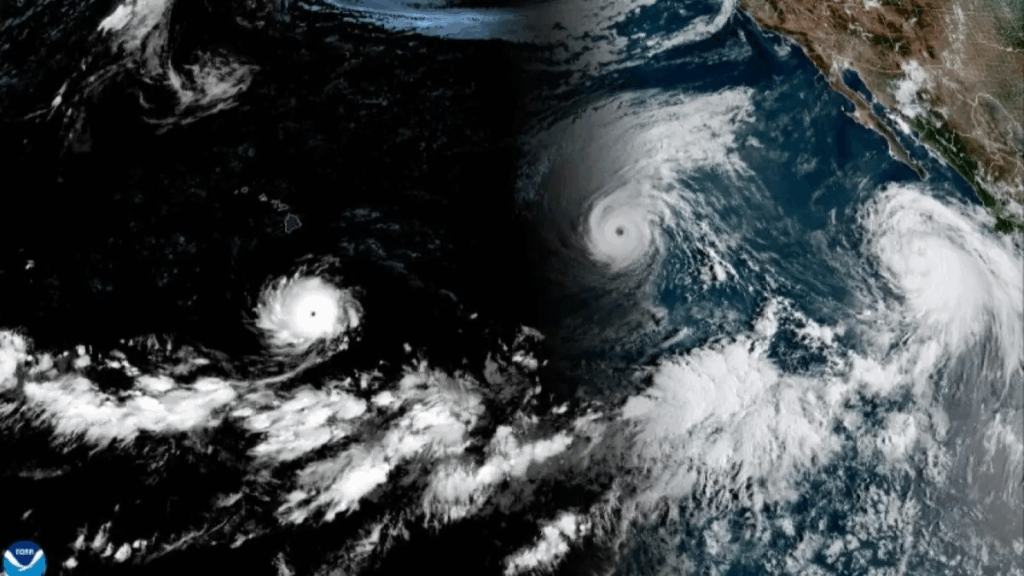
Meanwhile, China anticipates the landfall of seven typhoons this year, a situation experts attribute to the influence of a super El Niño.
In July, China experienced three typhoons—Bavi, Noul, and Maysak—that resulted in numerous fatalities.
In August, Typhoon Dolphin forced over one million people to evacuate due to heavy rains and strong winds.
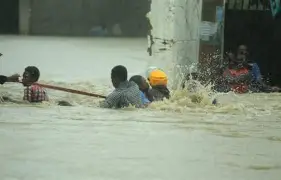
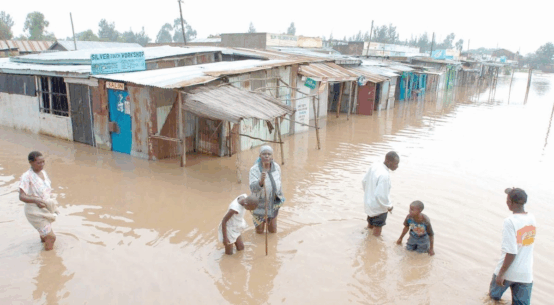
Similarly, regions of eastern Africa, southern Brazil, and the southern United States can expect wetter-than-average weather, increasing the likelihood of flooding.
“We are already witnessing disruptions and devastation from droughts and floods, and we anticipate these impacts will escalate as El Niño intensifies,” stated Prof. Celeste Saulo, WMO Secretary-General.
These events are compounded by long-term human-induced warming, potentially intensifying their effects. Some scientists suggest that climate change may be strengthening El Niño events, although this remains uncertain.
Peru is particularly susceptible to El Niño due to its coastline along the eastern Pacific.
Historically, parts of Peru, Ecuador, and Brazil have experienced increased rainfall leading to flash flooding and landslides, especially in urban areas where drainage is limited.
Miguel Aréstegui, climate resilience lead at Practical Action, remarked, “We are deeply concerned, but this concern must translate into preparedness rather than panic.”
He highlighted that Practical Action has collaborated with partners to improve public access to early warning systems, sharing vital information about river levels, flood risks, and weather forecasts.
At the end of last month, the United States announced the deployment of the vessel USNS Comfort to the Peruvian coast to provide additional medical assistance and technical resources as El Niño peaks.
However, Aréstegui emphasized that El Niño “does not occur in isolation.” Structural challenges, such as housing in vulnerable areas, fragile water and sanitation systems, and inadequate healthcare infrastructure, exacerbate the impact of such events.