

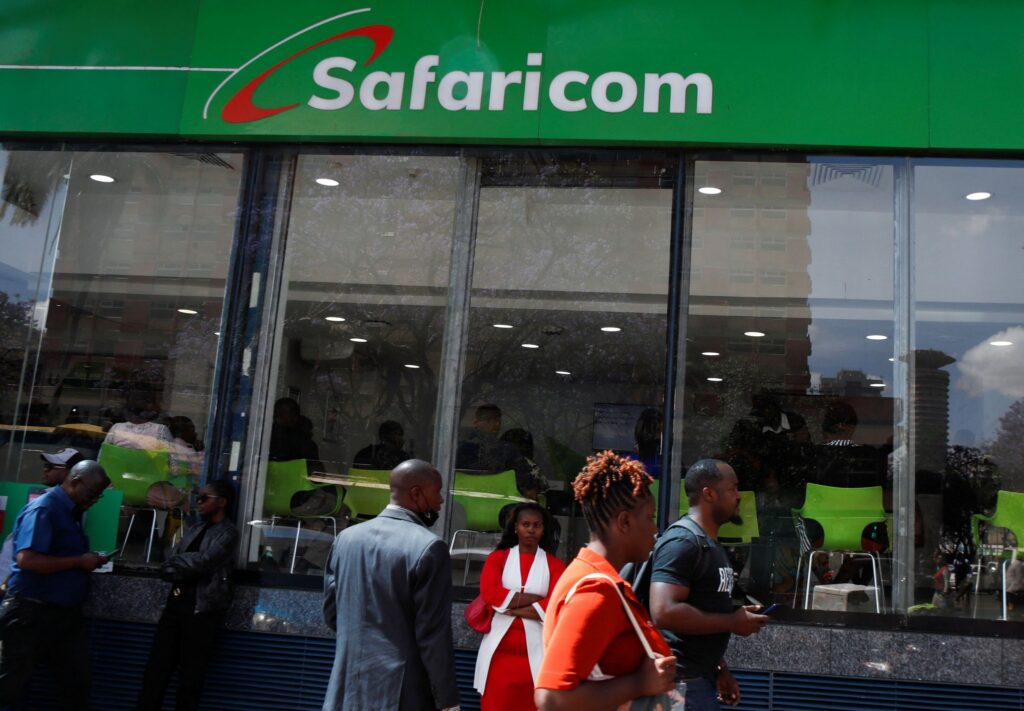
The Kenyan government’s decision to sell a 15 percent stake in Safaricom has initiated one of the most significant shifts in ownership for East Africa’s leading telecommunications company. While this move has sparked discussions about the state’s diminished shareholding, it also raises an important question for millions of Safaricom customers and investors: who holds the reins of the company now?
Safaricom continues to be a publicly listed Kenyan entity, but now Vodafone Kenya Limited stands as the largest shareholder, controlling 55 percent of the business after this transaction. The Government of Kenya maintains a 20 percent stake, while the remaining 25 percent is held by institutional and retail investors through the Nairobi Securities Exchange (NSE).
Previously, the ownership landscape looked quite different. The government held 35 percent, Vodafone owned about 40 percent, and the public controlled the remaining quarter. By selling off 15 percent of its stake, the government stepped back from being a major co-owner, allowing Vodafone Kenya to assume majority control.
Despite this change, the government emphasizes that it has not lost its strategic influence over Safaricom. National Treasury Cabinet Secretary John Mbadi framed the transaction as a key part of a larger strategy to unlock capital for development without raising taxes or increasing public debt.
“This transaction marks an initial step in the President’s agenda to innovatively free up capital without burdening the taxpayer,” Mbadi explained, noting that Safaricom remains “a vital strategic investment” since the government retains a 20 percent stake and board representation.
The Treasury anticipates generating approximately Ksh204 billion from the sale of these shares. Furthermore, Vodafone Kenya has committed to making an upfront payment of Ksh40.2 billion for the right to future dividends that would have otherwise benefited the government’s remaining 20 percent ownership for a designated period. Altogether, these arrangements will inject around KSh244 billion into government funds.
For Vodafone and its South African subsidiary Vodacom, this acquisition is more than just an investment in Kenya’s largest telecommunications provider. Vodacom Group Chief Executive Shameel Joosub highlighted that gaining majority control of Safaricom enhances the company’s position across Africa and opens doors to expand digital financial services beyond Kenya.
“Securing a controlling stake in Safaricom solidifies our role as a market leader and unlocks new avenues for driving digital and financial inclusion at scale in Kenya and Ethiopia,” Joosub stated.
The acquisition also streamlines what was once a complicated ownership structure. Previously, Vodafone Group and Vodacom jointly owned Vodafone Kenya. Following an internal restructuring, Vodacom now fully owns Vodafone Kenya, making Safaricom a majority-controlled subsidiary within the larger Vodacom Group.
Safaricom Chief Executive Peter Ndegwa reassured customers and investors that these ownership changes will not disrupt the company’s operations.
“Vodacom has been a reliable partner in Safaricom’s journey from the start, and we appreciate their ongoing commitment and long-term investment in our business,” Ndegwa remarked, emphasizing that the company will continue to prioritize innovation, regional growth, and digital financial services.
For millions of Kenyans, this ownership restructuring is unlikely to alter their everyday experience. Safaricom will still operate under Kenyan law, remain listed on the Nairobi Securities Exchange, and be regulated by the Communications Authority of Kenya, the Capital Markets Authority, and the Central Bank of Kenya concerning M-Pesa. The company’s board, management team, and corporate governance responsibilities will also remain intact.
What does change is the corporate control. With a 55 percent stake, Vodafone Kenya now wields majority voting power over shareholder decisions. However, certain strategic matters will still be governed by Kenyan company law, stock exchange regulations, and board oversight.
This sale also concludes another chapter in Safaricom’s ownership evolution. Established in 1997 as a subsidiary of Telkom Kenya, Vodafone acquired a 40 percent interest in 2000. In 2008, the government floated 25 percent of the company on the Nairobi Securities Exchange, marking one of Kenya’s most successful initial public offerings. Nearly two decades later, this latest transaction further lessens the State’s ownership while solidifying Vodafone’s influence over a company that serves over 50 million customers across Kenya and Ethiopia, maintaining its status as one of Africa’s most valuable listed technology firms.


