

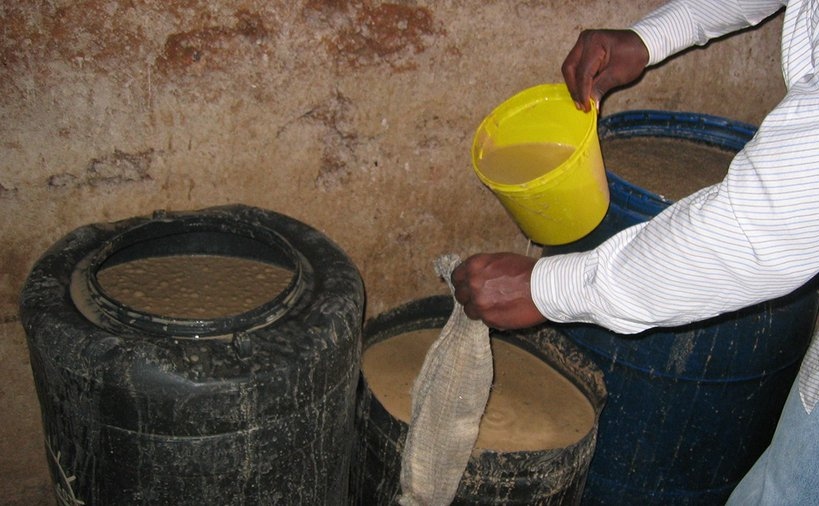
Residents of Busia are advocating for a legal framework to regulate the production, sale, and consumption of busaa, highlighting its significant cultural and economic contributions.
In a concerted effort, residents, traders, and cultural stakeholders have submitted a petition to the Busia County Assembly, urging the creation of legislation and regulations to protect and formalize this traditional brew.
Veteran journalist Kennedy Epalat presented the petition, which was received by senior serjeant-at-arms Patrick Oroni on Monday.
The petitioners emphasize that the need for legalization arises from the fact that many Kenyans travel to Uganda to enjoy the same brew, where it is both legal and regulated. They are calling for a similar framework to be established locally.
Busaa, a traditional drink crafted from maize and millet through fermentation, is identified in the petition as a vital part of social life in Western Kenya. It serves essential roles in ceremonies such as marriages, initiation rites, dispute resolution, and community gatherings.
The petitioners further contend that thousands of households—particularly women and youth—rely on brewing and selling busaa for their livelihoods. However, the sector remains largely informal, which exposes participants to legal uncertainties and enforcement challenges.
“Despite its significance, the busaa brew faces inadequate regulation and frequent criminalization, which subjects brewers to harassment, exploitation, and unsafe practices,” the petition states.
Among the proposed measures is the enactment of a county law that recognizes busaa as a legitimate economic activity, alongside the implementation of a simplified and affordable licensing system for those involved in the trade.
Additionally, they seek the establishment of clear hygiene and safety standards, designated consumption zones, protection for licensed brewers from harassment, and the promotion of busaa as both a cultural and tourism asset.
Other recommendations include training programs for brewers to enhance production standards and fair taxation mechanisms aimed at boosting county revenue.
Following the presentation of the petition, Epalat remarked that the Alcoholic Drinks Control Act of 2010 fails to adequately address the unique needs of traditional brews.
He pointed out that the lack of a clear county framework has led to unsafe brewing practices, including the use of harmful additives, and has resulted in significant revenue losses for the county.
Epalat emphasized that county governments possess both the authority and responsibility to regulate traditional brews effectively, as outlined in Article 11 of the Constitution regarding culture and heritage, as well as the Fourth Schedule.
If approved, Busia could become a model for other counties by developing a comprehensive legal framework specifically designed for traditional brews, striking a balance between cultural preservation and modern regulatory standards.
Observers suggest that if the proposals are implemented, they could formalize the sector, enhance public health standards, and create economic opportunities through job creation and increased county revenue.
Instant Analysis
The movement to legalize and regulate busaa in Busia illustrates a broader conflict between cultural preservation and public health regulation. Advocates present the brew as both a cultural heritage asset and an informal economic lifeline for many households, particularly for women and youth. However, implementing regulation raises critical policy questions surrounding safety standards, taxation, and enforcement capabilities at the county level. Should the proposed framework be adopted, it could formalize a long-overlooked sector, mitigate unsafe brewing practices, and expand revenue streams for the county. This initiative may also set a precedent for other counties grappling with similar issues, marking a significant shift towards the structured recognition of indigenous alcohol economies.