
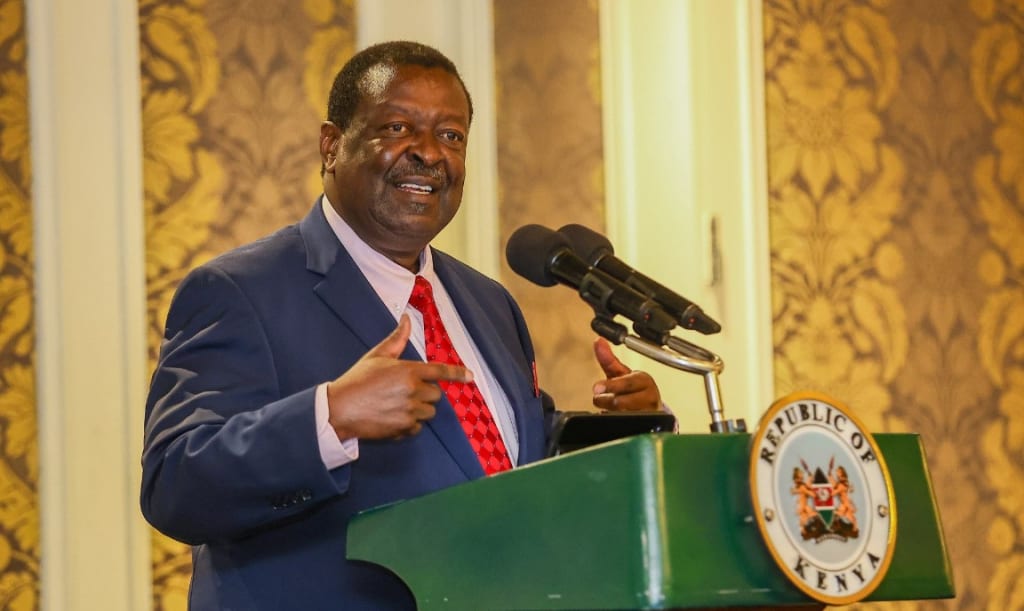
Prime Cabinet Secretary Musalia Mudavadi explained why Kenya must hold a referendum in 2027 with the General Elections.
He said it would protect the elections and fix key gaps in the constitution.
At a press briefing, Mudavadi called this time a “Constitutional Moment.” He stressed the need for quick legal and structural changes.
He stated clearly that Kenya needs a constitutional review 15 years after the 2010 Constitution took effect. The country faces a big legal problem. The 2027 election might get canceled before it starts.
Mudavadi noted the 2010 Constitution calls for boundary reviews every eight to 12 years. The last deadline passed on March 6, 2024.
We now break constitutional rules. No valid national census means no boundary review. Courts threw out the 2019 census in Mandera, Wajir, and Garissa. A small census for those areas won’t finish until January 2026.
Kenya’s population has grown a lot. Yet Article 89(4) caps constituencies at 290.
Without changes to the constitution, the IEBC can’t add seats for fast-growing areas. Some protected constituencies could disappear.
Mudavadi pointed to county issues too. The 2010 Constitution lets the IEBC change assembly wards. But the County Governments Act caps them at 1,450. This causes legal confusion.
He suggested fixes like locking the NG-CDF into the constitution to guard kids’ school bursaries. He wants a Senate Oversight Fund and a Ward Development Fund. These would send money straight to grassroots for water points and community halls.
To show a united Kenya in government, formalize the Prime Minister’s office and the Leader of the Official Opposition. This way, every region sees itself in government.
The referendum could also make the two-thirds gender rule work fully. That brings fair and open democracy.
No good population data means no boundary fixes. That means no real general election. Ignore this, and we risk our constitutional order.
Mudavadi said a 2027 referendum is a legal must. It would align laws, lock in constituency funds, and make elections follow the constitution.
His words have started talks in political and civic groups. He sees this as a key point for Kenya’s democracy and leadership.