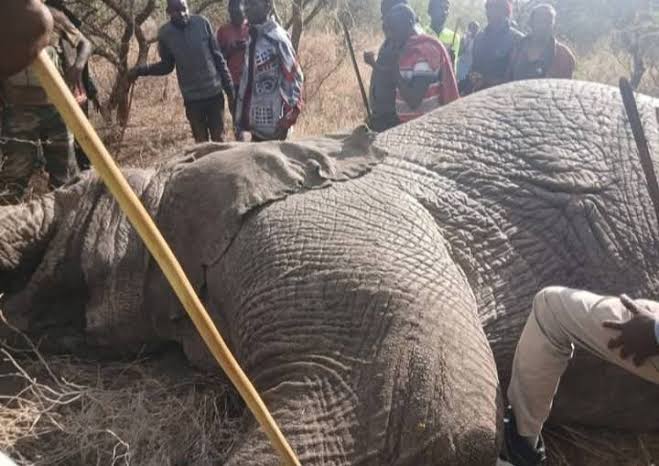
Kenya Wildlife Service (KWS) has shared new insights regarding the unfortunate deaths of 14 elephants in Amboseli National Park.
In a recent phone interview with a local TV station on July 28, 2026, KWS Head of Communications Duncan Juma reported that preliminary investigations suggest the introduction of a toxic substance into the ecosystem may have contributed to these deaths.
Juma explained that 10 of the elephants displayed similar clinical symptoms, including partial paralysis, leading to their collapse and subsequent death within one to two days. Unfortunately, the remaining five carcasses had either significantly decomposed or been scavenged, hindering the determination of their exact cause of death.
“Of the 10 elephants, each exhibited similar clinical symptoms, including partial paralysis that prevented them from standing before they succumbed within one to two days. The remaining five carcasses were either too decomposed or scavenged, making it impossible to identify the cause of death,” Juma conveyed to the local TV station.
KWS is taking further steps to investigate this matter thoroughly.
Juma also reassured Kenyans and nearby communities that, to date, there is no evidence indicating that the suspected toxin poses a threat to human health. He emphasized that investigations are ongoing, and KWS will provide updates once laboratory analyses are complete.
In the meantime, Kajiado leaders are urging the Kenya Wildlife Service (KWS) to expedite the investigations into the deaths of 15 elephants in the Amboseli ecosystem and to publicly disclose the findings. They warned that this incident could endanger one of Kenya’s most iconic elephant populations.
Led by Kajiado Governor Joseph Ole Lenku, the leaders criticized KWS for not providing timely answers following the discovery of elephant carcasses of varying ages and sexes at several locations within Amboseli National Park in June.
After a consultative meeting with KWS officials on July 28, 2026, the leaders expressed their concerns to the media, noting that these deaths are unprecedented and have created anxiety among local communities that have coexisted with wildlife for generations.
“Park ina kufa. Wiki zilizopita nilitangaza kwamba ndovu kumi na nne wamekufa kwa muda wa wiki tatu. Tukio kama hili hatujawahi kuona,” Ole Lenku stated.