

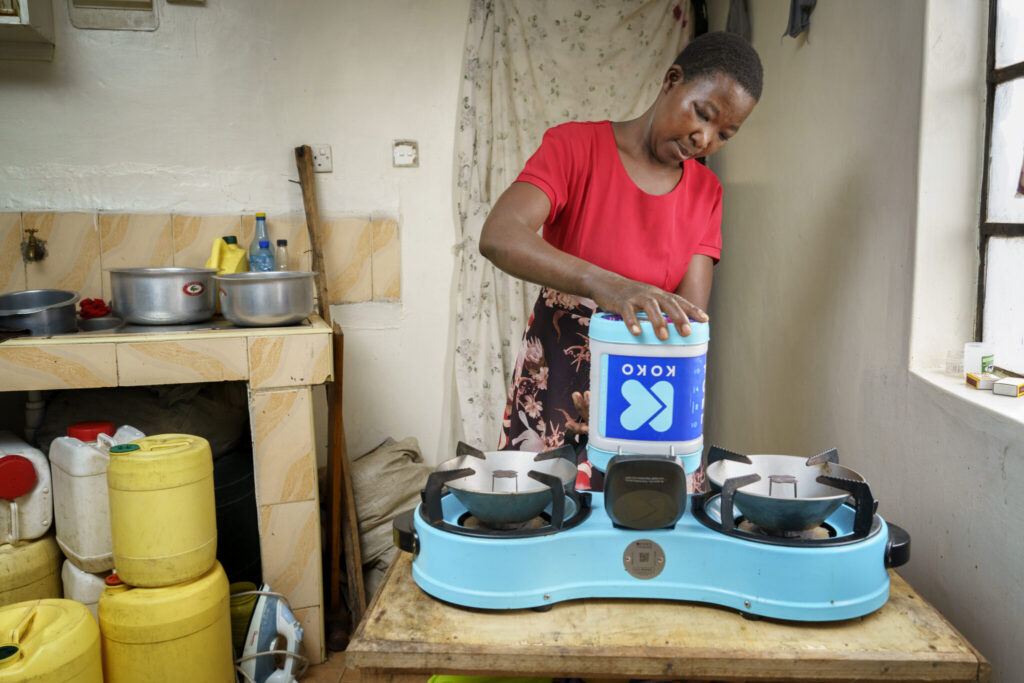
The abrupt shutdown of KOKO Networks has triggered a significant upheaval across Kenya, leaving both employees and customers in a state of shock.
Hundreds of employees found themselves grappling with uncertainty as the company suddenly ceased operations, many learning of this decision without prior warning. This unexpected closure has not only jeopardized livelihoods but also marked the end of one of the nation’s most ambitious clean-cooking initiatives.
The fallout from KOKO’s closure reached far beyond its workforce. Hundreds of thousands of customers awoke to discover that a vital service they relied on had vanished overnight.
For numerous households and small businesses, this shutdown disrupted an essential daily requirement: cooking fuel.
Estimates suggest that up to 1.5 million households in Kenya depended on KOKO’s ethanol fuel as a more affordable and cleaner alternative to charcoal and kerosene.
Sources indicate that the decision to shut down followed two days of intense discussions at the company’s Nairobi headquarters. Once the decision was made, the implementation was swift and comprehensive. Fuel distribution ceased, thousands of automated refill machines were deactivated, and employees were instructed to refrain from reporting to work.
The closure was communicated through mass text messages sent to employees and customers on January 31.
KOKO Networks was not merely a fragile startup; founded in 2013, the company had evolved into one of Kenya’s most prominent clean-energy enterprises, operating over 3,000 automated ethanol dispensing machines across urban and peri-urban regions.
Throughout its existence, KOKO raised more than US$100 million in debt and equity from major international investors, including Verod-Kepple, Rand Merchant Bank, Mirova, and the Microsoft Climate Innovation Fund, with additional backing from World Bank-aligned institutions.
This substantial financial support reflected robust global confidence in clean cooking as both a development and climate solution, as well as in carbon markets as a means to address affordability gaps in emerging economies.
KOKO strategically positioned itself at the intersection of these trends, presenting a model that aimed to combat deforestation, indoor air pollution, and energy poverty simultaneously.
Central to KOKO’s operations was a business model based on carbon credits—certificates issued for verified reductions in greenhouse gas emissions. By encouraging households to transition from charcoal or kerosene to bioethanol, KOKO reduced carbon emissions and earned carbon credits for every tonne of emissions avoided.
These credits were subsequently sold on international markets to companies seeking to offset their own emissions. Revenue generated from carbon credit sales subsidized both fuel and cookstoves for low-income households.
Ethanol refills were priced as low as Sh30, making them considerably cheaper than charcoal in many urban locations. Cookstoves were sold at approximately $12 (Sh1,500), significantly below the market price of around $115 (Sh13,000).
This pricing strategy enabled KOKO to scale rapidly, integrating its fuel into the daily lives of millions of Kenyans. The fuel became a staple in many low-income households, celebrated for its affordability, efficiency, and environmental benefits.
Beyond financial savings, ethanol significantly diminished indoor air pollution, a major contributor to respiratory illnesses, particularly among women and children. The shift from charcoal also supported forest conservation efforts by reducing the demand for wood fuel, a leading factor in deforestation in Kenya.
However, this entire business model hinged on one crucial regulatory approval: a Letter of Authorization from the Kenyan government. This letter permitted KOKO to sell all carbon credits generated by its operations on international markets. Without it, the company could not monetize the emissions reductions that financed its subsidies.
Sources reveal that the government’s refusal to issue the authorization became a critical point of failure for the business. Once the letter was denied, the repercussions were immediate and severe. Without access to carbon credit revenues, KOKO could no longer offer fuel and stoves at subsidized prices.
Executives determined that the company would be unable to fulfill its financial obligations, leading to the decision to shut down. This conclusion followed days of internal deliberations as management assessed whether operations could persist under any alternative financing arrangement.
Ultimately, they concluded that without government approval to sell carbon credits, the business was no longer viable. Staff received notification of the closure on Friday and were instructed not to report to work, according to multiple sources.
The shutdown affects more than 700 direct employees, including engineers, logistics personnel, customer service representatives, and corporate teams. Additionally, thousands of agents who operated KOKO’s extensive distribution network now face the loss of a critical income source. For many, the sudden cessation of operations has left little time to prepare for the loss of jobs and commissions.
Beyond the immediate employment impact, the closure raises broader concerns for Kenya’s clean-energy transition. An estimated 1.5 million households that had adopted bioethanol as an alternative to charcoal and kerosene now confront uncertainty regarding their cooking options.
Energy experts caution that many households may revert to charcoal, potentially reversing progress in forest conservation, public health, and emissions reduction.
KOKO’s demise also underscores the vulnerabilities facing climate-dependent business models in emerging markets, particularly those reliant on regulatory approvals and international carbon markets. While carbon credits have been promoted as a tool to finance climate solutions in low-income settings, the KOKO case illustrates how policy decisions can abruptly alter the viability of such ventures.
Once celebrated as a flagship example of how private capital could bolster climate action and development goals, KOKO Networks’ sudden closure has left customers stranded, workers unemployed, and investors facing significant losses.