

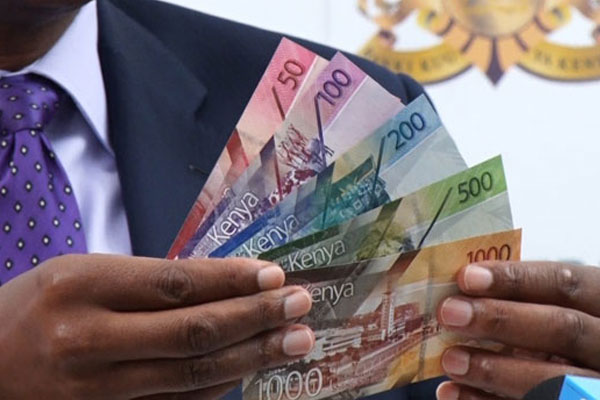
The Kenyan shilling demonstrated stability against major international and regional currencies in the week ending March 26, 2026, despite a decline in Treasury bill interest rates, as reported by the Central Bank of Kenya (CBK) in its Weekly Bulletin on March 27.
On March 26, the shilling traded at Ksh129.72 per US dollar, a slight increase from Ksh129.52 on March 19. This minimal change of 20 cents reflects limited volatility in the foreign exchange market during the review period.
The local currency also maintained its value against key currencies such as the Sterling Pound and the Euro, as well as regional currencies like the Ugandan and Tanzanian shillings.
Foreign Exchange Reserves Remain Strong
According to CBK data, Kenya’s foreign exchange reserves reached Ksh1.82 trillion as of March 26, which equates to 6.0 months of import cover.
“The foreign exchange reserves stood at USD 14,022 million (6.0 months of import cover) as of March, exceeding CBK’s statutory requirement of at least 4 months,” stated a recent post from the CBK.
This level of reserves continues to surpass the statutory requirement, bolstering the stability of the shilling and supporting the country’s external payment position. Throughout March, reserves fluctuated between 6.0 and 6.2 months of import cover.
Decline in Treasury Bill Rates
Treasury bill interest rates saw a decrease during the auction on March 26.
CBK data indicated that the auction received bids totaling Ksh10.9 billion against an advertised amount of Ksh24.0 billion, yielding a performance rate of 45.5 percent.
Interest rates across all three tenors fell during the auction. The average interest rate on the 91-day Treasury bill dropped to 7.426 percent from 7.568 percent the previous week. The 182-day Treasury bill decreased to 7.829 percent from 7.840 percent, while the 364-day Treasury bill fell to 8.282 percent from 8.345 percent.
“The Treasury bill auction on March 26 attracted bids worth Ksh10.9 billion against an advertised Ksh24.0 billion, reflecting a performance of 45.5 percent. Interest rates for the 91-day, 182-day, and 364-day Treasury bills all declined,” the CBK noted.
Additionally, CBK data revealed that domestic debt stood at approximately Ksh7.14 trillion as of March 20, with Treasury bills and bonds making up the majority of government securities. Financial corporations, especially commercial banks, continued to hold the bulk of these securities.
Liquid Money Market
The money market remained liquid during the review week, with active open market operations. Commercial banks’ excess reserves averaged Ksh9.6 billion above the 3.25 percent Cash Reserve Ratio requirement.
During this period, the Kenya Shilling Overnight Interbank Average Rate (KESONIA) experienced a slight increase to 8.73 percent on March 26, up from 8.68 percent the previous week.
The average value of interbank transactions rose to Ksh13.4 billion, compared to Ksh13.2 billion from the previous week, although the number of deals decreased from 24 to 18.


