

Retired President Uhuru Kenyatta may have left State House nearly three years ago, but his influence still looms large over Kenya’s political landscape, creating ripples for President William Ruto and his team as the 2027 General Election approaches.
Although Uhuru claims to step back from active politics, his recent endorsements and control of the Jubilee Party have unsettled the Kenya Kwanza administration.
He plays a crucial role in reshaping the opposition and political discussions nationwide, especially in Mt Kenya, where he retains strong loyalty.
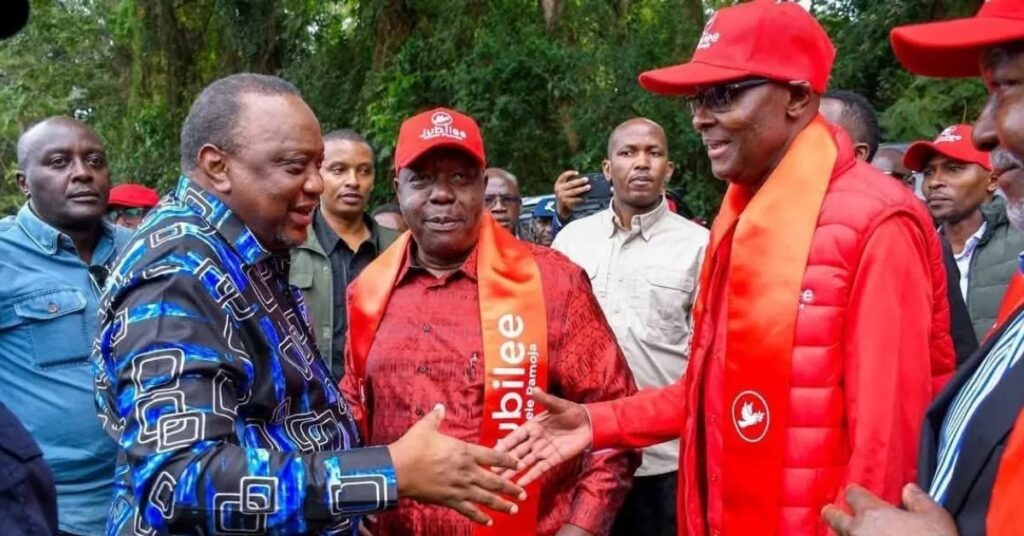
During a Jubilee delegates meeting in Kiambu County, Uhuru clarified that he is not engaged in partisan politics, focusing instead on guiding a constitutional leadership transition within the Jubilee Party.
“We are here to discuss the future of our Jubilee Party, addressing the challenges we face, many of which stem from external sources,” Uhuru noted.
“Since my departure from the presidency, I have worked to unite the Jubilee Party and prepare new leaders within our constitutional framework.”
Uhuru pointed fingers at unnamed political figures who have stalled the party’s reorganization through lengthy legal disputes.
“Some chose to take us to court, wasting two to three years when we aimed to let the public elect their leaders. I am in the handover process, yet some claim I’m engaging in politics. If they had allowed me, we’d be done by now,” he expressed.
Tensions between Uhuru and the Kenya Kwanza leadership are rising, with Ruto’s allies accusing the former president of covertly supporting opposition movements while enjoying taxpayer-funded retirement benefits.
This political rift dates back to the contentious 2022 General Election, when Uhuru supported Raila Odinga over his deputy Ruto, a divide that remains unhealed.
In Mombasa, UDA Secretary General Hassan Omar criticized Uhuru, accusing him of funding anti-government initiatives.
“Our true adversary is the former president who has betrayed us and must be stopped,” Omar asserted.
Concerns about Uhuru’s influence are mounting within Kenya Kwanza, particularly in Central Kenya, where Ruto is working hard to secure support for the upcoming election.
Uhuru’s ability to mobilize resources and key political figures poses a significant challenge to Ruto’s strategists.
The situation intensified after Uhuru endorsed former Interior Cabinet Secretary Fred Matiang’i for the presidency, calling him a capable leader ready to lead the nation.
This endorsement signals Uhuru’s intent to remain politically relevant as the 2027 succession conversations unfold.
Ruto’s allies reacted quickly, accusing Uhuru of abandoning the expected neutrality of retired leaders.
Senate Majority Leader Aaron Cheruiyot advised Uhuru to respect his retired status to maintain public esteem.
“If you act like a retired president, people will respect you. Misbehavior will lead to consequences,” Cheruiyot warned.
Nandi Senator Samson Cherargei escalated the rhetoric, threatening to seek the withdrawal of Uhuru’s retirement benefits for violating laws governing retired presidents.
“The law allows us to revoke benefits if a retired president does not exit politics. We plan to act on this next week,” Cherargei declared.
Cherargei has introduced a motion in the Senate to review Uhuru’s benefits under the Presidential Retirement Benefits Act, arguing that these privileges depend on political neutrality post-office.
The motion proposes withdrawing or reducing Uhuru’s retirement benefits and calls for an audit of public resources allocated to him since his retirement.
Cherargei’s motion claims Uhuru’s participation in rallies and politically charged statements constitutes active engagement in political activities, contrary to the law.
Despite the mounting political pressure, Uhuru’s supporters assert that he has every right to express his political views and back leaders of his choice.
However, the backlash from Kenya Kwanza leaders indicates that Uhuru’s political presence remains a vital factor in Kenya’s evolving succession politics, potentially shaping alliances and influencing voter behavior as we approach the 2027 elections.


