

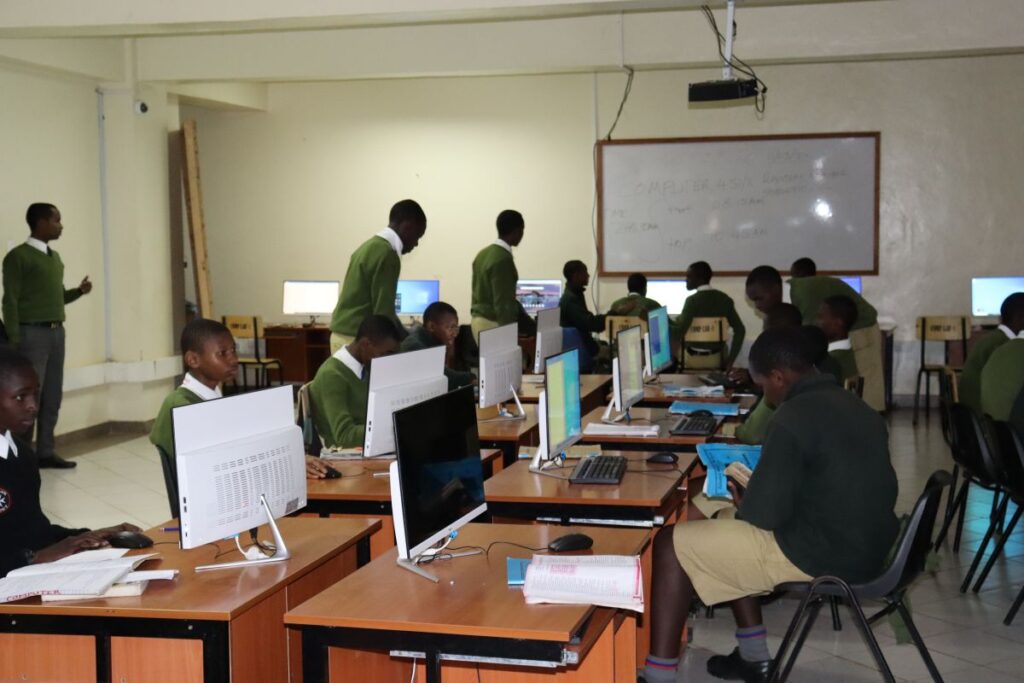
For nearly two decades, Kenya has been on a mission to create digitally empowered classrooms. From early laptop programs to the Competency-Based Education (CBE) curriculum, technology has been seen as the key to transforming learning and readying our youth for a fast-changing world.
Recently, the government kicked off the distribution of laptops and interactive smart boards to 10,382 Junior Secondary Schools nationwide. While this marks a significant milestone, education experts emphasize that the real challenge is improving learning outcomes, not just distributing gadgets.
Through the Kenya Digital Economy Acceleration Project (KDEAP) and with World Bank support, each targeted school will receive a teacher laptop and a 65-inch interactive smart board. Government officials view this initiative as a vital investment in our future workforce and digital competitiveness.
“We’re not just rolling out devices; we’re investing in our children’s future. We want learners to not only use technology but to innovate and solve community challenges,” said Principal Secretary for Broadcasting and Telecommunications, Stephen Isaboke.
This move reflects a global shift in education policy, focusing on digital skills and problem-solving abilities essential for future economies. For Kenya, the stakes are particularly high as AI and automation reshape job markets.
While digital tools are critical for developing technological fluency, technology alone won’t guarantee success. Past initiatives in Africa show that many digital projects faltered when devices arrived before the necessary support systems. Issues like unreliable electricity and insufficient teacher training often hindered their effectiveness.
Recognizing these challenges, officials stress that this rollout is part of a broader strategy. “The real value lies in the impact on classrooms. We aim for more interactive lessons, richer content, and schools as hubs of innovation,” said Jessy Maruti, CEO of the ICT Authority.
His insights highlight that educational transformation relies as much on how technology is utilized as on the technology itself.
Bridging Kenya’s digital divide is crucial. Digital devices can enhance learning, but their potential is limited without reliable internet access. Progress is underway, with over 30,000 kilometers of fiber optic infrastructure deployed and more than 8,000 public institutions connected.
The goal now is to ensure that rural and underserved schools benefit equally from these investments. World Bank officials believe these devices can help reduce educational inequalities by providing access to engaging content, no matter the location.
“These tools will make lessons more visual and interactive, supporting early digital literacy and helping young Kenyans develop essential skills for today’s job market,” said KDEAP Task Leader Aneliya Muller.
Her comments underline a broader economic perspective—digital literacy is crucial for participating in modern economies. Countries that don’t equip youth with these skills risk widening employment and income gaps.
For policymakers, this rollout is about more than education; it’s about national competitiveness. “Today’s launch is a key milestone in Kenya’s digital transformation. By integrating technology into classrooms, we prepare learners for success in the Fourth Industrial Revolution and bolster Kenya’s status in the digital economy,” said Dagoretti South MP John Kiarie, Chairperson of the National Assembly Committee on Communication, Information and Innovation.
As thousands of devices make their way to schools, the true success of this initiative will be measured by classroom engagement, not just distribution numbers. If teachers are empowered, connectivity improves, and learners are actively engaged, these smart boards can transform education. If not, they risk becoming mere symbols of unfulfilled potential.
The coming years will reveal whether Kenya’s latest digital learning investment bridges the gap between access and meaningful learning or if there are still lessons to learn in this digital classroom revolution.