

The Kenya National Highways Authority (KeNHA) has issued a seven-day notice to traders operating along sections of the Thika Superhighway, mandating them to remove all structures and merchandise from the road reserve.
On the evening of February 23, 2026, KeNHA announced via its X account that this directive specifically targets busy trading areas, including Kihunguro, Allsops, and Delview. The authority emphasized that it would enforce compliance with highway regulations, warning that any failure to adhere to this notice would result in action after the designated timeframe.
In a statement, KeNHA expressed, “The Kenya National Highways Authority (KeNHA) wishes to notify all roadside traders operating along the Thika Superhighway at Kihunguro (both bounds), Allsops (both bounds), and Delview Sections to remove and clear their wares from the road reserve within seven days from the date of this notice.”
This directive will take effect at the conclusion of the seven-day period, allowing traders until February 30, 2026, to vacate the road reserve.
KeNHA highlighted that roadside encroachments obstruct visibility and narrow the carriageway and shoulders, thereby increasing the risk of accidents, particularly on busy roads.
The announcement follows recent clearance operations in Githurai 45, where temporary structures and makeshift stalls were demolished. KeNHA stated that these actions are part of an ongoing initiative to reclaim illegally occupied road reserves, thereby enhancing safety on one of Kenya’s busiest transportation routes. The authority reiterated that encroachments pose significant dangers to both motorists and pedestrians and have impeded crucial infrastructure projects, such as designated bus bays and service lanes.
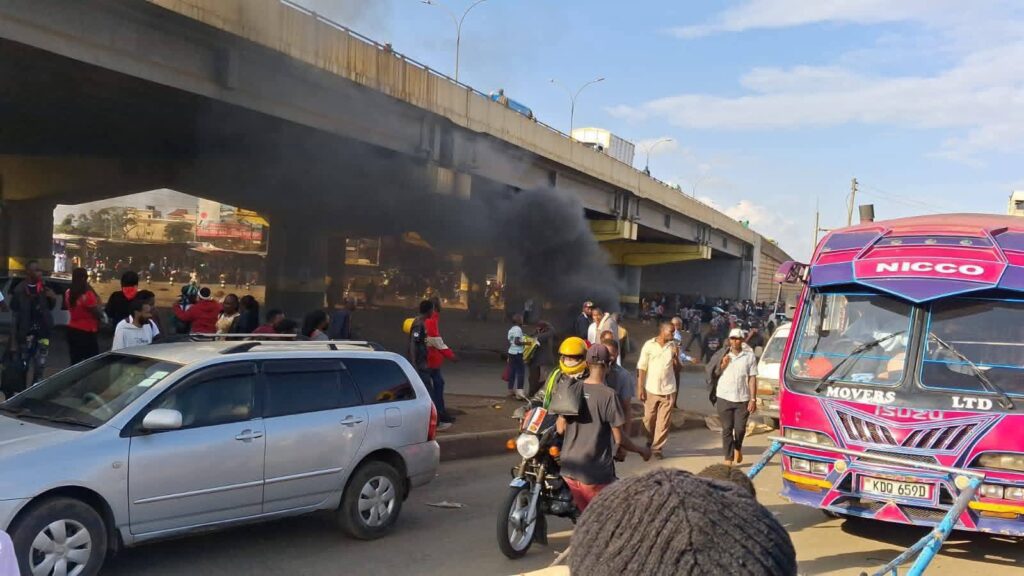
The demolitions sparked protests, with traders blocking sections of the highway in demonstration. Police intervened to disperse the crowds and restore normal traffic flow. Affected traders voiced concerns that the notice period was insufficient and that they were not provided with alternative trading locations. Many claimed substantial financial losses due to the destruction of their stock and structures.
Political figures and local authorities have since called for dialogue, advocating for a more compassionate approach towards informal traders who depend on roadside businesses for their livelihoods.
KeNHA maintains that these operations are legal and necessary to uphold the integrity of the road reserve, facilitating planned developments such as modernized bus parks and organized trading zones. The authority encourages traders to cooperate with this directive and engage with local authorities to explore potential relocation options, asserting that restoring order along the highway is essential for ensuring safe and efficient movement within the corridor.


