

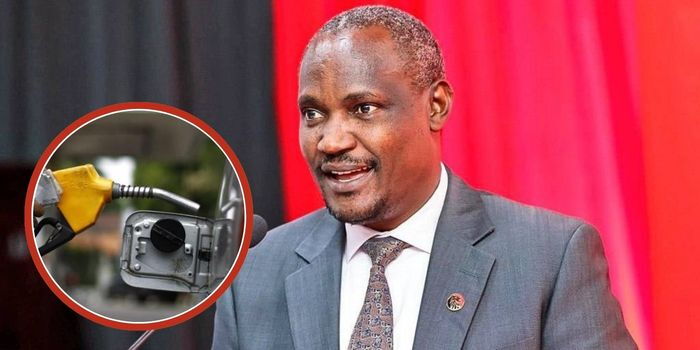
The Treasury Cabinet Secretary John Mbadi announced that the government will meet with President William Ruto to explore new strategies for reducing fuel prices, including potential adjustments to Value Added Tax (VAT) and other levies.
On Saturday, May 16, 2026, he addressed growing concerns from MPs and consumers after the Energy and Petroleum Regulatory Authority (EPRA) raised fuel prices, leading to increased transport and commodity costs nationwide.
Mbadi acknowledged that the government has already invested billions to stabilize fuel prices but recognized ongoing challenges due to global factors.
He explained, “The situation in the Middle East has created fuel scarcity, resulting in higher prices.”
Last month, the government allocated Ksh6.2 billion to stabilize fuel prices and reduced VAT by 8 percent. An additional Ksh5 billion was added this month, yet prices remain elevated.
Looking ahead, Mbadi emphasized the importance of consulting widely before making further decisions. “We will collaborate with the President to explore all options for lowering petroleum prices to relieve our citizens.”
He pointed out that Kenya is not alone in facing high fuel costs, noting similar trends globally. “Even in the United States, fuel prices have surged by 60 percent.”
Despite these challenges, he stressed the need for action in Kenya to protect consumers. “We must approach this issue thoughtfully and avoid politicization.”
The government is considering two main options to reduce fuel prices: tax modifications and additional fiscal support.
His comments come as MPs, including Kiharu MP Ndindi Nyoro, advocate for urgent action in the fuel sector. Nyoro has requested a recall of Parliament to discuss tax cuts, including eliminating VAT on fuel and lowering the Road Maintenance Levy Fund (RMLF).
Kakamega Senator Boni Khalwale echoed this sentiment, urging the government to present formal tax amendments to alleviate fuel costs. He called for the removal of VAT on petroleum products and the use of the fuel stabilization fund.
However, this push has sparked political disputes regarding parliamentary procedures. Nandi Senator Kiprotich Arap Cherargei criticized Nyoro’s request, stating only the Majority or Minority Leader can formally call for a special sitting.
Mbadi’s remarks also reflect the broader political pressure for tax relief as rising fuel prices strain households and businesses. The latest EPRA review increased Super Petrol by Ksh16.65 and Diesel by Ksh46.29, further impacting transport, food prices, and inflation.
This increase follows President Ruto’s recent approval of the Value Added Tax Amendment Bill 2026, which reduced VAT on petroleum products from 16 percent to 8 percent. Initially, this adjustment provided temporary relief, but global oil prices soon escalated costs again.
In defense of government actions, Mbadi noted that the use of stabilization funds has mitigated some impacts but cannot fully counter global price fluctuations.
Amid growing political tensions, some leaders, including Winnie Odinga, have criticized Treasury officials’ communication style regarding the cost of living. In response, Mbadi defended his experience and commitment to stabilizing the economy. “I focus on economic stability rather than engaging in petty politics,” he stated.