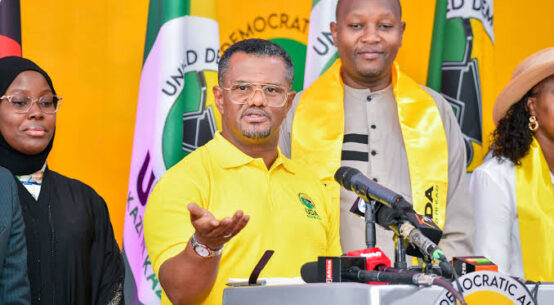


Jimi Wanjigi, the leader of the Safina Party and a prominent businessman, has expressed his willingness to form alliances with any leader or movement that champions a clear, issue-based agenda, moving away from traditional ethnic mobilization.
In an interview with a local station on Thursday, April 16, 2026, Wanjigi asserted that the time for tribal arithmetic in Kenyan politics has passed. He highlighted a growing demand for economic liberation and accountability in government.
As a vocal critic of President William Ruto’s administration, Wanjigi welcomed collaboration with like-minded individuals focused on the nation’s economic survival. “I am ready to work with anyone committed to agenda-based politics,” he stated.
Wanjigi elaborated, “An agenda is straightforward. We have identified that the core issue in this country is the economy, and our current period is centered on achieving economic freedom.”
He further explained that Kenya has historically experienced various forms of domination, first during the colonial period and subsequently through what he describes as ‘internal systems of control’ post-independence.
Wanjigi remarked that Kenyans have endured years of subjugation, whether under colonial rule or through the hands of fellow Africans, often concealed within tribal affiliations. “We have been enslaved—first by colonial powers and later by our own elite, hidden behind tribal identities,” he stated.
He identified the national debt as a significant barrier to freedom, characterizing it as a form of “slavery” that consumes 80% to 90% of the nation’s income. Wanjigi proposed a bold policy of non-payment of what he deems illegal debt, arguing it could save the country at least 2 trillion shillings annually.
“At the end of the day, this issue affects every one of us. We have clearly diagnosed our primary challenge: the debt crisis. This debt represents our slavery, siphoning off 80% to 90% of our earnings,” Wanjigi explained.
“Our policy is clear. We will ally with anyone who agrees to this stance. We will not pay what we consider illegal debt, which means we can potentially save a minimum of 2 trillion shillings per year—funds that can remain within our economy instead of being diverted to illegitimate obligations.”