

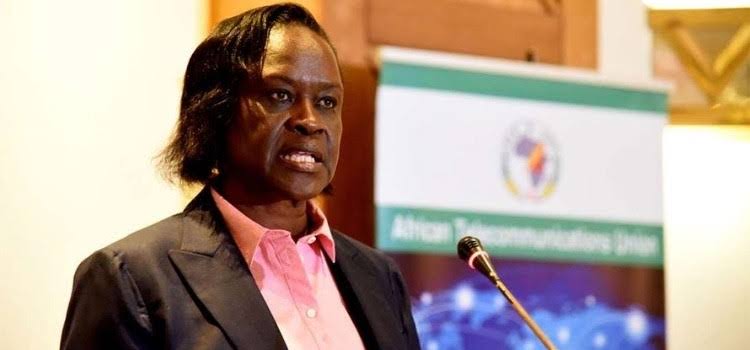
Esther Jepkemboi Koimett, the former Principal Secretary of Kenya, has emerged as the largest individual shareholder of Middle East Bank Kenya, holding a remarkable 17.48% stake. This significant acquisition follows a multimillion-dollar inheritance from her late father, Nicholas Biwott, a distinguished businessman and former Cabinet minister.
Recent ownership disclosures from the bank reveal that Koimett surpasses other notable shareholders, including MEB Holdings Limited, which owns 11.58%, and Mustang Limited, holding 10.47%. Baumann Management Services Limited and Good Fortune Limited each possess 6.60%.
Koimett’s new position signifies a pivotal shift in private banking wealth within Kenya, placing her among the nation’s most influential individual investors in the commercial banking sector.
Transitioning from inheritance to ownership, Koimett’s stake resulted from a substantial transfer of wealth from her father’s estate, which he divided equally among his children after his passing in July 2017. Although public records do not specify the exact timing of her acquisition of Middle East Bank shares, the bank has confirmed her current 17.48% holding.
Her rise to the position of largest shareholder has enhanced her role in the bank’s governance. Koimett officially joined the board on February 26, 2024, with the bank expressing its enthusiasm: “The Board is delighted to welcome Mrs. Esther Koimett, effective 26 February 2024.” With over three decades of experience in banking, investment promotion, public enterprises, and public policy, Koimett brings invaluable expertise to the bank.
This development stands out in Kenya’s banking landscape, where substantial individual shareholdings among women remain relatively rare. While Kenya has produced several prominent female investors, such as lawyer Jane Wanjiru Michuki, who previously held a minority stake in Equity Bank, records indicate that Michuki’s holdings do not match Koimett’s significant 17.48%.
Thus, Koimett joins a select group of women with substantial equity interests in African financial institutions, although it remains unconfirmed if she is the first Kenyan woman to achieve this level of individual ownership in a commercial bank.
Despite its name, Middle East Bank Kenya is predominantly owned by local investors, who control 90.22% of the bank, while foreign shareholders represent just 9.78%. Established in 1981 by the UAE-based Al-Futtaim Group, ownership transitioned to Kenyan investors after the conglomerate divested in 1991. Currently, corporate shareholders collectively own 79.69% of the bank, with individuals holding 20.31%, of which Koimett accounts for the largest share.
As Kenya’s banking sector enters a new phase of consolidation and capital raising, the ownership structure becomes increasingly significant. African lenders are actively pursuing acquisitions and expansion opportunities in East Africa’s largest financial market. In 2025, Middle East Bank reported a net profit of Sh264.37 million ($2.05 million), reflecting a 22.2% increase from Sh216.34 million ($1.67 million), while core capital reached Sh3.07 billion ($23.76 million), as lenders adapted to higher capital requirements set by the Central Bank of Kenya.
For Koimett, this stake enriches a distinguished career that has included leadership roles at Postbank and senior government positions in transport, telecommunications, and investment management, alongside various board memberships across corporate Kenya.