

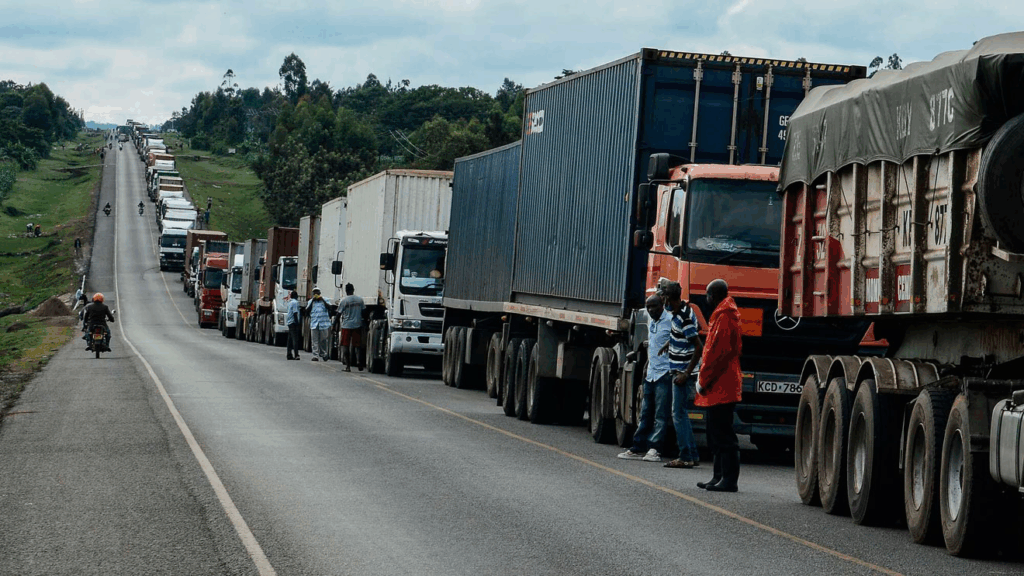
The journey from the Mombasa port to the Democratic Republic of Congo represents more than just a long-distance drive for many Kenyan drivers; it signifies a vital source of livelihood. However, this journey can quickly transform into a source of anxiety when unforeseen events, such as accidents or confrontations, turn a standard delivery into a diplomatic challenge.
In response, Kenyan and Congolese authorities are actively working to alleviate these concerns as they strengthen diplomatic and business relations, with driver safety emerging as a top priority.
Jomvu MP Badi Twalib emphasized the importance of finding sustainable solutions to the challenges faced by truck drivers from both nations. He reassured Kenyan truck drivers of their safety in the DRC and expressed similar sentiments for Congolese drivers in Kenya.
During a meeting with a delegation from the Congolese business community, led by honorary consul Kambale Mukokoma, Twalib highlighted the need for a mutually beneficial relationship between the two countries and encouraged drivers to collaborate effectively.
While these diplomatic assurances offer hope, individual incidents can still exacerbate tensions. Roman Waema, chairman of the Kenya Long Distance Truck Drivers and Allied Workers Union in Mombasa, stated that drivers generally have no issues with the DRC. He noted that they had established an agreement with the Governor of North Kivu to ensure their protection in the region, particularly as many drivers deliver goods to Goma.
However, Waema called for the DRC government to assist in securing the release of a Kenyan driver who was arrested in Beni following an unfortunate accident during unloading, which resulted in the death of a Congolese cargo off-loader. He expressed concern that this incident could reignite previously subdued tensions.
Waema also urged Kenyan police to cease the harassment of Congolese drivers, addressing the need for fair treatment on both sides.
Twalib expressed confidence that such tensions would diminish once the two governments finalize their discussions, which will also address the delayed construction of a liaison office in Goma. He urged President William Ruto to collaborate with DRC President Felix Tshisekedi to expedite the office’s opening, emphasizing that its establishment would facilitate Kenyan businesses in accessing the vast DRC market.
He proposed that instead of Kenyan businessmen traveling to the DRC, a liaison office in Goma could serve as a local point of contact, thereby reducing costs and increasing efficiency.
Additionally, plans are underway to establish a similar office in Beni, a key agricultural and commercial center in North Kivu. Mukokoma welcomed the commitment to ensuring safety for Congolese drivers in Kenya, affirming the importance of dialogue in resolving disputes and noting that a significant volume of cargo passing through the Port of Mombasa is destined for eastern DRC.
Jomvu deputy county commissioner Dolphine Okondo reiterated assurances of safety for both Kenyan and Congolese truck drivers, highlighting the commitment to upholding agreements.
Twalib pointed to improvements in road infrastructure and operations at the Port of Mombasa as factors enhancing the attractiveness of this trade route. He mentioned the expansion of the Jomvu road and enhancements along the Rironi-Mau Summit route, which connect to Uganda and the DRC, as key initiatives to bolster regional trade links.
He also acknowledged Captain William Ruto, managing director of Kenya Ports Authority, for revising cargo clearance grace periods. After discussions with the Congolese business community, the clearance period for all three countries—Uganda, South Sudan, and the DRC—has now been standardized to 15 days.
Twalib encouraged Congolese businesses to continue utilizing the Port of Mombasa, as improved infrastructure and the resumption of operations have significantly lowered the cost of doing business. In 2024, Kenya’s total exports to the DRC reached approximately USD 235.9 million (around Sh30.5 billion), reflecting a favorable trade balance for Kenya. This growth, driven by products like wheat flour and manufactured goods, positions the DRC as one of Kenya’s fastest-growing export markets within the East African Community bloc.


