

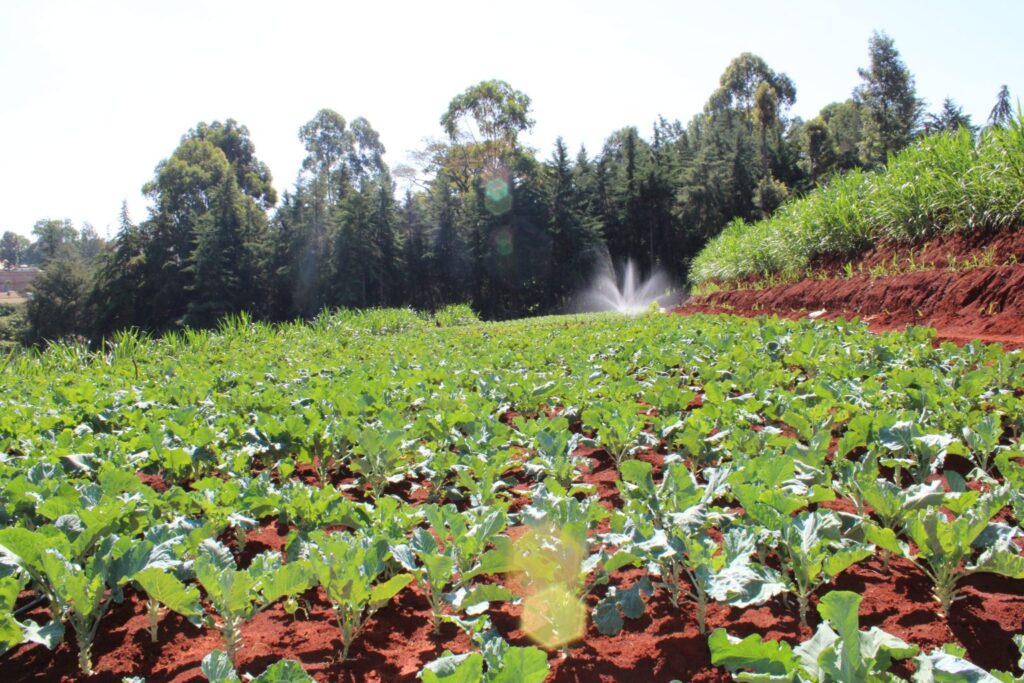
A year ago, a group of Nyeri residents united with a clear mission: to grow healthy food while caring for the environment. Now known as Nyeri Organic Herbs and Eco-fuel Enterprise (Nohefe), they embraced organic farming after training in agroecology, inspired by the harmful effects of agrochemicals on health and nature.
What started as a small initiative has blossomed into a thriving venture. This 11-member team leased a one-acre farm where they cultivate a variety of vegetables, herbs, and tubers using organic methods. They also set up a solar dryer at a member’s home, allowing them to preserve their harvests before packaging for sale.
Their products now shine in Nyeri’s first organic outlet, recently launched in Skuta with support from agroecology advocates. Group chairperson Pauline Kariuki shares that their journey began with tree planting in Nyeri Hill Forest through Rodi Kenya, learning the vital connection between nurturing nature and reaping its rewards.
Introducing value addition led them to discover that local indigenous plants could be transformed into marketable products. For instance, they began harvesting and packaging stinging nettle, or hatha, which grows abundantly in nearby forests.
Initially, they consumed their products, and soon family and neighbors joined in before they expanded to the wider Nyeri market. Currently, they grow tomatoes, capsicum, coriander, kale, arrowroots, cassava, and potatoes, with plans to scale up as demand increases.
Kariuki emphasizes that their farm will remain the primary source for raw materials, ensuring they sell only chemical-free products. They are committed to promoting organic farming, starting with their own crops.
This initiative reflects a broader movement toward agroecology in Kenya, with stakeholders advocating for practices that enhance soil health, conserve biodiversity, and reduce reliance on synthetic inputs. The government recently launched the National Agroecology Strategy for Food Systems Transformation 2024-33, aiming to foster sustainable food production and climate resilience.
Counties like Murang’a, Kiambu, and Vihiga have begun developing supportive policies for agroecological farming. George Boro, Pelum’s Nairobi and Central zonal coordinator, highlights the significant progress in Nyeri, showcasing agroecology’s potential to improve livelihoods while protecting the environment.
Boro notes that the training has led to increased food production, prompting support for the new organic shop. Pelum Kenya, a network of 67 organizations, collaborates with Rodi Kenya to train farmers in agroecological practices and enterprise development.
This shop will not only provide a market for their produce but also serve as a hub for bio-inputs, connecting farmers and consumers. Peter Chege from Rodi Kenya emphasizes that this milestone allows farmers to engage directly in marketing, moving beyond mere production.
With aspirations to replicate this model in other counties, Rodi Kenya supports farmers and youth groups in 16 regions, planning to establish more organic outlets as production grows.
The excitement among the youth was palpable as customers flocked to the new outlet, reinforcing their belief that Kenyans are increasingly ready to embrace food produced in harmony with nature.
Organic food adoption is on the rise in Kenya. A group of Nyeri farmers is successfully cultivating vegetables, herbs, and tubers using organic methods. They’ve even implemented a solar dryer for preserving their produce, benefiting both their business and consumer health.