

The moment a 42-year old Maureen Awuor entered prison, she felt an overwhelming sense of confinement, both physically and mentally. The loss of her teaching job and the prospect of being separated from her three children for six years weighed heavily on her.
Convicted of obtaining money through false pretenses, this single mother faced a harsh reality. “Being in prison is kind of a mental torture,” she shared during an interview with the Star in Syokimau, Machakos County.
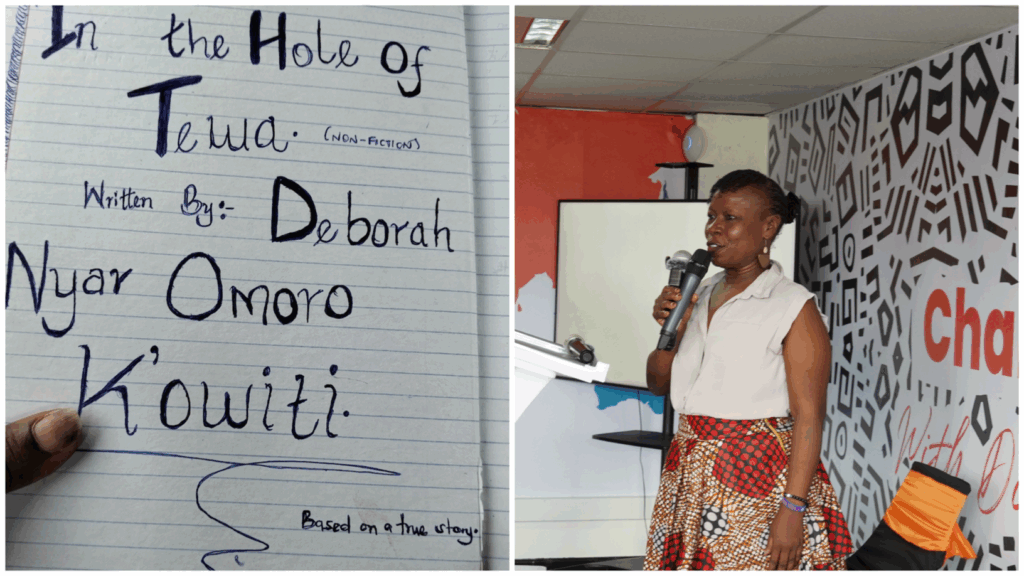
Dressed in a sleeveless blouse and kitenge skirt, Maureen contrasted sharply with the monotony of her previous striped prison gown. “You’ve left your family out there,” she reflected. “You are just within the walls. You don’t have freedom.”
Her tone fluctuated between somber reflection and humble contentment as she recounted her prison experience. Yet, her smile radiated resilience, as if she had turned adversity into opportunity.
Originally from Busia, Maureen had resided in Mombasa since 2007 before her incarceration in Shimo la Tewa Women’s Prison on March 6, 2024. Once a confident educator in English and Literature, she now faced the uncertainty of life behind bars.
After serving one year and eight months, she appealed her conviction and was acquitted on November 18, 2025. At that moment, however, her future felt bleak, clouded by fears of losing her identity as a criminal.
Eight months into her sentence, a digital literacy program introduced by Close the Gap, a social enterprise focused on reducing e-waste, opened new doors for her. With computers donated by CEO Olivier Eynde and training provided by Tech Kidz Africa, Maureen seized the opportunity as one of the first six inmates to enroll.
“When I got this opportunity, I was elated,” she stated. “The tough environment had something to ease it.” The training encompassed skills from computer maintenance to web development, pushing Maureen to expand her horizons.
“Before my incarceration, I only knew basic computer skills,” she noted. “I didn’t know that one day, I would be a web developer.”
Transitioning from student to teacher, Maureen began instructing fellow inmates and prison officers in ICT after earning her certificate. “Being in prison is not a walk in the park,” she acknowledged. “When you are involved in imparting knowledge to others, you are mentally engaged.”
Teaching brought renewed purpose to her life. “I really love teaching,” she affirmed, embracing the challenge of adapting from English to digital skills. Her daily routine transformed despair into purpose, allowing her mind to breathe within prison walls.
“It felt like I was outside,” she remarked. “I was not in prison anymore.” Upon completing the program, she received her certificate from First Lady Rachel Ruto, a moment she cherishes.
During the First Lady’s visit to the computer lab, Maureen confidently presented her web development work, suggesting the creation of a website as an appreciation gesture. “Your Excellency, with your permission, we request if you can allow us to make you a small website,” she proposed, eliciting laughter.
After her release, Maureen faced the challenge of reintegration, armed with new skills but confronting societal stigma. A painful experience at a family funeral underscored her struggle for acceptance. “Nobody wanted to associate with me,” she recounted, reflecting on her vulnerability.
Support from Close the Gap proved invaluable. “Immediately I left prison, it was Olivier who invited me and my daughter for my first meal,” she shared. “The first phone, the one I have, he bought for me.”
These gestures restored her sense of worth. “Here are people who have offered me training free of charge,” she expressed gratefully. Within a month of her release, Maureen secured a job as an ICT teacher at Progressive Malindi Academy, showcasing the skills she acquired behind bars.
“At times, I see my being in prison as a way God wanted to elevate me,” she reflected. “If I were not in prison, I would not have learned these skills.” Her past did not define her; her abilities did.
“They welcomed me despite being an ex-convict,” she noted, highlighting the disparities in her reception at home and work. In the classroom, Maureen found healing and affirmation, eager to teach young students what she learned in prison.
Her experiences have shaped her views on the prison system. She advocates for rehabilitative programs, believing they can mitigate the stress and depression caused by prison conditions. “I managed to get digital training,” she told a room filled with diplomats and officials, emphasizing the positive impact of such initiatives.
Maureen calls for practical support for former inmates, urging the provision of tools like laptops for web design or capital for small businesses. “If you come out and there’s nowhere to start, you feel like you want to go back to crime,” she cautioned.
For those still incarcerated, Maureen encourages seizing every opportunity for growth. “Those are employability skills,” she asserted. “They can change your life.”
Today, Maureen stands as a testament to the transformative power of opportunity and support. Her journey from despair to stability remains ongoing but profoundly impactful. She is currently working on publishing her manuscript titled “In the Hole of Tewa,” using her experiences to inspire others. “Being in prison is not the end of the world,” she emphasizes, carrying both scars and lessons forward.