

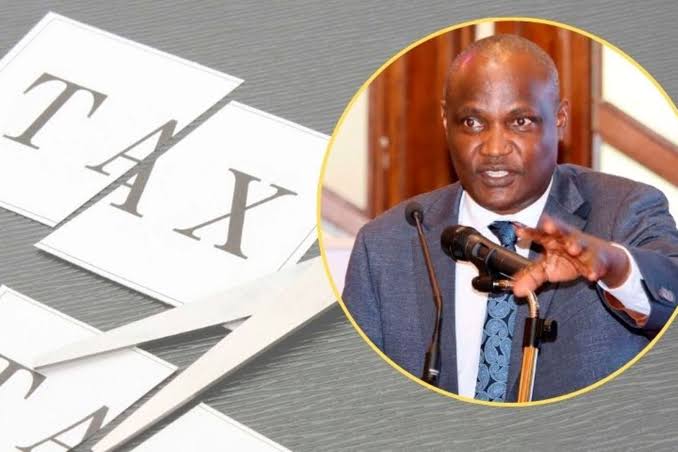
Cabinet Secretary John Mbadi has unveiled plans to provide tax relief for individuals earning below Ksh30,000 per month. During a forum on Sunday, February 1, 2026, at the Kiambu National Polytechnic, he emphasized that the government would also reduce taxes for those earning below Ksh50,000, aiming to alleviate the financial strain on salaried Kenyans.
This forum formed part of the Budget and Privatisation Public Engagement Forum for Kiambu County. Mbadi elaborated on the government’s strategy to privatize state-owned enterprises, with the intention of using the proceeds to enhance infrastructure and implement tax reductions.
The Cabinet Secretary underscored the challenges facing Kenya’s middle class and salaried workers, revealing that approximately 3.5 million Kenyans depend on salaries and shoulder the majority of the tax burden.
“Currently, 3.5 million salaried Kenyans bear an unfair tax load. To address this, I am proposing an amendment to the National Assembly. I will not wait for the finance bill. Anyone earning below Ksh30,000 in this country should pay zero tax,” he asserted.
Regarding tax reductions for earners, the government plans to lower tax rates for those earning below Ksh50,000. Mbadi explained that these measures aim to increase disposable income and stimulate consumer demand, especially in light of recent economic downturns characterized by reduced spending.
“For anyone earning below Ksh50,000, we will implement tax reductions. This decision comes after discussions with the President. Our goal is to place more money in your hands, allowing you to drive demand within the economy,” he stated.
“Upon evaluating the current economic landscape, it is evident that the economy is struggling. Many people lack sufficient funds to make purchases. For instance, we see individuals opting for minimal purchases, such as only buying a few leaves of vegetables instead of a full basket.”


