

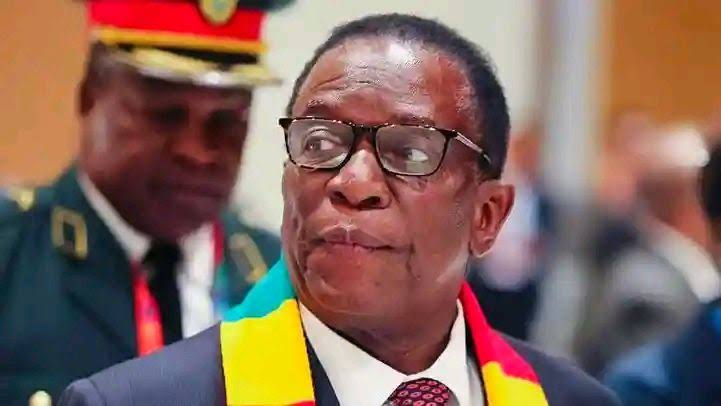
The Zimbabwean government has officially designated President Emmerson Mnangagwa’s birthday, September 15, as an annual national public holiday. This new holiday, established through Statutory Instrument 148 of 2026, will be recognized as Munhumutapa Day each year.
Local media confirmed that the announcement was published on Wednesday.
“His Excellency the President, in accordance with section 2(2) of the Public Holidays and Prohibition of Business Act [Chapter 10:21], issues the following notice: 1. This notice may be cited as the Public Holidays and Prohibition of Business (Declaration of Public Holiday) Notice, 2026. 2. It is hereby declared that the 15th of September every year henceforth shall be a public holiday known as Munhumutapa Day,” the notice stated, as reported by ZBC News, a prominent Zimbabwean news outlet.
As Mr. Mnangagwa approaches his 84th birthday, he will celebrate this milestone on the very day designated to honor the nation’s “pre-colonial heritage.”
The holiday derives its name from the Munhumutapa title, historically associated with the rulers of the Mutapa Empire, a significant Shona kingdom that thrived from the 14th to 17th centuries.
While the state has not provided an explanation for selecting September 15 for this celebration, Mr. Mnangagwa has indicated his intention to remain in power beyond 2030. He remarked on Thursday that he will “still be around” in nine years, despite his current term being set to expire in about four years.
“I will still be around; I do not know about you,” he was quoted as saying.
In July, Mr. Mnangagwa signed a controversial bill extending his term of office by two years, shifting the presidential term from five to seven years amid significant public scrutiny.
Previously, he had positioned himself as a constitutionalist, promising to adhere to term limits.
Mr. Mnangagwa ascended to power in 2017 after removing long-time leader Robert Mugabe with military support. He subsequently won disputed elections in 2018 and 2023.
Despite public calls for a referendum on the bill that amends the Constitution, Mr. Mnangagwa insisted that this legislative change would foster stability in Zimbabwe.
The new law alters the presidential election process, transitioning from direct elections by voters to a system where members of Parliament will elect the president.
Critics, however, caution that this change may further entrench the dominance of Mr. Mnangagwa’s party, ZANU-PF, which has ruled Zimbabwe since gaining independence from Britain in 1980.


