

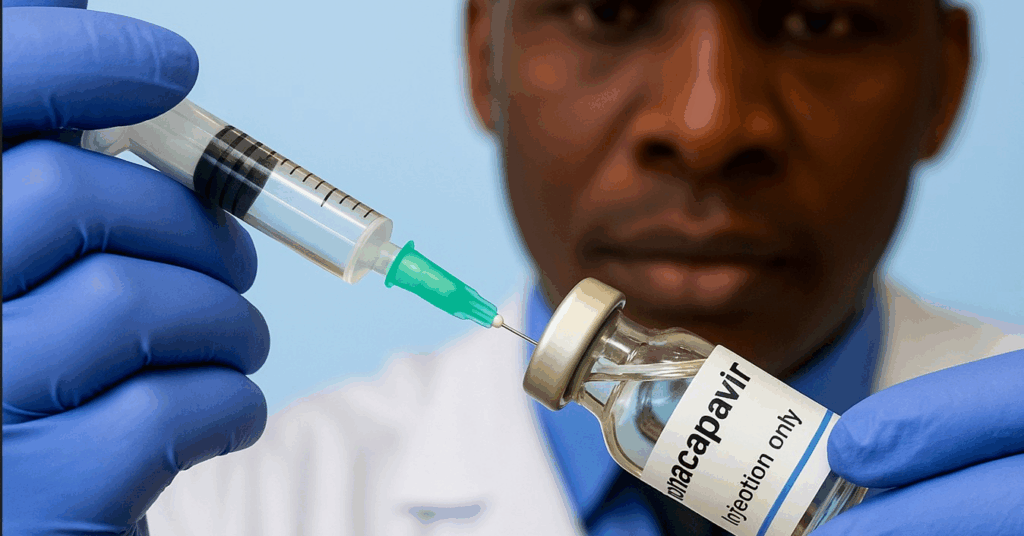
Uganda is poised to receive its first supplies of a lower-cost HIV prevention injection in the coming days, after the first global shipment of the generic drug arrived in Zambia.
Lenacapavir is given twice a year and is nearly 100% effective at preventing HIV infection. The generic version is expected to cost about Ksh5,200 per person annually, making it more accessible to people in low- and middle-income countries.
The Global Fund confirmed to the BBC that the first shipment arrived in Zambia on Wednesday. Uganda is among the next countries expected to receive supplies. Zimbabwe is scheduled to receive the drug early next year, with other African countries expected to follow.
The milestone comes a year after US pharmaceutical company Gilead Sciences’ original version became available in sub-Saharan Africa. At about Ksh3.64 million a year in the United States, however, the original remains out of reach for many people in developing countries.
How the injection prevents HIV infection
Lenacapavir targets HIV’s protective protein shell, disrupting the virus’s ability to multiply and establish an infection. Unlike daily pre-exposure prophylaxis (PrEP) pills, the injection is given just twice a year.
Health experts say the longer gap between doses could help overcome barriers to daily prevention medication, including the stigma some people face.
In a 2024 clinical trial involving more than 5,000 adolescent girls and young women in Uganda and South Africa, none of the participants who received the injection contracted HIV.
The World Health Organization recommended lenacapavir for HIV prevention in July 2025. The Global Fund called the arrival of the lower-cost version a major step toward expanding access to HIV prevention.
“These deliveries mark an unprecedented acceleration and expansion in access to a highly effective, quality-assured generic HIV prevention medicine in low- and middle-income settings,” the organisation said in a statement on Wednesday.
Millions expected to access the drug
The Global Fund says more than 189,000 people in 10 countries have already received their first lenacapavir injection. It expects 24 countries to have received supplies by the end of 2026.
In partnership with the US government, the fund aims to reach at least three million people by the end of 2028. The drug is ultimately expected to become available in 120 low- and middle-income countries.
Sub-Saharan Africa is home to nearly two-thirds of people living with HIV worldwide. Adolescent girls and young women are among the groups disproportionately affected.
South Africa, which has the world’s largest population of people living with HIV—nearly eight million—is also expected to receive the lower-cost injection.