

The war in Sudan, now entering its third year, has become one of Africa’s most devastating and complex crises. What began as a power struggle between the Sudanese Armed Forces (SAF) led by Gen. Abdel Fattah al-Burhan and the Rapid Support Forces (RSF) under Gen. Mohamed Hamdan “Hemedti” Dagalo has evolved into a dangerous proxy war pitting two Gulf powers — Saudi Arabia and the United Arab Emirates (UAE) — against each other on African soil.
On one side stands Saudi Arabia, which has maintained a long-standing relationship with Sudan’s military leadership dating back to the 1950s. Riyadh sees Sudan as a strategic partner in protecting its Red Sea interests, vital for oil shipments and economic diversification. The Saudi leadership has cultivated close ties with Gen. al-Burhan and the SAF, offering political and economic support in the name of stability.
On the other side is the UAE, which has thrown its full weight behind the RSF. Abu Dhabi has supplied weapons to Hemedti’s forces through humanitarian routes operating in Chad, while the RSF funds its war effort through Sudanese gold smuggled into Dubai. Analysts have observed that the UAE’s strategy mirrors its actions in Libya and Somalia — empowering non-state actors to secure access to resources and strategic territory.
As long as Saudi Arabia and the UAE continue to back opposing sides, Sudan will remain trapped in a proxy war whose costs are borne by innocent civilians. Millions have been displaced, cities destroyed, and the nation’s social fabric torn apart. The African Union’s “Silence the Guns in Africa” initiative, along with other regional efforts, has so far failed to yield any meaningful results. Despite commendable intentions, these efforts lack the political leverage and global influence necessary to compel both Gulf monarchies and their Sudanese allies to the negotiation table.
This is why the world must now look to the United States, and specifically to President Donald J. Trump, to take decisive action. President Trump has demonstrated an unmatched ability to broker peace in complex conflicts. His recent success in mediating a ceasefire between Israel and Hamas is a testament to his pragmatic approach and his willingness to engage directly with difficult actors. This achievement has renewed hope that the U.S. can again play a transformative role in restoring peace — not just in the Middle East, but also in Africa.
President Trump’s personal relationships with both Saudi Crown Prince Mohammed bin Salman and UAE President Mohammed bin Zayed Al Nahyan place him in a unique position to mediate between the rival Gulf powers whose rivalry now fuels the bloodshed in Sudan. His credibility as a dealmaker and his history of success in forging the Abraham Accords further reinforce his ability to deliver meaningful results where others have failed.
I therefore urge President Trump to use his influence to convene urgent peace talks at the White House — bringing together representatives of the Sudanese Armed Forces, the Rapid Support Forces, Saudi Arabia, and the United Arab Emirates. Such a summit, under Trump’s leadership, would send a powerful message that the world will no longer tolerate proxy wars fought at the expense of African lives. The talks could lay the foundation for a permanent ceasefire, the delivery of humanitarian assistance, and the beginning of a genuine political transition toward democracy in Sudan.
Sudan’s strategic position between the Horn of Africa and the Sahel makes it a vital hub for regional stability. Continued fighting threatens not only Sudan’s survival but also peace and security across East and Central Africa. The longer the conflict drags on, the greater the risk of regional spillover, extremism, and mass migration.
The time for action is now. The United States, under President Trump’s leadership, must not allow Sudan to become another endless war. By leveraging his relationships with the Gulf monarchies and his proven diplomatic skills, President Trump has the opportunity to end one of Africa’s deadliest conflicts and reaffirm America’s commitment to global peace.
The people of Sudan have suffered enough. The guns must fall silent, and only bold, decisive leadership can make that happen.
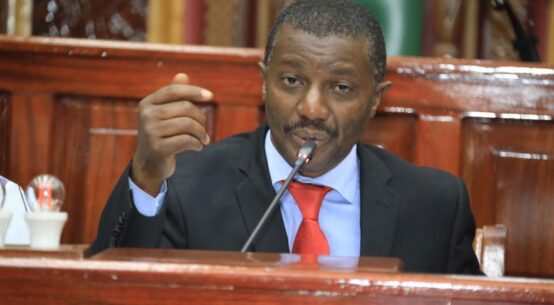
The writer is Mr. Daniel Juma Omondi, the Africa Regional Representative of the Global Peace Foundation.