

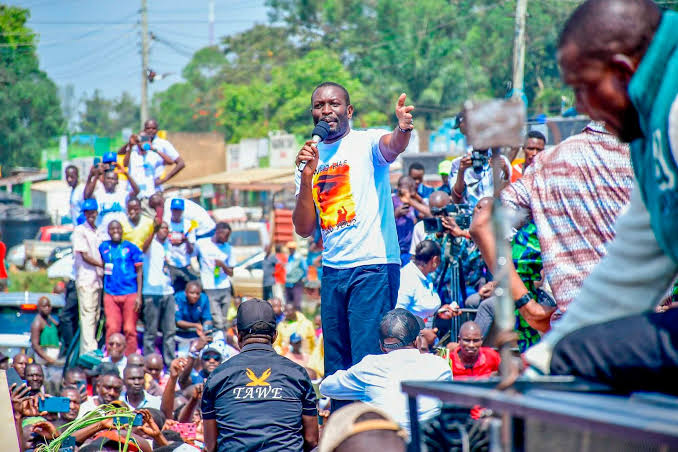
Edwin Sifuna from Nairobi has successfully initiated a political movement ahead of his 2027 presidential campaign, but the next challenge lies ahead: determining who will steer this movement to the ballot box.
As the deadline for political parties to register for the 2027 General Election approaches in October, Sifuna and his Linda Mwananchi allies are navigating a landscape filled with competing party options, legal challenges, and individual ambitions.
What initially seems to be a dispute over party names reveals a more profound struggle for political ownership. This includes who controls the brand, party structures, candidate nominations, and the bargaining power that comes with Linda Mwananchi’s increasing prominence.
Sifuna reassures his supporters, stating that they have multiple party options and that their main focus is on safeguarding the movement’s identity. “People may think Sifuna lacks a party, but let our supporters rest easy—a rose by any other name still sells,” he remarked. “What we’re truly fighting for is our brand—our name.”
This confidence is essential, indicating that Sifuna’s team doesn’t view the registration of a single party as the cornerstone of his presidential bid. Instead, they prioritize ensuring that whatever legal framework they choose can effectively represent the Linda Mwananchi identity in the election.
However, the differing views among his allies highlight a more complex organizational reality.
Linda Mwananchi is rapidly gaining recognition as a political force, endorsing Sifuna for the presidency and extending its message beyond Nairobi. Yet, support for Sifuna doesn’t guarantee consensus among the politicians surrounding him regarding who should control the campaign’s operational structures.
Embakasi East MP Babu Owino expresses his support for Sifuna while simultaneously building an independent political base through his Mwananchi Party. He suggests that the parties maintain their identities while collaborating under the broader Linda Mwananchi umbrella. “We’ll form a coalition within Linda Mwananchi, with Sifuna leading the Ukombozi Party and me leading the Mwananchi Party,” Babu stated. He added, “Sifuna is my brother; I won’t abandon him because we started this journey together.”
This distinction is crucial. Babu’s stance doesn’t necessarily oppose Sifuna’s presidential aspirations; instead, it reflects how various politicians can back the same candidate while striving to protect their organizational influence.
The emerging model may resemble a coalition of politicians and parties united under one popular brand rather than a traditional political party. This presents Sifuna with a central organizational dilemma: how to be the undisputed leader of a movement that comprises individuals with their own political interests.
The situation grows more complex with the involvement of George Natembeya’s Ukombozi initiative. Natembeya supports Ukombozi as a potential vehicle for Sifuna, while Babu promotes Mwananchi as his own platform. This divergence reveals competing visions for how Linda Mwananchi should be structured as the 2027 elections approach.
The Ukombozi matter has expanded beyond Linda Mwananchi, with Kalonzo Musyoka announcing that Azimio has adopted the Ukombozi Alliance name, while Sifuna’s allies challenge the reservation of that identity.
This clash signifies that the party issue is no longer just a registration problem for Sifuna; it intertwines with the broader struggle for the opposition’s political framework. This results in three overlapping spheres of influence: Sifuna possesses the presidential brand and public visibility; Babu has an established political base and an independent party initiative, particularly in Nairobi; and Natembeya advocates for a different organizational path through Ukombozi. Kalonzo’s adoption of the Ukombozi identity introduces a wider coalition aspect to the opposition.
These positions do not imply that the politicians have abandoned collaboration with Sifuna. Instead, they illustrate that the movement’s political capital is being negotiated among various actors.
Political analyst Gitile Naituli views Sifuna’s rising profile as part of a broader struggle between an emerging political force and an established political system. “The political landscape shows notable anxiety about Sifuna, as his support appears organic,” Naituli noted. “This poses a threat to a system accustomed to controlling who enters and exits.”
Naituli emphasized, “Expect this figure to face challenges from all sides,” while commending Sifuna’s calm demeanor and suggesting that his advisors are quite astute.
Naituli’s insights reflect the political climate rather than evidence of a coordinated effort to hinder Sifuna’s candidacy. However, they underscore why the party dispute holds significant political weight.
If Sifuna’s following is genuinely independent of established party structures, then the movement represents a potential challenge to traditional political coalition-building, which typically involves established parties and regional leaders negotiating over positions and electoral machinery.
The increasing value of Linda Mwananchi could become both its strength and a source of organizational weakness. As the brand’s worth rises, so does the importance of controlling its structures for every politician involved.
The immediate pressure centers on the electoral timeline. Political parties aiming to participate in the 2027 election face deadlines for submitting authorized officials, specimen signatures, and other organizational requirements. This urgency leaves Sifuna’s camp little room for prolonged indecision regarding their final choice of vehicle.
Vihiga Senator Godfrey Osotsi has sought to reassure supporters that the movement has a solution in place. “But we are clever. We have a party, and within two weeks, we will announce the party that Edwin Sifuna will represent as the next President of Kenya,” Osotsi declared.
This statement suggests that the debate over Linda Mwananchi’s preferred party does not necessarily jeopardize Sifuna’s candidacy. His allies maintain that alternative options remain viable.
However, the larger question will persist beyond the registration deadline. A presidential campaign requires more than just a name—it demands a national organization capable of recruiting candidates, conducting nominations, coordinating campaigns, raising resources, and forging alliances.
This is where the internal party debate becomes crucial. If Sifuna opts for a vehicle primarily controlled by his allies, he could unify the movement around his presidential campaign. Conversely, if multiple politicians retain separate parties under the Linda Mwananchi umbrella, the movement may evolve into a negotiated coalition where individual leaders maintain their own bases.
Neither model is finalized. Thus, the most pressing question surrounding Sifuna’s 2027 bid may not be which party name appears on the ballot but rather whether the movement built around his growing popularity can remain politically cohesive as the politicians around him negotiate control over the machinery behind the brand.
For Sifuna, the October registration deadline marks just the first test. The more significant challenge lies in transforming a seemingly organic following into a cohesive electoral organization without allowing the machinery crafted to support his presidential ambitions to become a stage for competing interests.