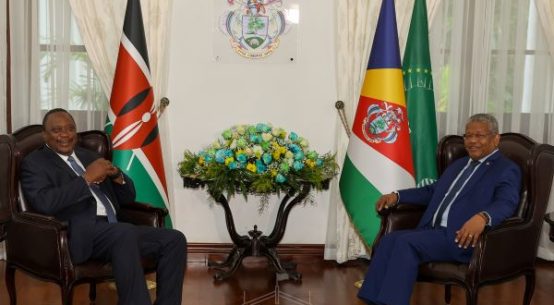


The President of the Republic of South Sudan Salva Kiir has removed one of his vice-presidents, Benjamin Bol Mel, who had been rumored as his likely successor.
Kiir revoked Bol Mel’s military title of general and discharged him from the national security apparatus. He also fired the central bank governor and the director of the revenue authority, both viewed as close associates of Bol Mel.
No justification was offered for the removals, which were announced in a decree broadcast on state television.
This occurs amid mounting concerns of political instability and a potential return to civil war, following the recent failure of a fragile accord for power-sharing between Kiir and opposition chief Riek Machar.
Bol Mel, 47, was designated vice-president in February, taking the place of James Wani Igga, an established politician and general.
He was additionally promoted to the primary deputy chairman of the ruling SPLM party, which observers feel granted him greater authority and placed him as a possible replacement for the 74-year-old Kiir. The president later advanced him to the full rank of a general in the National Security Service (NSS).
Bol Mel’s designation proceeded despite the United States imposing penalties against him for supposed graft in 2017, which were reaffirmed earlier this year. The US Treasury characterized Bol Mel as Kiir’s “main financial consultant.” Kiir’s office disputed that description.
He has never directly addressed the corruption allegations leveled against him and has offered no comment on his dismissal.
The president has yet to name substitutes for any of the posts he occupied.
His removal follows conjecture on social media regarding an internal contest for dominance within the SPLM.
A senior government official, who wished to stay unnamed for security considerations, informed the BBC that Bol Mel had been an “unifying figure” within the government.
“It is positive that he has departed,” he stated.
South Sudan is a nation rich in oil which became the globe’s newest country in 2011 after separating from Sudan. It was engulfed by civil conflict two years later, after Kiir and Machar had a falling out.
The 2018 power-sharing pact that concluded the war has been troubled with difficulties, as disagreements linger and sporadic fighting continues to flare up.
Planned ballots have been rescheduled twice in the last three years and combat between forces loyal to the president and armed groups has recently intensified.
Machar was ousted as vice-president and detained earlier this year and in September indicted for homicide, sedition, and atrocities against humanity in an action viewed as worsening tensions and provoking anxieties of renewed civil upheaval. The legal process is proceeding.
His representative labeled the accusations against him as a “political manhunt.”
The charges came after an assault by a militia supposedly connected to Machar, which the administration asserted had killed 250 military personnel and a general.