

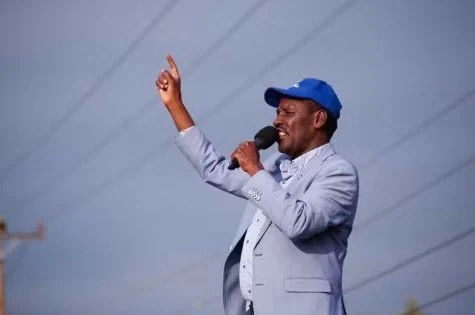
Tensions within the opposition have escalated as Peter Munya, the leader of the Party of National Unity (PNU), boldly criticized former Deputy President Rigathi Gachagua, calling him a “bully” after a series of heated exchanges regarding the recent by-election results in Ol Kalou.
The verbal showdown, which took place during live television interviews and delegate meetings, underscores the growing political divides in the influential Mount Kenya region as factions position themselves for the upcoming 2027 general election.
During a televised appearance on Wednesday night, August 5, 2026, Munya firmly rebutted Gachagua’s earlier remarks that belittled PNU’s performance in the Ol Kalou ward by-election.
At a gathering with Murang’a County delegates at his residence in Wamunyoro, Gachagua noted that PNU garnered only 28 votes in the contest, attributing this disappointing result to the party’s lack of effective voter outreach and marketing.
Munya countered this critique, asserting it was a deliberate attempt to undermine independent political parties in the region.
“That kind of language is demeaning, and we urge him to use respectful communication when addressing fellow leaders,” Munya stated during the broadcast.
“He embodies bullying behavior; he is not merely acting as one. Just look at how he spoke about the governor of Murang’a, calling him ‘kiherehere,’ and then the governor faced aggression from some individuals when visiting Ol Kalou. He must take on a more responsible role,” Munya emphasized.
This contentious exchange highlights broader concerns regarding leadership within the opposition.
In the wake of Gachagua’s Democracy for Citizens Party (DCP) triumph in the Ol Kalou by-election, Gachagua criticized smaller political entities in Mount Kenya, advocating for a more unified regional bargaining power.
This proposal sparked immediate dissent from experienced political figures, including Munya, former Public Service Cabinet Secretary Justin Muturi of the Democratic Party (DP), and former Senator Lenny Kivuti of the Devolution Empowerment Party (DEP).
In a united statement released earlier this week, the trio asserted that Gachagua lacks the mandate or legal authority to dictate the future of independent political parties or to position himself as the sole spokesperson for Mount Kenya.
Responding to the criticisms on Wednesday, Gachagua dismissed claims of coercion, framing his initiatives as proactive grassroots mobilization rather than political intimidation.
“I noticed that my colleagues Justin Muturi, Peter Munya, and Lenny Kivuti expressed concerns about DCP’s growing strength,” Gachagua told his supporters.
“They appear to be misinformed. Democracy thrives on competition. I have never instructed anyone to dissolve their party. However, if you fail to effectively market your party, you risk facing significant setbacks.”


