

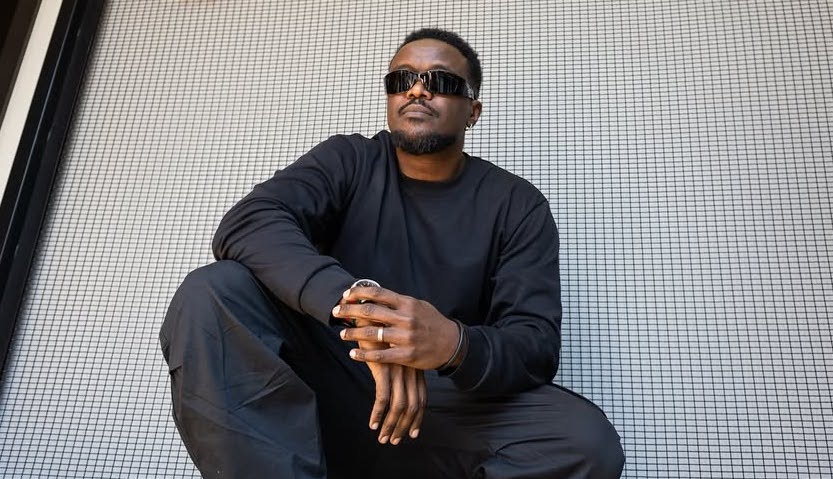
Media personality MC Alex Mwakideu has courageously shared his personal health journey, shedding light on his years-long battle with hearing loss.
In his self-produced short documentary, “Hear Me Clearly,” Mwakideu invites viewers to revisit his roots in Mombasa, recounting his quest for solutions to a condition that posed a serious threat to his sound-centric career.
“I stepped through that door with nothing but a dream,” he reflected, gently caressing the radio station’s logo above the entrance during his first visit in years.
“As a young boy, I lacked fame and experience. I didn’t even realize this was where I truly belonged. Yet, someone took a chance on me, and that opportunity transformed my life forever,” he reminisced with warmth.
Mwakideu recalls that it was at this now-closed radio station where he first took to the airwaves, starting as a news reader before evolving into a gospel show host and later a sports news presenter.
This opportunity allowed him to travel the world, study abroad, and even cover the Olympic Games.
Over the years, Mwakideu blossomed into the accomplished radio presenter we know today, working at three prominent national radio stations in Nairobi.
However, amid his growing success, he noticed unsettling changes in his life.
“I spent time at home with my family—my wife and kids—and I began to recognize a troubling pattern. Sometimes I could hear them; other times, I couldn’t,” he shared, emotion evident on his face.
Initially, colleagues who had worked with him for over a decade misinterpreted his lack of response during conversations, even on live broadcasts, as disinterest.
But as the issue persisted, it became too significant to dismiss as mere contempt.
Mwakideu gradually came to the realization that he might have a hearing problem.
“As I brushed my teeth, I noticed I had to stop to hear my wife speaking. At the dinner table, I had to pause chewing to understand what my child was saying,” he recounted, a hint of laughter in his voice.
“Slowly, my children began asking, ‘Daddy, don’t you hear us?’ My wife would say, ‘Babe, the kids are calling you.’”
During movie nights, Mwakideu had to crank the volume to 100 just to catch the dialogue. Recognizing the gravity of the situation, he sought medical help.
“What’s happening to my life?” he pondered.
Initially, he suspected excessive earwax might be the culprit.
However, after a cleaning, the issue persisted.
“I decided to take my first hearing test, and that’s when reality struck: I was actually losing my hearing.”
The first test indicated the problem was not yet severe, but a follow-up a year later revealed further deterioration.
“Another year passed, and my hearing continued to decline,” he shared.
He reached out to a doctor friend, an ENT surgeon, who conducted comprehensive evaluations and referred him for further assessment in June 2025.
“He told me, ‘You probably need hearing aids.’ Oh my goodness, so now I need hearing aids?” he recalled with surprise.
Following the referral, Mwakideu visited an audiologist, underwent detailed assessments, and received a diagnosis of mild to moderate sensorineural hearing loss (SNHL).
SNHL arises from damage to the inner ear or the nerve pathways carrying sound signals to the brain. It is the most prevalent type of permanent hearing loss, often making sounds seem muffled or challenging to comprehend.
Mwakideu embraced the decision to wear hearing aids, understanding that sound is integral to both his professional and family life.
“These are not AirPods; I’m not listening to music,” he stated, pointing to the hearing aid in his left ear.
He acknowledged the financial strain associated with his condition due to the cost of the hearing aids.
“The ones I’m wearing cost Sh430,000. They are custom-made abroad to match my specific needs; when I take them off, I feel off-balance,” he explained.
“These hearing aids are uniquely mine; they are quite costly. However, I am grateful because now I can participate in meetings without needing to ask questions afterward.”
He noted that the devices also restored harmony to his family life.
“At home, I can play with my kids without them questioning whether I can hear. That concern is gone,” he said, beaming as he reflected on the joy the hearing aids have brought back into his life.
“This is me now; this is a part of my life, and I will embrace it forever because I chose sound and I chose this broadcasting journey.”
Mwakideu affirmed that, given the chance, he would still choose radio.