

A
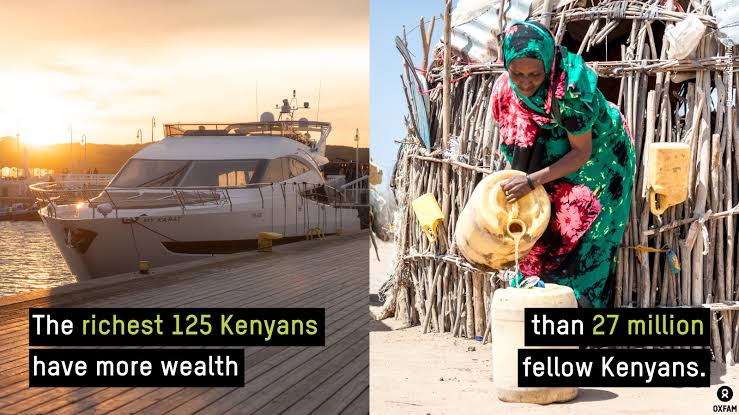
A recent report on Kenya’s political and economic landscape paints a troubling picture of inequality: less than 0.1% of Kenyans possess more wealth than the combined total of the remaining 99.9%.
The Bertelsmann Transformation Index (BTI) 2026 Country Report arrives at a critical time, coming less than two years after nationwide protests led by Gen Z challenged President William Ruto’s administration, revealing widespread public discontent over issues such as taxation, unemployment, and the escalating cost of living.
Although Kenya has long presented itself as East Africa’s economic success story, the report contends that this growth has not translated into widespread prosperity. “Despite two decades of average economic growth near 5%, the improvements in living standards and social welfare are visible but relatively modest,” the report indicates.
The findings reveal a nation grappling with wealth concentration, rising debt levels, and aggressive taxation, creating significant social tensions. “Poverty and inequality remain critical development challenges in Kenya,” the report states, emphasizing that economic opportunities are heavily influenced by factors such as race, ethnicity, gender, age, and geographic location.
Economic frustrations reached a boiling point in 2024 when the government proposed the contentious Finance Bill, which aimed to generate Ksh46 billion through new taxes and VAT hikes. “The proposed measures would have disproportionately impacted low-income Kenyans, igniting mass protests led by youth,” the BTI report highlights.
The protests reached a climax on June 25, 2024, when demonstrators stormed Parliament, forcing lawmakers to flee as parts of the building were set ablaze. In response, President Ruto dissolved his Cabinet in an effort to quell public anger.
Underlying these protests is a significant structural crisis. Kenya’s public debt has soared from 39% of GDP in 2010 to over 73% in 2023, largely driven by extensive borrowing for infrastructure initiatives. To stabilize the economy and secure support from the International Monetary Fund (IMF), the government implemented austerity measures and increased taxes, even as citizens struggled with inflation, unemployment, and diminishing disposable income.
The report notes that rising contributions to the Social Health Insurance Fund (SHIF) and the National Social Security Fund (NSSF) have further fueled discontent among salaried workers. Meanwhile, the benefits of economic growth remain unevenly distributed, with rural populations and residents of northeastern, coastal, and western Kenya experiencing significantly higher poverty rates. Women and young people continue to face substantial barriers to economic opportunity.
Additionally, the report warns that trust in democratic institutions may be eroding under the strain of inequality. It links economic grievances to political instability, civic unrest, and declining faith in governmental institutions.
Even as Kenya’s macroeconomic indicators show signs of improvement, with falling inflation and a stabilizing shilling, the report suggests that the underlying crisis extends beyond economics; it increasingly reflects a struggle for legitimacy.