

Working abroad offers many Kenyans a chance to earn better salaries, advance their careers and improve their living standards. Countries across the Middle East, Europe and North America hire workers in healthcare, hospitality, construction, transport, agriculture, security and technology.
But pursuing an overseas job requires careful preparation. Kenyans must guard against recruitment scams, fake job offers and illegal migration arrangements.
Knowing how to find legitimate vacancies, verify recruitment agencies, secure work visas and prepare travel documents can help job seekers make informed decisions.
Find genuine overseas job opportunities
Start by choosing a destination and identifying roles that match your qualifications, skills and experience.
Saudi Arabia, Qatar and the United Arab Emirates offer jobs in hospitality, construction, security, domestic work and healthcare. Canada, the United Kingdom and Germany also recruit international workers in healthcare, agriculture, engineering and technology.
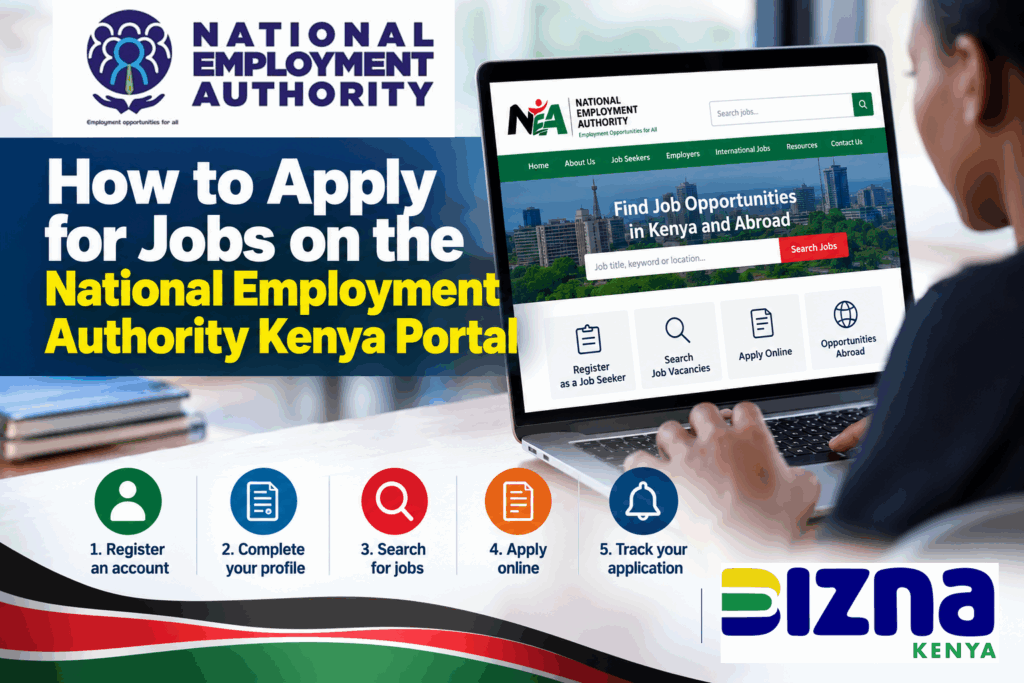
Search for overseas vacancies through the National Employment Authority’s Integrated Management System at https://neaims.go.ke/. You can also check LinkedIn Jobs, Indeed and the European Employment Services portal, EURES, at https://eures.europa.eu/.
Verify recruitment agencies
Before engaging a recruitment agent, confirm that the company holds a licence to recruit workers for overseas employment.
The National Employment Authority (NEA), under the ministry responsible for labour, regulates private employment agencies in Kenya. Job seekers can check an agency through the government portal at https://diaspora.go.ke/verify.
Ask the agency for its registered name and licence number. Search the portal to confirm that its licence remains valid and active, and compare its contact details with the official register.
If anything raises concern, contact NEA for clarification. Registering a business does not, by itself, authorise a company to recruit Kenyans for overseas employment.
Avoid overseas job scams
Fraudulent recruiters often target job seekers with appealing salaries and promises of quick departures.
Watch for agents who demand payment before providing verifiable employment details, offer unusually high salaries for unskilled work, issue unverifiable offer letters or operate only through WhatsApp. Be cautious of anyone who pressures you to pay immediately or refuses to disclose a physical office.
Before accepting an offer, contact the advertised employer directly through official channels to confirm the vacancy. Do not send money to a personal mobile money account without verifying the recipient and the reason for payment.
Never travel on a tourist visa based on a promise that you will secure a job after arrival.
Understand work visas and permits
A Kenyan passport does not grant permission to work abroad. A passport allows you to travel; a work visa or permit authorises you to work legally.
Depending on the destination, you may need a confirmed job offer, employer sponsorship, a medical examination certificate, police clearance and proof of academic or professional qualifications. In some countries, the employer must begin the work-permit process before you apply for a visa.
Authenticate your employment contract
Before travelling, make sure a Labour Officer authenticates your overseas employment contract as required.
The State Department for Labour oversees this process to help protect workers from exploitation and fraudulent arrangements. Read your contract carefully and check the monthly salary, duties, working hours, overtime pay, accommodation, medical insurance, annual leave and length of employment.
Understand the termination terms and confirm who will cover recruitment and flight costs.
Apply for a Kenyan passport
Kenyans who do not have passports can start an application through the government’s eCitizen platform at https://www.ecitizen.go.ke/.
Visit Immigration Department services at https://immigration.ecitizen.go.ke/, choose a passport booklet, complete the application form and pay the prescribed fees. Download and print the application documents, then attend biometric enrolment at your selected immigration office for document verification, photographs and fingerprint capture.
First-time adult applicants generally need their original national identity card and a photocopy, birth certificate and photocopy, passport-size photographs, a copy of their recommender’s national identity card, and any other required supporting documents.
Published government fees are Ksh4,550 for a 32-page passport, Ksh6,050 for a 48-page passport and Ksh 7,550 for a 64-page passport. Confirm current charges at https://immigration.go.ke/ before paying.
Prepare for departure
Once you have secured a job and the required travel authorisation, complete any required medical examinations, attend relevant pre-departure training and confirm that your employment contract has been authenticated.
Check your visa and flight arrangements. Keep copies of your passport and contract, and share your employer’s contact details and destination address with trusted family members.
Save the contact details of the nearest Kenyan embassy or High Commission so you can seek assistance if needed.
Government websites to bookmark
Kenyans planning to work abroad can find useful information through the National Employment Authority at https://nea.go.ke/, the agency verification portal at https://diaspora.go.ke/verify, the Kenya Migrant Workers Portal at https://migrant.nea.go.ke/, the Immigration Department at https://immigration.go.ke/ and the State Department for Labour at https://www.labour.go.ke/.
Working abroad can support financial growth and career development, but it takes patience and proper documentation. Choose legitimate employers, verify recruitment agencies, authenticate your contract and secure a valid work visa.
Protect your savings and your future: verify every offer, pay cautiously and travel legally.