

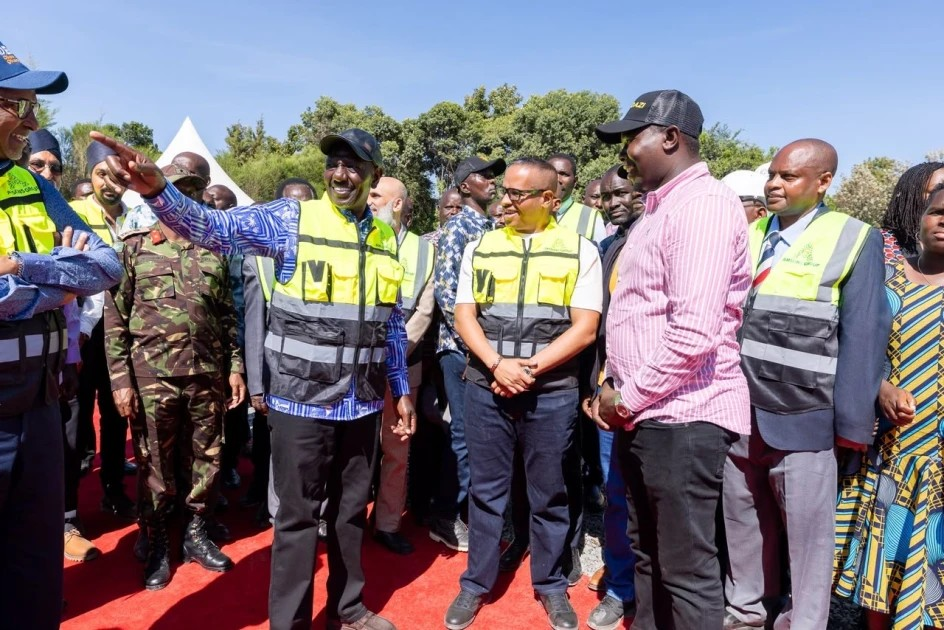
Kenya will soon benefit from the establishment of 10 specialized mother-and-child hospitals, thanks to a generous $35 million (Ksh 4.52 billion) grant from Amsons Group. This initiative presents a unique opportunity to explore how privately financed infrastructure can enhance the nation’s public healthcare system.
Construction has commenced on the first facility, a 250-bed Level 4 hospital located in Chebunyo, Bomet County. This hospital will feature maternity suites, operating theatres, neonatal intensive care services, and comprehensive antenatal, delivery, and postnatal care facilities.
President William Ruto emphasized that this financing arrangement will not impose any repayment obligations on the government. “This facility is a grant from Amsons. It’s not a loan, and that’s the value of friendship,” Ruto stated.
Under this collaborative framework, Amsons will oversee the construction and equipping of the hospitals before officially transferring them to Kenyan authorities. Following this handover, the government will take charge of staffing, supplying medicines, maintenance, and day-to-day operations.
This clear division of responsibilities is crucial to the program’s success.
While the grant covers initial construction and equipment expenses, the government must also secure funding for ongoing operational costs, including healthcare personnel, medical supplies, utilities, maintenance, and additional services.
Edha Nahdi, Managing Director and CEO of Amsons Group, expressed the company’s desire to transform agreements into tangible projects. “Our commitment will not remain on paper or in boardrooms; it will reach the ground where healthcare needs are most urgent,” Nahdi affirmed.
Amsons anticipates that the 10 hospitals will collectively serve up to one million patients annually, with planned locations including Bomet, Nairobi, Kwale, Mombasa, Garissa, Kisumu, Embu, Nakuru, Uasin Gishu, and West Pokot.
Nahdi highlighted that the program aims to bridge gaps in access to specialized maternal and newborn services, particularly for women who travel long distances to obtain emergency care during childbirth. The Chebunyo hospital will significantly improve access to these vital services within Bomet County.
This initiative distinguishes itself from Amsons’ traditional commercial investments, as the company intends for these hospitals to become public assets upon completion and handover, rather than retaining them as commercial healthcare facilities.
Nahdi articulated the company’s broader regional vision, which is grounded in “shared prosperity,” aligning commercial activities with community development.
President Ruto also took this opportunity to showcase Kenya’s favorable investment climate and regional economic commitments, including participation in the East African Community, COMESA, and the African Continental Free Trade Area. He noted a significant increase in foreign direct investment, rising from approximately $1.6 billion to $3.2 billion over the past three years, highlighting Amsons as a key contributor to this growth.
However, for the hospital program to succeed, the immediate challenge lies in ensuring that infrastructure investments are complemented by adequate resources for operational sustainability. A well-equipped hospital cannot fulfill its mission without sufficient healthcare professionals, medications, equipment maintenance, and operating budgets.
The Chebunyo facility will serve as an early indicator of the effectiveness of this model in practice. If infrastructure development aligns with the government’s commitment to providing necessary staffing and recurrent funding, this program could pave the way for Kenya to expand its public healthcare capacity without relying on government borrowing for initial construction.
Conversely, if operational funding fails to keep pace with construction, the investment’s impact may be limited. This program represents more than a $35 million private-sector contribution; it is a significant test of whether privately funded public-health infrastructure can be successfully integrated into Kenya’s health system for the long haul.


