

The Football Kenya Federation (FKF) has launched a dedicated seven-member committee to lead the transition of the SportPesa Premier League into a semi-autonomous structure, effectively alleviating tensions that could have jeopardized the commencement of the 2026/27 season.
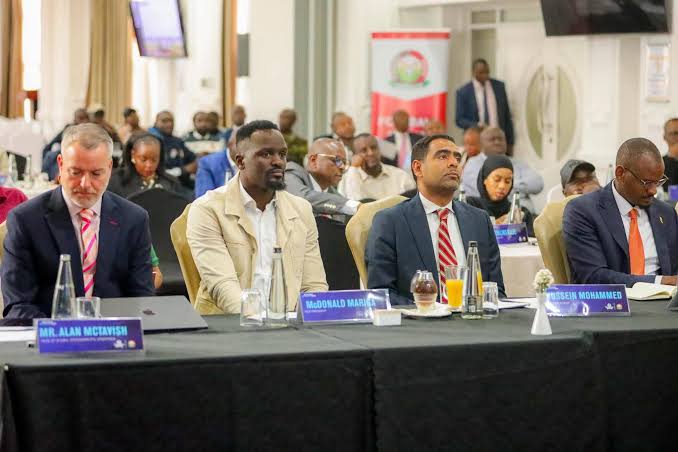
This committee formation emerged from a crucial meeting on Thursday, involving FKF President Hussein Mohamed, Chief Executive Officer Dennis Gicheru, and the chairmen of top-flight clubs. This collaboration follows weeks of disagreements regarding the governance of the upcoming league.
This significant development comes after club chairmen expressed their intention to boycott the new season, scheduled to start on August 22, unless the federation adhered to a prior agreement aimed at establishing a more independent management system for the nation’s premier competition.
Gor Mahia chairman Ambrose Rachier characterized the meeting as productive, emphasizing that it set the groundwork for a well-structured transition. “We convened to evaluate the resolutions from our previous discussions; it was an incredibly valuable exchange,” Rachier stated.
“The critical takeaway is that we now have a committee in place to guide the transition of the SportPesa Premier League into a semi-autonomous competition,” he continued. “We will explore collaborative avenues with essential stakeholders, including the league sponsors.”
The committee will include two representatives from FKF, two from Premier League clubs, two from the corporate sector, and one representative from the National Super League. Their mandate involves crafting a commercial strategy designed to attract new investments while preserving existing sponsorship and broadcasting agreements. Rachier highlighted the committee’s commitment to developing a sustainable governance model without hastily implementing structural changes.
“This initiative focuses on collaboration rather than confrontation, ensuring the league evolves on a solid foundation that benefits every stakeholder,” Rachier affirmed. He acknowledged that both the clubs and the federation understand the necessity of maintaining stability ahead of the new season while gradually implementing reforms.
“The discussions revealed a mutual goodwill. Our vision is to establish a league that is professionally managed, commercially appealing, and accountable,” Rachier added.
The governance issue traces back to a meeting on May 26 at the Serena Hotel, where FKF and club chairmen agreed on a roadmap to transfer greater operational control to a semi-autonomous structure starting with the 2026/27 season. However, frustrations mounted as clubs accused the federation of not forming the promised Transition League Management Committee, creating uncertainty around the new governance framework.
Mathare United CEO Jecktone Obure shared that the meeting also addressed logistical challenges clubs may encounter next season, particularly since major stadiums will be unavailable during the 2026 African Nations Championship (CHAN). “We discussed infrastructure since several clubs, especially those in Nairobi, will lack access to the main stadiums during the tournament,” Obure explained. “FKF requested our recommendations for alternative venues, such as Afraha Stadium in Nakuru, Dandora, and Kericho Green Stadium.”
Obure welcomed the agreement on league reforms but stressed the importance of a careful transition to avoid legal complications. “Introducing a semi-autonomous league is a fantastic idea, but we must proceed gradually to prevent any legal challenges,” he stated. “FKF President Hussein Mohamed reiterated his aspiration to cultivate the best league in Africa, emphasizing the necessity of operating within legal boundaries.”
Thursday’s meeting revisited the resolutions from May and resulted in a compromise that positions the newly established committee at the heart of the transition process. Rachier expressed optimism that this latest agreement would help rebuild trust between FKF and the clubs. “The paramount aspect is that we now have a structured process. We all share the same goal: creating a stronger and more competitive league,” Rachier asserted. He also highlighted the importance of enhancing the league’s commercial value by collaborating closely with sponsors and broadcasters.
“We must maintain ongoing engagement with our commercial partners, as they play a vital role in the growth and sustainability of the competition,” Rachier emphasized.
FKF reaffirmed its commitment to safeguarding existing agreements with title sponsors SportPesa and broadcast partners Azam Media while seeking new investment opportunities through the committee. The federation also confirmed that the current prize structure, awarding Sh15 million to the league champions, Sh3 million to the runners-up, and Sh2 million to the third-placed team, remains integral to its strategy for enhancing the competition’s commercial appeal.
With the governance deadlock resolved, focus now shifts to the committee as it embarks on delivering the long-awaited transition ahead of the new Premier League season, set to kick off on August 22.