

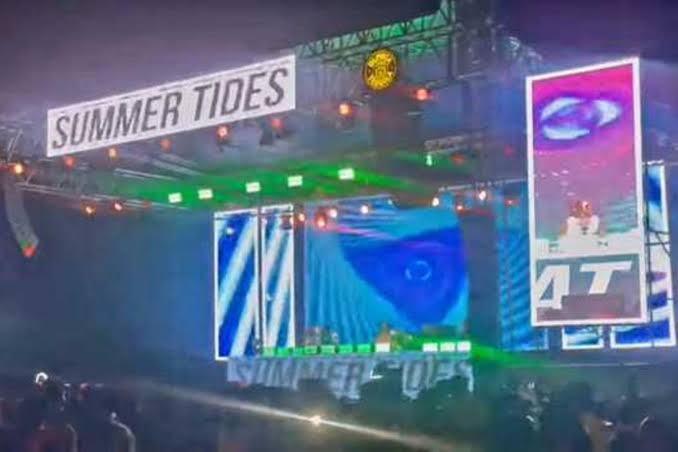
Malindi’s tourism sector has experienced a significant economic boost, and surprisingly, this surge did not stem from European tourists as some might think.
Instead, the vibrant, energetic, and financially robust group of young black African revelers from Kenya and across East Africa made this possible. They gathered to celebrate the Summertides Festival, Africa’s largest beach festival, held at Lost Beach Club in Malindi from Thursday to Sunday last week. While the festival name suggests summer, the cool, wet, and windy weather in Malindi during this time might prompt a reconsideration of that title.
Despite the weather, the enthusiasm among the visitors was palpable. The long lines at fuel stations, supermarkets, and tourist attractions indicated their determination to ensure that every mobile money account in Malindi saw substantial activity.
To understand the context, it’s essential to recognize that Malindi operates on a seasonal economic cycle driven by distinct travel periods. The high season, from December to February, is the most lucrative for the town, with hotel occupancy often exceeding 70%. This season has recently benefited from Kenyan holidaymakers escaping the traffic of Nairobi and foreign visitors avoiding the European winter chill.
In the past, Malindi, affectionately known as Little Italy, enjoyed what locals referred to as the ‘Italian season’ from January to March. During this time, European retirees and property owners, mostly Italians, arrived predictably, providing a financial cushion that helped stabilize the town’s economy and maintain high levels of espresso consumption.
Now, we enter the low season, from April to July, when the long rains arrive, leading to a sharp decline in visitor numbers. Many businesses find themselves anxiously calculating their finances during this time. According to AirROI, a platform offering AI-driven analytics for Airbnb hosts, local Airbnb rentals average just 31.4% occupancy during this period, with monthly revenue dropping to approximately Sh48,000 per active listing. In contrast, the average annual revenue for a holiday rental in Malindi is about Sh735,000, highlighting the critical need for high season traffic to sustain operations.
When over 15,000 revelers flocked to the town for three days of music featuring top regional DJs and artists, the economic impact reached far beyond hotels and entertainment venues. Private chefs, tuk-tuk drivers, tour guides, Mama Fuas, seafood vendors, and numerous small businesses experienced a remarkable surge in earnings over the festival days, achieving revenue that many would typically struggle to reach during the low season.
Hotels, villas, and Airbnb properties reported full occupancy during the festival, completely selling out both permanent and temporary accommodations. Latecomers quickly discovered that the phrase ‘walking distance from the beach’ can be quite flexible.
Before the festival, AirROI noted that Airbnb occupancy was at just 27.7%. The festival resulted in an extraordinary spike in bookings, revealing a crucial insight that Malindi may have overlooked for too long: the town doesn’t have a tourism problem; it has a tourism diversity problem.
As someone who has grown weary of the notion that Malindi would falter without foreign tourism, the weekend served as a gratifying affirmation. While foreign tourists are undoubtedly welcome, local tourists have demonstrated their capacity to spend with equal enthusiasm, albeit with much louder music.
However, not everyone shared in the excitement. Members of Malindi’s noise abatement WhatsApp group voiced their concerns over the noise levels. While the volume was indeed high, many of us accustomed to lively bars and places of worship viewed it as a temporary inconvenience for a greater benefit—a perspective that not everyone may agree with.
Additionally, some raised eyebrows at the revealing outfits worn by the revelers, reflecting discomfort with youthful self-expression.
European visitors remain invaluable, but this weekend highlighted that East Africa’s burgeoning middle class is not merely a backup market. This demographic is increasingly capable of filling hotels, restaurants, and beaches, reminding Malindi that prosperity can arrive with a sense of fun, sporting sunglasses, carrying Bluetooth speakers, and embracing a mindset where sleep is optional.


