

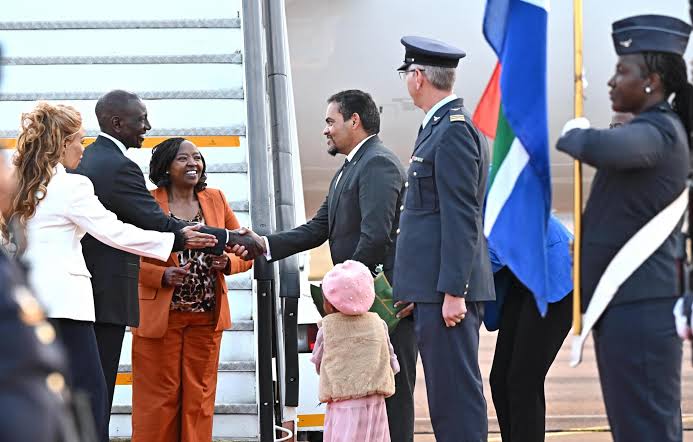
President William Ruto has touched down in South Africa for a State Visit to enhance political, economic, and trade ties between Nairobi and Pretoria.
Arriving in Pretoria on the evening of June 3, 2026, Ruto, along with First Lady Rachel Ruto, was welcomed at Waterkloof Air Force Base by South Africa’s Deputy Minister of International Relations, Alvin Botes.
On Thursday, the South African government announced that President Cyril Ramaphosa will host Ruto at the Union Buildings in Tshwane. This visit aims to deepen the long-standing, mutually beneficial relations established in 1994.
The invitation from President Ramaphosa reflects a growing commitment among African nations to boost trade and investment under the African Continental Free Trade Area (AfCFTA).
The agenda includes a ceremonial welcome, bilateral talks, the signing of agreements, and a joint media briefing. A highlight will be the South Africa-Kenya Business Forum, uniting government officials, investors, and business leaders to explore opportunities in manufacturing, agriculture, energy, and technology.
Both nations aim to foster new investments and strengthen existing partnerships. As two of Africa’s largest economies, South Africa and Kenya have a robust presence in sectors like banking, telecommunications, and manufacturing.
This visit comes at a crucial time as African leaders advocate for stronger economic integration and intra-African trade, which remains below its potential compared to other regions.
In addition to economic discussions, the two presidents will address regional peace and security, particularly in Eastern and Southern Africa, and share insights on African Union priorities.
However, Ruto’s visit occurs amid rising concerns over xenophobic incidents in South Africa, prompting a cautious approach. The Kenya High Commission in Pretoria has urged Kenyans to stay vigilant.
While not officially on the agenda, these concerns provide context for the visit. Advocates believe that ongoing dialogue between African nations can help tackle sensitive issues while promoting cooperation on shared economic and security goals.


