

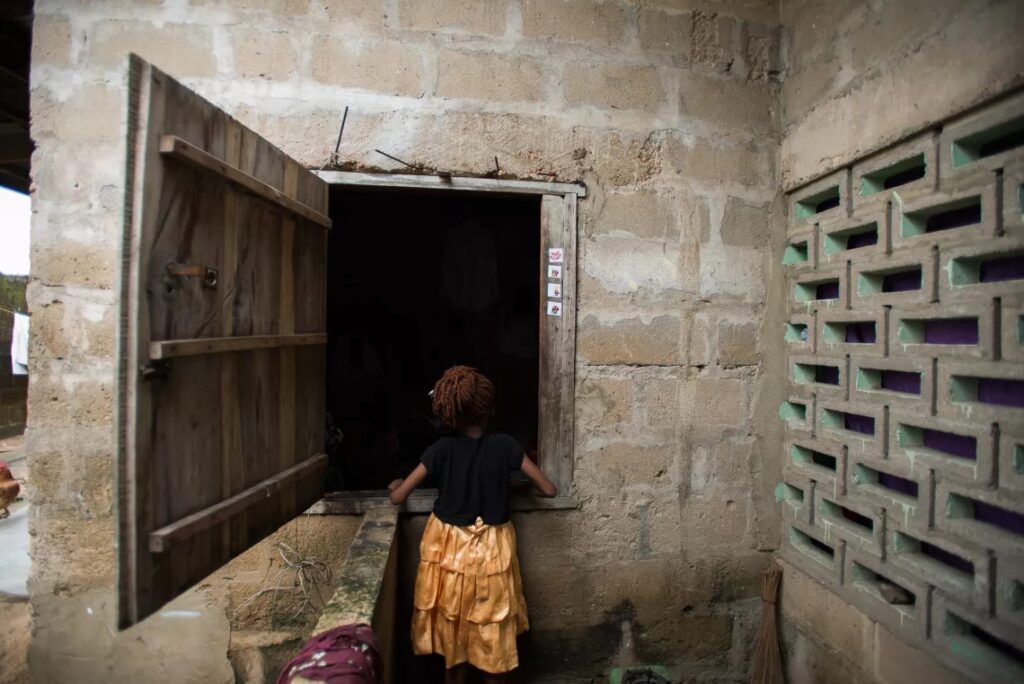
Today, I find myself grappling with profound sadness. As a police officer in the small village of Jiji Ndogo, I witness aspects of humanity that many might never encounter—and, ideally, should not.
Recently, our village experienced a shocking incident where someone brutally shot an elderly man, leaving his body to decay on a couch. Such cruelty raises the question of how anyone could possess such a lack of compassion. Yet, just when I believe I have seen the worst of humanity, another incident surfaces, reminding me that despair can take on new forms.
This morning, a concerned woman contacted our police post, revealing her neighbor’s alarming behavior of locking her children inside the house while she went to work. She described the children’s makeshift toilet—a bucket—akin to the conditions of a prison cell.
“How long has this been happening?” I inquired.
“Since she moved here, I believe,” she replied. “It must be about six months now.”
My partner, Sergeant Sophia, leaned in closer to the phone speaker. “Why are you only reporting this now?”
A moment of silence followed. Then, the woman explained, “You know how it is. I didn’t want to interfere. Nowadays, even a kind word to someone’s child can provoke a harsh reaction from the parent.”
This sentiment is all too familiar. The notion that ‘it takes a village’ feels outdated; today, many parents operate as a solitary unit. My experience with disputes involving children confirms this reality.
Upon checking the house, we discovered it locked, with no children in sight.
“It’s a school day,” the neighbors informed us, which made sense. However, further inquiries confirmed the allegations.
Sophia and I planned to revisit the home later that evening, hoping to encounter the mother. At 10 o’clock, we knocked on the door of the one-room flat. To our surprise, a small girl, no more than eight, opened it wide.
What we found inside was disturbing. Five children, ages two to ten, lay asleep on a worn, dirty carpet. Their mother, deeply asleep beneath a mosquito net on the only bed, stirred slightly and mumbled, “Is that you, Oduor?”
The girl who had opened the door replied, “No. It’s the police.”
With a sleepy smile, the mother responded, “Ha-ha, my love. Come over to the bed. I love it when you role-play.”
Sophia approached the bed and gently shook the woman awake. “How can you sleep comfortably while your children are on the floor?”
The mother appeared annoyed. “Does it look like we can all fit in this bed? Besides, they’re fine. Just ask them.”
We did just that, and with a little encouragement, the children revealed the uncomfortable truth.
Their mother, a heavy sleeper, never locked the door at night, allowing her lover, Oduor—who is not their father—to enter freely. On numerous occasions, they had spent entire days confined to the house while she was out.
In fact, the children recounted a harrowing incident where the three-year-old, desperate for water, dipped a cup into their makeshift toilet bucket and drank from it. They also mentioned that when their mother occasionally permitted them to cook, the ten-year-old boy took on the responsibility.
Sophia visibly reacted to their story, perhaps due to her pregnancy. As we arrested the mother and escorted her to the police post, I couldn’t help but ponder why society grants licenses for driving but not for parenting.