

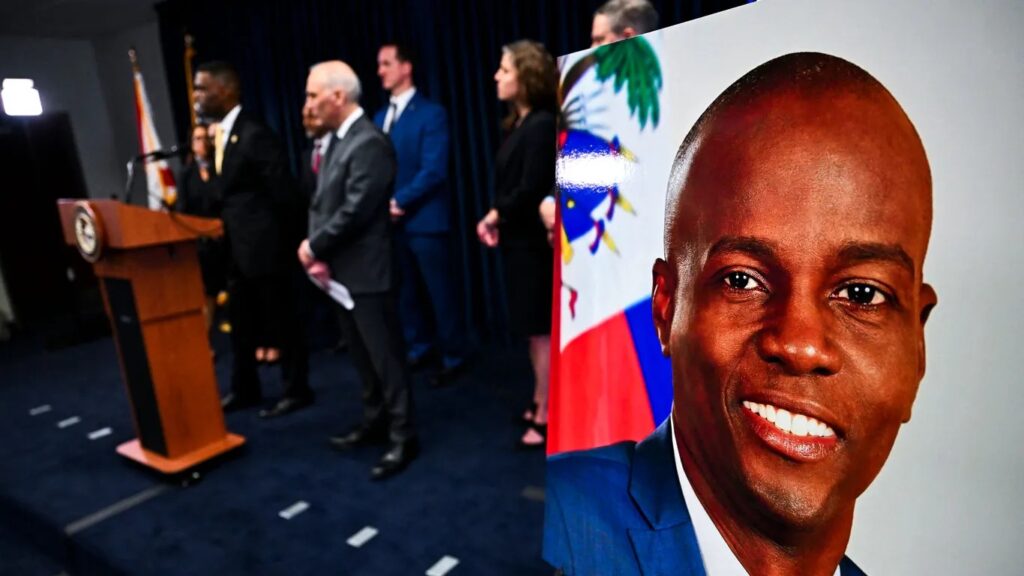
On Friday, a federal court in Miami convicted four men from South Florida for their involvement in a conspiracy to assassinate Haitian President Jovenel Moïse in 2021. The defendants allegedly hired mercenaries to carry out the assassination at Moïse’s residence in Port-au-Prince, according to court records.
During a nine-week trial, prosecutors presented evidence that the men recruited approximately 24 former Colombian soldiers, providing them with financial support, firearms, ammunition, and tactical gear as part of their plot to kill Moïse. Tragically, the 53-year-old president was fatally shot in July 2021, an act that created a significant political void in Haiti and empowered various gangs.
The individuals on trial included Arcangel Pretel Ortiz, 53, a former FBI informant and Colombian national; Antonio Intriago, 62, a Venezuelan-American security firm owner; James Solages, 40, a Haitian-American handyman; and Walter Veintemilla, 57, an Ecuadorian-American. Each faced multiple charges, including conspiracy to kill and kidnap a person outside the U.S., which resulted in death, as well as providing material support for these actions.
All four men now face the possibility of life imprisonment. A fifth defendant, Christian Emmanuel Sanon, a Haitian-born doctor who reportedly aspired to assume the presidency following Moïse’s death, will have his trial postponed due to health concerns.
The assassination has spurred numerous investigations and indictments in both Haiti and the United States, leading to various theories regarding the motivations and orchestrators behind the killing.
Defense attorneys for the Florida men contended that the prosecution relied on questionable evidence sourced from Haiti. They argued that their clients intended only to serve an arrest warrant on Moïse, who they claimed had overstayed his term. The defendants further asserted that, by the time the Colombian soldiers arrived, Moïse had already been killed by his own security personnel.
“This is a Haitian plot and it is a Haitian conspiracy,” emphasized defense attorney Emmanuel Perez, suggesting that the defendants were being unfairly scapegoated in a flawed FBI investigation.
Moïse, a polarizing figure who resisted stepping down after his term expired in February 2021, saw his assassination exacerbate Haiti’s political turmoil and trigger a surge in gang violence.
Jake Johnston from the Center for Economic and Policy Research in Washington cautioned against the assumption that the Miami trial would clarify all aspects of the assassination. “The Miami crew represents just a small fraction of the broader picture,” Johnston remarked. “Numerous individuals face accusations in Haiti, and we are unlikely to uncover the full story through this case.”


