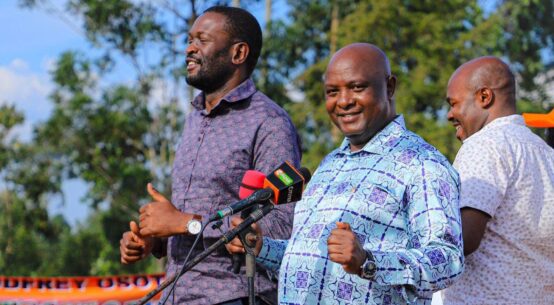

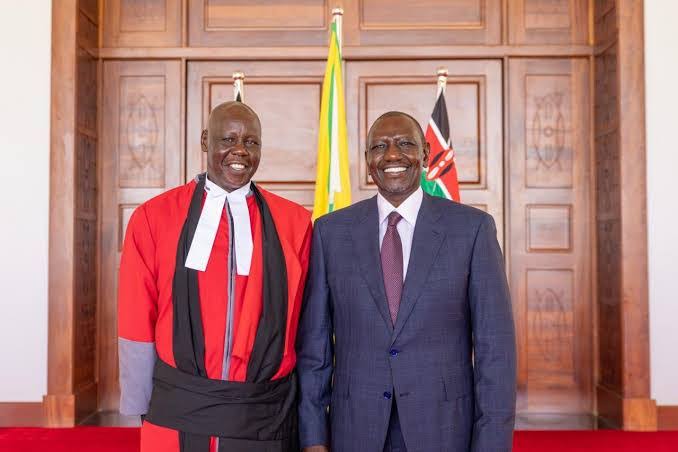
Court of Appeal Judge Katwa Kigen assured the Judicial Service Commission (JSC) that his prior legal representation of President William Ruto would not compromise his independence if appointed to the Supreme Court.
Kigen appeared before the commission on Tuesday, April 28, 2026, during the initial interviews for a vacancy at Kenya’s highest court, which arose following the passing of Justice Mohamed Ibrahim in December 2025.
During the session, JSC commissioner Fatuma Sichale expressed concerns raised by the public regarding Kigen’s suitability. These concerns primarily focused on his previous involvement as Ruto’s lawyer, including his role in Ruto’s defense at the International Criminal Court (ICC) and during the 2022 presidential election petition. Ruto is anticipated to run for re-election in 2027.
The discussion centered on Kigen’s ability to remain impartial should a presidential election petition involving Ruto reach the Supreme Court after the forthcoming General Election.
Kigen acknowledged his past representation of President Ruto but emphasized that this should not be a factor in evaluating his qualifications for the role.
“I have indeed represented him,” Kigen confirmed during the interview.
He expressed confidence in his ability to maintain objectivity and fairness if appointed.
“I intend to approach my duties as a judge with objectivity and neutrality, focusing solely on the facts and the law,” he stated.
Addressing concerns of bias, Kigen recognized the public’s apprehension but asserted that his professional background should not overshadow his judicial integrity and conduct.
He noted that many judges in Kenya have transitioned from advocacy to the Bench, representing diverse clients in their legal careers.
Kigen argued that singling him out based on his association with one former client would be unjust and inconsistent with the evaluation standards applied to other candidates.
“To differentiate me solely because of one client would be quite unfair,” he remarked.
He encouraged the commissioners to assess him based on his integrity, fairness, and commitment to justice, rather than his past affiliations.
Kigen also highlighted existing legal mechanisms to address any potential bias in future cases, stating that any party with valid concerns could request his recusal.
“There are procedures to manage such situations, including recusal,” he explained.
He added that the Supreme Court addresses a wide range of constitutional and appellate issues beyond just presidential petitions.
“I understand that some presidential petitions have been resolved with fewer than the full complement of seven judges. The Supreme Court’s responsibilities extend far beyond presidential matters,” he clarified.
Kigen is among five shortlisted candidates vying for the position, alongside former Independent Policing Oversight Authority chair Anne Makori, High Court Judge Joseph Sergon, and Court of Appeal judges Francis Tuiyott and Mohammed Warsame.
The successful candidate will join a court pivotal in constitutional interpretation, election disputes, and final appeals.
These interviews have garnered significant public interest, as the next Supreme Court judge may participate in adjudicating major disputes stemming from the 2027 elections.
Kigen’s appearance thus held both legal and political significance, with commissioners probing whether his previous connections to the President might undermine public confidence in the court.
He firmly rejected this notion, maintaining that judges should be evaluated based on their conduct rather than the clients they represented in their prior legal careers.