

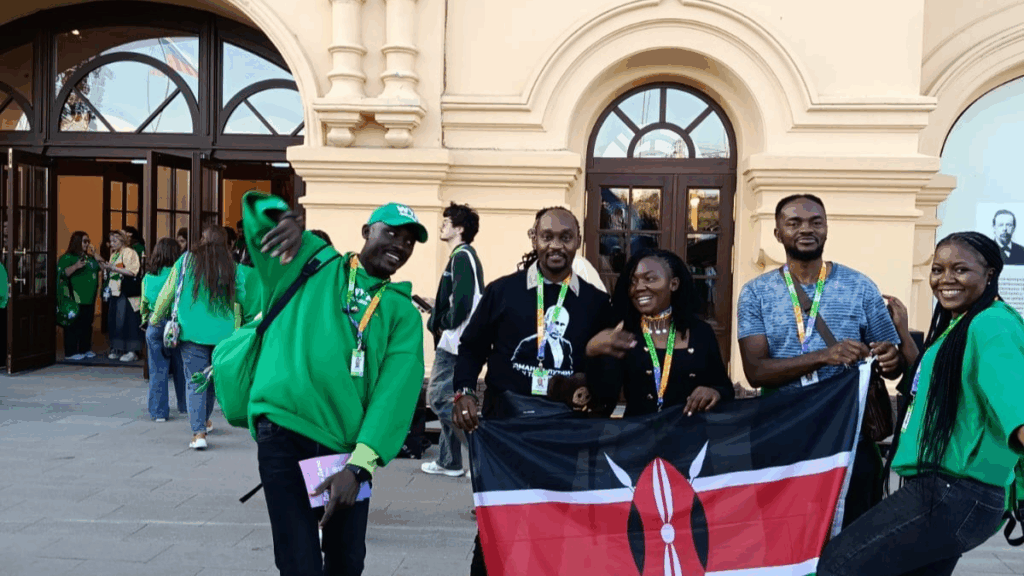
As Kenya prepares to send its youth to one of the world’s largest international youth gatherings, this journey transcends mere travel. It symbolizes diplomacy, opportunity, and a new generation eager to influence global discussions.
From September 11 to 17, thousands of young people from over 180 countries will converge in Yekaterinburg, Russia, for the World Youth Festival. This significant event aims to promote cooperation, cultural exchange, and dialogue among emerging leaders.
This year, approximately 10,000 participants will create a global hub for youth in various sectors, including business, media, science, public administration, innovation, and civic leadership.
For Kenya, attending the festival represents more than participation; it signifies the opening of new doors.
Richard Wambua, head of the World Youth Festival Directorate (WYFD) Project Office in Kenya, leads the preparations for the Kenyan delegation. He views the festival as a vital space for young people to forge meaningful relationships that can influence careers, partnerships, and even international diplomacy.
“The International Festival for Youth is part of the annual programs organized under the WYFD,” Wambua stated. “It serves as a global cultural platform where young individuals gather in Yekaterinburg, with around 10,000 participants.”
For many young Kenyans, this platform offers unique access to global networks, scholarships, and partnerships that typically take years to establish. It also embodies a deeper concept: people-to-people diplomacy.
Where Youth Become Diplomats
Diplomatic relations often focus on presidents, ambassadors, and trade agreements. However, Wambua believes the strongest connections form when young people meet, free from titles and positions.
“It allows youth to exchange ideas, collaborate, and recognize their commonalities despite different backgrounds,” he remarked. “This engagement strengthens bilateral relations between Kenya and Russia.”
The World Youth Festival has a rich history dating back to the early 1960s. Its revival under Russia’s hosting emphasizes the belief that the future of international relations hinges on youth involvement.
“The festival originally began around 1963-64 and has been hosted in various countries, including Hungary, Germany, and South Africa,” Wambua explained. “After a hiatus, Russia resumed hosting it, recognizing that youth globally share similar challenges and aspirations. The goal is to provide them with a platform to express ideas and collaborate on solutions for the future.”
The festival promotes a multipolar world grounded in justice, equality, and mutual respect, encouraging young people to see themselves not merely as citizens of their respective countries but as contributors to global development.
For Kenya, this message aligns perfectly with its diplomatic stance. Wambua highlighted that Kenya has always embraced partnerships worldwide. “Kenya has historically maintained a non-aligned approach and a ‘friend to all’ foreign policy,” he asserted. “As a gateway to East and Central Africa, we play a crucial role in global affairs. Engaging partners like Russia is essential for adapting to the evolving global landscape.”
Given that Kenya is predominantly youthful, youth participation in the festival holds particular significance. Wambua noted that approximately 75% of Kenya’s population is young, representing the future’s diplomats, innovators, investors, and policymakers.
“Youth exchanges facilitate collaboration before formal diplomatic roles or major businesses are established,” he said. “When young people connect now, they cultivate long-term relationships that later enhance trade, innovation, and diplomacy.”
The festival’s potential is immense. A student today could evolve into tomorrow’s investor, while a young entrepreneur might become a key business partner. A media participant could emerge as a global voice, linking nations through storytelling.
These early connections often extend beyond the festival, forming enduring bridges.
Opportunities Beyond Travel
For many Kenyan youth, international festivals may seem like glamorous travel opportunities. However, Wambua emphasizes that this is not tourism; it represents a serious investment in talent.
The festival provides lectures by world-class experts, workshops, exhibitions, cultural immersion, and direct networking with investors, researchers, and business leaders. It also opens doors to scholarships and specialized training.
Previous Kenyan delegates have successfully leveraged the platform to secure educational opportunities and international partnerships. “Many participants go on to receive scholarships, study abroad, and return as professionals who strengthen ties between countries,” Wambua noted. “These relationships create lasting bridges in business, education, and diplomacy.”
This is particularly crucial for young Kenyans in entrepreneurship and technology. Known for their creativity and resilience, Kenya’s youth can transition local projects into international opportunities at the festival.
Wambua highlighted dedicated spaces for this purpose. “We provide exhibition areas for youth, export and trade desks, translation support, and networking hubs,” he said. “These platforms foster opportunities that extend beyond cultural exchange into business development and international cooperation.”
A young entrepreneur with a compelling idea can connect with an investor, while a student with a climate initiative may find research partners. A civic innovator focused on decolonization or green movements could discover international collaborators.
Kenyan youth also contribute valuable perspectives. They attend not only to listen but to engage actively, bringing local solutions, stories, and innovations to global discussions. This exchange enhances both Kenya’s international visibility and its relationship with Russia.
Breaking Stereotypes
Diplomacy often falters due to reliance on stereotypes rather than personal experiences. Wambua believes the festival addresses this issue through direct human interaction.
Participants engage in various activities, including school visits, environmental initiatives, and friendship clubs, allowing them to experience daily life in Russia. “We organize cultural exchanges, school visits, environmental activities, and friendship clubs across regions,” he explained.
Such interactions help dissolve assumptions. When youth engage personally, they discover shared experiences that transcend national boundaries. This exchange benefits both sides: Russian youth gain insights into Kenya beyond the headlines, while Kenyan youth experience Russia beyond political narratives.
Even small moments matter. Wambua describes Yekaterinburg as a beautiful, welcoming city eager to host international guests. “Locals are incredibly helpful, contributing to a hospitable environment where youth can genuinely experience daily Russian life,” he said.
Kenya already enjoys considerable cultural recognition in Russia. “Many people know about Kenyan tea and athletes, so the first stereotype we often dispel is that Kenyans are only runners,” he added with a smile.
The festival allows Kenya to share a broader narrative, showcasing a nation of innovators, thinkers, creators, and future leaders ready to engage on the global stage.
Despite the excitement, organizing Kenya’s participation has posed challenges. “The biggest hurdle has been raising awareness and getting enough people to understand the opportunity and apply,” Wambua noted. While interest spikes once people learn about it, he emphasizes the need for balanced representation across various sectors.
The festival is not exclusively for students or entrepreneurs; it must encompass voices from sports, media, civic engagement, and other areas. This diversity is essential, as diplomacy is a collective societal effort.
To enhance understanding, the coordination team has organized virtual engagement sessions to clarify the festival’s purpose and the workings of youth diplomacy. The response has been positive. “The most rewarding aspect has been the enthusiasm and insightful questions from Kenyan youth. They are curious, critical thinkers fully engaged,” Wambua remarked.
These young individuals are ready to carry Kenya’s voice into global arenas, forging friendships that could evolve into trade partnerships, academic collaborations, and diplomatic ties. In a world seeking balance, understanding, and cooperation, this may represent the most potent form of diplomacy.


