

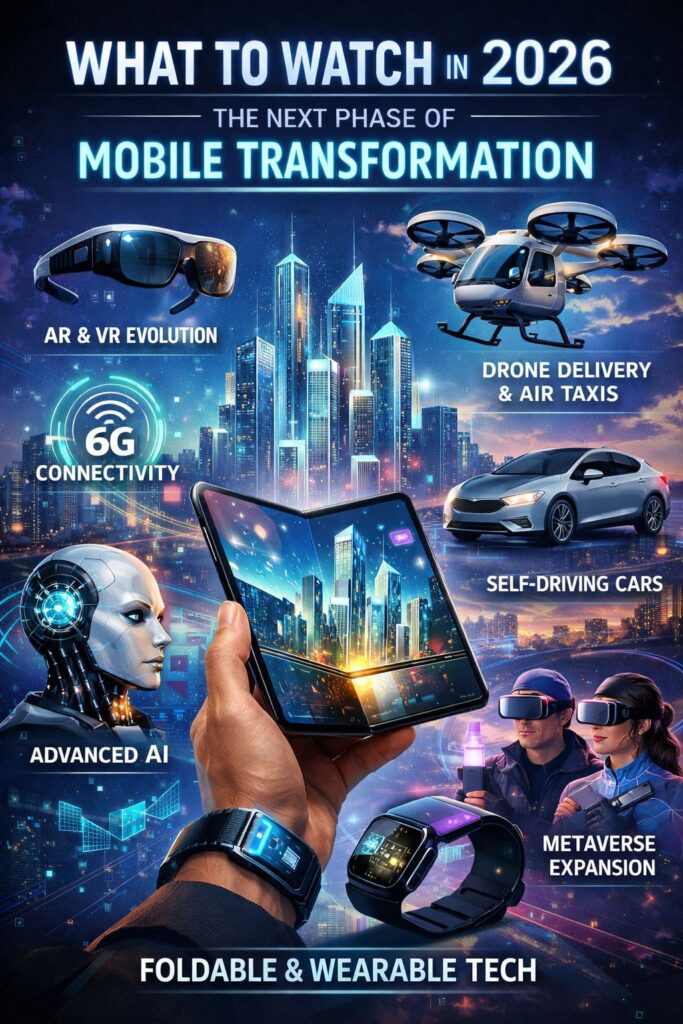
Mobile technology has already reshaped how people communicate, work, shop, and access information. By 2026, the conversation is shifting. The focus is no longer just on new devices, but on how mobile systems quietly become the backbone of daily life, business, and public services.
One key trend to watch is the smartphone’s role as a primary work tool. For millions of people, especially in Africa, the phone is now an office, a bank, and a marketplace. In 2026, more businesses will design services with a “mobile-first” mindset, not as an option but as a necessity. From customer service to payroll and logistics, work will increasingly happen on small screens.
Another major shift is the growth of mobile-based financial ecosystems. Mobile money has already transformed payments, but the next phase goes deeper. Expect wider use of digital credit, savings, insurance, and cross-border payments, all built into mobile platforms. Governments and regulators will also pay closer attention as mobile finance becomes central to national economies.
Artificial intelligence will play a bigger role on mobile devices as well. Rather than being limited to big tech platforms, AI tools will be embedded directly into phones, helping users write, translate, organize tasks, and even run small businesses. This could narrow the digital skills gap, but it also raises new concerns around data privacy and control.
Connectivity will also improve, though unevenly. Faster networks will expand in urban areas, while rural regions continue to lag behind. Bridging this gap will remain a critical policy and investment challenge.
Finally, digital identity and mobile governance will gain momentum. More public services, from healthcare to voting information, will move to mobile platforms. This promises convenience, but also demands stronger safeguards.
In 2026, mobile transformation will not be about what phones can do, but about how much society depends on them. The real question will be whether that dependence works for everyone, or only for a connected few.


