

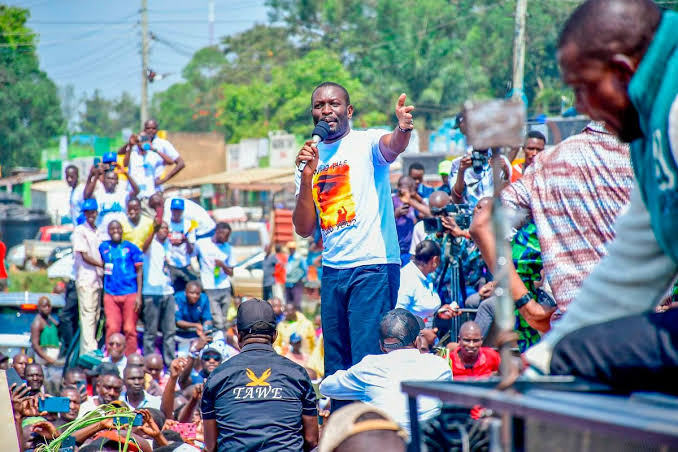
Nairobi Senator Edwin Sifuna has challenged Kisumu Governor Anyang’ Nyong’o regarding the proposed Vision 2060, advocating for experienced politicians to empower younger leaders in shaping Kenya’s future.
During a church service in Mumias, Kakamega County, on Sunday, August 9, 2026, Sifuna emphasized the necessity for a new generation of leaders to take the helm after years of established political leadership.
“Experienced leaders have led us into this predicament; let us not be underestimated as young people,” he stated.
Sifuna asserted that young leaders should be evaluated based on their ideas, integrity, and capacity to deliver results, rather than their years in politics.
Championing the youth agenda
As he and fellow leaders from the Linda Mwananchi movement continued their grassroots mobilization tour in western Kenya in preparation for the 2027 General Election, Sifuna reflected on the skepticism surrounding young politicians’ experience in leadership roles.
He firmly rejected this notion, arguing that Kenya’s current challenges demand innovative solutions from a fresh generation of leaders. He encouraged supporters to remain dedicated to the Linda Mwananchi movement, highlighting its focus on building support among ordinary citizens and grassroots networks.
During his visit to Mumias, Sifuna addressed the town’s economic decline, recalling its historical significance as a major sugar industry center. He attributed the diminished economic opportunities for farmers, workers, and businesses to corruption and mismanagement.
Vision 2060 debate gains traction
Sifuna’s comments align with the nation’s preparation for a dialogue on Vision 2060, a proposed long-term development framework intended to succeed Vision 2030.
President William Ruto initiated this national conversation during his State House address on July 30, 2026, framing it as a significant national dialogue and inviting Kenyans from various sectors to contribute to the proposed framework.
The initiative aims to prioritize political, economic, and social development while addressing constitutional rights, including those outlined in Article 43.
Nyong’o, who played a role in developing Vision 2030 in 2002 and is involved in the preparations for the proposed blueprint, has defended Vision 2060 as a national project rather than a political campaign initiative.
Nyong’o advocates for long-term planning
Nyong’o has emphasized the need for Kenya to look beyond 2030, advocating for a long-term framework that transcends individual administrations.
He has differentiated Vision 2060 from Vision 2030, asserting that the new blueprint should center on citizens and offer a comprehensive roadmap for governance, economic growth, and social welfare.
Furthermore, he has stressed that the nation’s development planning must consider the needs of future generations, including access to healthcare, education, and economic opportunities.
Sifuna’s stance resonates with comments from Mumias East MP Peter Salasya, who cautioned against evaluating political influence solely by the size of rallies. Salasya noted that enduring political strength requires ongoing engagement with voters, referencing established leaders such as Kalonzo Musyoka, Fred Matiang’i, and Eugene Wamalwa.
The government plans to officially launch the national conversation on August 12, 2026, paving the way for broader public discussions on Kenya’s long-term development trajectory.


