

President urges diplomats to leverage improved economic gains to expand Kenya’s global influence amid shifting international order.
President William Ruto has urged Kenyan diplomats to step up efforts to promote the country’s economic and strategic interests abroad, citing improved economic stability and growing investor confidence as a foundation for stronger global engagement.
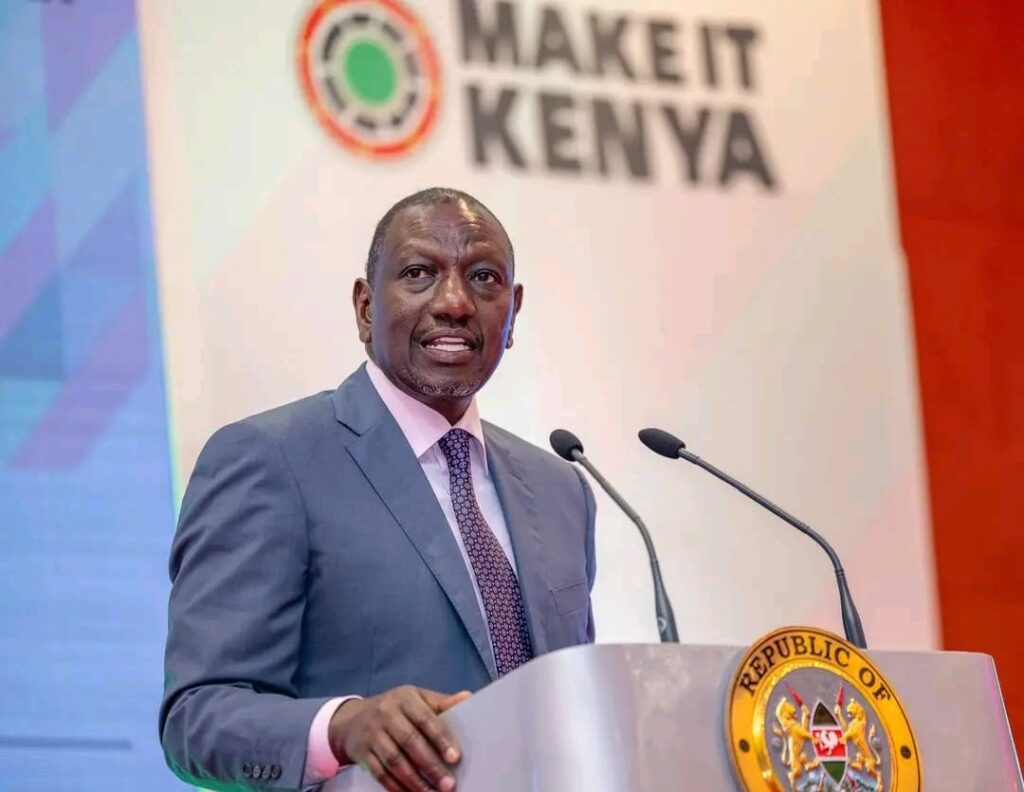
Speaking during the opening of the 19th Ambassadors’ Conference in Nairobi on Saturday, the President said Kenya is operating from a position of increased strength despite a shifting and uncertain global order marked by rising geopolitical tensions and weakening multilateral systems.
“We meet at a moment of profound change in the global order, an era marked by deep and often unpredictable disruptions,” he said, acknowledging the complex international landscape within which diplomats must now operate.
Ruto told ambassadors and envoys that Kenya must use its current economic gains to position itself more effectively on the global stage and attract partnerships that deliver tangible outcomes for citizens. He emphasized that the role of diplomats has evolved beyond traditional representation to active economic diplomacy, with ambassadors expected to serve as key drivers of trade, investment, and strategic partnerships.
He said the country’s recent economic performance reflects deliberate policy choices made over the past three years, underscoring the importance of consistency in economic management.
“By any credible measure — whether economic stability, fiscal discipline, or institutional resilience — the direction is unmistakable. Kenya is not only steady, but it is also on the rise,” he told the gathering of heads of diplomatic missions and senior foreign affairs officials.
The President noted that Kenya had avoided a projected debt default that affected several African countries, attributing this to reforms that included expenditure controls and the removal of what he described as unsustainable subsidies. He pointed to the government’s commitment to fiscal prudence as a key factor in restoring market confidence.
He added that the country’s economy has continued to grow steadily, with gross domestic product estimated at about $136 billion and annual growth at around five per cent. This sustained growth trajectory, he noted, places Kenya among the fastest-growing economies in sub-Saharan Africa.
He said inflation has declined to an average of 4.3 per cent from 9.6 per cent three years ago, while the shilling has stabilized against the dollar — a development that has eased pressure on importers and helped restore predictability in the business environment. He also pointed to an upgrade of Kenya’s sovereign credit rating by Standard & Poor’s as an indication of improved confidence from global markets.
On investment, Ruto said foreign direct investment inflows grew by 15 per cent in 2025 to exceed $2 billion for the first time, a milestone that reflects growing international interest in Kenya’s economic potential. He added that the recent Kenya International Investment Conference (KIICO) secured commitments worth $2.9 billion across sectors including agriculture, manufacturing, energy, and technology, demonstrating that the country’s investment promotion efforts are bearing fruit.
The President challenged the envoys to aggressively market Kenya as a premier investment destination, highlighting not only traditional sectors such as agriculture and tourism but also emerging opportunities in green energy, technology, manufacturing, and the creative economy. He urged them to leverage their positions to connect Kenyan businesses with international partners and to actively court investors who can contribute to the country’s industrialization agenda.
He also called on the diplomats to play a more proactive role in defending Kenya’s interests in multilateral forums, particularly on issues such as climate change, trade, and global financial architecture reform. He noted that Kenya has positioned itself as a leader on climate action, having championed the Africa Green Industrialization Agenda, and that ambassadors should build on this momentum to advance the country’s strategic interests.
The Ambassadors’ Conference, convened annually, brings together Kenya’s envoys from missions around the world to deliberate on foreign policy priorities and align diplomatic efforts with national development goals. This year’s edition is focused on strategies to deepen economic diplomacy, enhance Kenya’s regional and global influence, and navigate the complexities of an increasingly multipolar world.
Foreign Affairs Cabinet Secretary Musalia Mudavadi, who also addressed the conference, emphasized the need for coherence in Kenya’s foreign policy and urged envoys to work collaboratively with government agencies to ensure that diplomatic efforts translate into concrete economic outcomes.
As the conference continues, diplomats are expected to engage in working sessions focused on trade promotion, diaspora engagement, and the implementation of Kenya’s foreign policy objectives over the coming year. With the President’s directive to intensify economic diplomacy, ambassadors now face the task of translating Kenya’s improved economic standing into tangible partnerships that will sustain the country’s upward trajectory.