

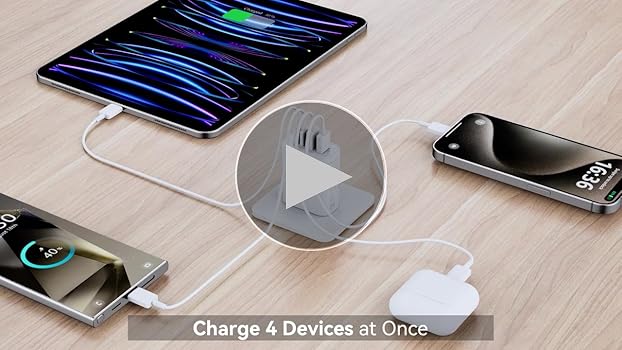
The Communications Authority of Kenya (CA) has introduced new technical specifications for mobile phones and communication devices, mandating that all devices sold in the country be equipped with USB Type-C chargers.
Manufacturers must adhere to these specifications to improve consumer safety and ensure network reliability. The guidelines address crucial aspects such as input power, safety standards, electromagnetic compatibility (EMC), radiated power, frequency usage, and environmental considerations.
CA Director General David Mugonyi emphasized that these specifications aim to create clear and comprehensive technical requirements for mobile cellular devices, ensuring their safe, reliable, and efficient operation within Kenya’s telecommunications framework.
Additionally, the new rules stipulate that materials used in manufacturing mobile phones and accessories must be free from hazardous substances such as lead, mercury, and cadmium. The CA aims to protect users from electrical shocks, heat, and explosion risks during device charging or usage.
Furthermore, mobile devices must provide a minimum of eight hours of talk time and at least 24 hours of standby time. Compliance with national and international radiation exposure limits is also mandatory, along with compatibility with existing and future telecommunications networks.
To maintain network integrity and optimal performance, the specifications require devices to enhance electromagnetic compatibility by limiting unintended emissions and resisting interference.
For devices sold with a power plug, it must conform to the ‘Type G’ standard, the 3-pin plug commonly used in Kenya. If a non-3-pin plug is included, an adapter converting it to a 3-pin must also be provided.
Devices should support an operating voltage of 240 Vac ± 10% at a frequency of 50 Hz ± 1, consistent with Kenya’s standard power supply. The charging solution must allow the charging cable to detach from the power adapter, with USB Type-C as the required charging solution in line with the European Union Directive (EU) 2022/2380.
Mobile devices must also support frequency bands for 2G (GSM), IMT-2000 (3G), IMT-Advanced (4G), and IMT-2020 (5G), as well as future generations as designated by the International Telecommunication Union (ITU).
On safety measures, the CA mandates restricted access to energized parts of devices and ensures that materials do not exceed safe temperature limits. Devices with replaceable batteries must display a warning near the battery slot regarding the risk of explosion if an incorrect battery type is used.
Moreover, the specifications call for accessibility features for individuals with disabilities, including compatibility with assistive technologies like screen readers, voice recognition, and refreshable braille displays.
Devices must offer features for users with limited or no vision, such as speech output, text-to-speech conversion, tactile feedback, non-visual navigation cues, adjustable text size, high-contrast display modes, and magnifier functionality.
Finally, to support users with limited or no hearing, devices should include visual notifications, text displays for audio content, vibration alerts, captioning options, audio amplification, adjustable frequency response, and real-time captioning. They must also facilitate Real-Time Text (RTT) for messaging, visible caller identification, alternatives to voice-only services, and unimpeded access to emergency services.


