

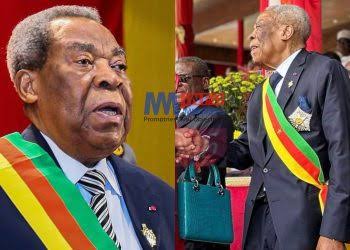
A recent photo making rounds online has stirred up very deep and pertinent conversations on Cameroon’s leadership. In it, six of the country’s most powerful men sit at the top of government. They are: President Paul Biya, 92; Clément Atangana, 91; Claude Meka, 91; Marcel Niat, 84; Cavaye Yegue, 85; and Laurent Esso, 83.
Together, they control nearly every arm of the state: the presidency, the army, the courts, and the legislature. When looked at from face value, it’s just a group of senior public servants whose strengths are waning day by day.
In short, the message being relayed in the photo paints a stark picture of a nation run almost entirely by men in their twilight years.
A Leadership Frozen in Time
Much as their supporters would rightfully argue that age brings wisdom, they’re lost in another sense that at some point, experience turns into a wall against change—and a positive one for that matter.
Cameroon’s leadership seems to have settled into comfort — too stable to fall, and too rigid to evolve.
President Biya has been in power since 1982. Many Cameroonians have only known one president,now going to a half a century. The irony of it is that that longevity notwithstanding, the West African country has stayed relatively calm through his reign, albeit calm isn’t the same as progress. Leadership that never changes starts to feel less like stewardship and more like ownership.
A Young Country, an Old Ruling Class
Cameroon’s median age is just 19. That means most citizens are younger than Biya’s presidency, which is now in its fourth decade. The generation is growingup in a different world, a world of smartphones, global ideas, and fast change. However, they are ruled by men whose political instincts were shaped in the colonial and Cold War years.
That generational gap is hungry and yawning. It’s not just about age — it’s about understanding. Young people don’t see their ideals and mindsets in people like Paul Biya anymore. They feel left out of the equation — watching power circulate among the same faces year after year. Many have stopped believing politics has room for them at all.
No Plan for Tomorrow
There’s also the issue of what happens next. With so much power concentrated in such elderly hands, it’s hard not to wonder what the plan is when time catches up. Real democracies prepare for transition. In the current Cameroon, succession politics seems to be an afterthought — or even worse, a forbidden topic.
That kind of uncertainty that has blurred the young Cameroonians is toxic and detrimental to the future of the younger generation. It makes institutions weak and overly dependent on individuals. When leaders outlast systems, the future becomes unpredictable.
More Symbolic Than It Seems
The image of six ageing men leading an entire nation is more than a curiosity — it’s a symbol. It tells of a political culture where power is a lifelong possession, not a temporary responsibility. The younger generation sees that and loses faith in the idea of renewal.
What is probably eluding those in power is that relinquishing power isn’t on any way a sign of weakness or even failure, but a final act of service. The old guard could choose to hand over the reins gracefully, mentoring younger leaders and leaving behind something stronger than themselves. That’s how real legacy works.
Time to Open the Door
Cameroon stands at a defining moment. The country can keep recycling the same names until nature forces a change, or it can open space for new energy, new ideas, and new hope.
The Gen Zs in Cameroon aren’t asking for a miracle. They just want to be part of the story of building their country, not just to sit watch in wait of an unforeseeable change of generational leadership. For that to happen, the elders must find the courage to let go. Power, after all, isn’t meant to be a lifetime inheritance.