

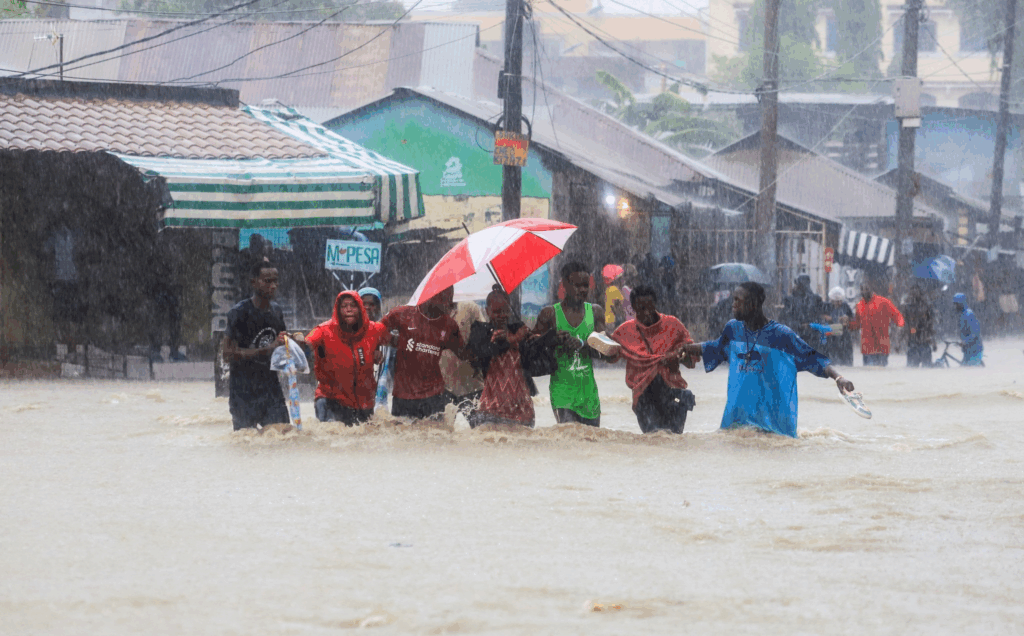
The Kenya Meteorological Service Authority (KMSA) reports that the cloudy conditions affecting various regions, including Nairobi County, stem from a weather phenomenon known as the Madden-Julian Oscillation (MJO).
Principal Meteorologist Jemimah Gacheru explains that the MJO is currently in its first and second phases, which typically correlate with heightened rainfall in certain areas of the country. This weather system is actively contributing to the rainfall observed across some regions.
Gacheru elaborates, “The Madden-Julian Oscillation consists of eight distinct phases, and the active phases significantly enhance rainfall in various parts of the country.” She anticipates that the cloudy conditions will intensify, particularly in Nairobi and the central region.
In a recent interview, Gacheru highlighted that the transition from the current cold season to the October-November-December (OND) short rains season may lead to cooler weather across the region.
According to the KMSA’s weekly forecast, counties such as Baringo, Bomet, Bungoma, Busia, Elgeyo/Marakwet, Embu, Garissa, Homa Bay, Kajiado, Kakamega, Kericho, Kiambu, Kilifi, Kirinyaga, Kisii, Kisumu, Kitui, Kwale, Laikipia, Lamu, Machakos, Makueni, Mandera, Marsabit, Meru, Migori, Mombasa, Murang’a, Nairobi, Nakuru, Nandi, Narok, Nyamira, Nyandarua, Nyeri, Siaya, Taita/Taveta, Tana River, Tharaka-Nithi, Trans Nzoia, Uasin Gishu, Vihiga, Wajir, and West Pokot can expect rainfall this week.
The forecast also indicates that night-time (minimum) average temperatures may drop below 10°C in parts of Meru, Tharaka Nithi, Kirinyaga, Murang’a, Nyeri, Nakuru, Narok, Taita/Taveta, and Kajiado Counties.
Conversely, daytime (maximum) average temperatures exceeding 30°C are anticipated in several counties, including Kilifi, Tana River, Lamu, Garissa, Wajir, Isiolo, Marsabit, and Turkana.
To clarify, the Madden-Julian Oscillation (MJO) is a tropical weather pattern that progresses globally through its eight phases. This system is particularly effective in generating rainfall when it traverses the Indian Ocean, especially during phases two and three.